Sitting Is a Skill Problem, Not a Willpower Problem
In 2026, office ergonomics experts have largely moved away from the “sit better” framing and toward what they call movement snacking — short, deliberate recovery breaks built into the workday rather than one long stretching session that never actually happens. The logic is simple: a perfect posture that you hold for two minutes is less valuable than a decent posture interrupted every 25 minutes with movement.
Most desk workers know they should stretch more. The problem is not knowledge — it is friction. A complicated 45-minute yoga routine sounds great until it is 7:30 p.m. and you are tired.
This guide gives you a 10-minute routine covering the five zones that desk work destroys: hip flexors, thoracic spine, chest and shoulders, neck, and wrists. You will also find the best tools to make each stretch more effective, and a simple structure for building the habit without relying on motivation.
Quick answer if you only do one thing: Do the hip flexor lunge stretch every morning, every evening, and pick up the TriggerPoint Grid roller for your thoracic spine. Those two moves address the two most significant mobility losses from desk work.
What 8 Hours at a Desk Actually Does to Your Body
Before covering the exercises, it helps to understand what you are undoing.
Hip flexors shorten and tighten. The psoas and iliacus muscles that run from your lumbar spine to your femur spend 8+ hours in a shortened, contracted position. Over time, they pull your pelvis into anterior tilt — which flattens your lower back’s natural curve and shifts the load onto your lumbar discs instead of your spinal muscles. This is why you feel lower back tension after a long day even when nothing is “injured.”
Your thoracic spine stiffens into flexion. Sustained forward flexion at a desk locks up the mid-back. The thoracic vertebrae lose their natural ability to extend backward. This transfers load to the cervical spine (neck) and forces the lumbar spine to compensate during bending and lifting.
The chest shortens, the upper back weakens. Hours of forward-reaching toward a keyboard shortens the pec minor and anterior deltoid while the rhomboids and lower trapezius lengthen and weaken. Classic “desk posture” — rounded shoulders — is this imbalance made visible.
Neck extensors and deep flexors get disrupted. Forward head posture is the most visible desk-work symptom. For every inch your head moves forward from its neutral position over your shoulders, it effectively adds roughly 10 pounds of gravitational load to your cervical spine according to a widely cited estimate from spine surgeon Kenneth Hansraj.
Calves and circulation suffer. Reduced lower-leg muscle pump activity during sitting slows venous return from the legs. The result: swollen ankles, that heavy-leg ache that builds through sedentary hours, and early fatigue when you stand up.
The 10-Minute Daily Desk Stretch Routine
Do this in the morning before you start work, or immediately after your workday ends. Aim for both if you can. Each stretch addresses one of the zones above.
1. Hip Flexor Lunge Stretch — 90 seconds each side
Step into a deep lunge with your back knee on the floor (use your yoga mat or a folded blanket for knee padding). Keep your torso upright and gently push your front hip forward until you feel a pull through the front of the rear thigh and lower abdomen. This is your psoas and iliacus stretching.
Hold for 60–90 seconds. Do not bounce. After 30 seconds you will often feel the muscle “release” and allow a slightly deeper position — that is normal.
For a deeper stretch, raise the arm on the same side as your back leg overhead and lean slightly to the opposite side. This adds a lateral elongation to the hip flexor and QL.
2. Thoracic Extension Over a Foam Roller — 2 minutes
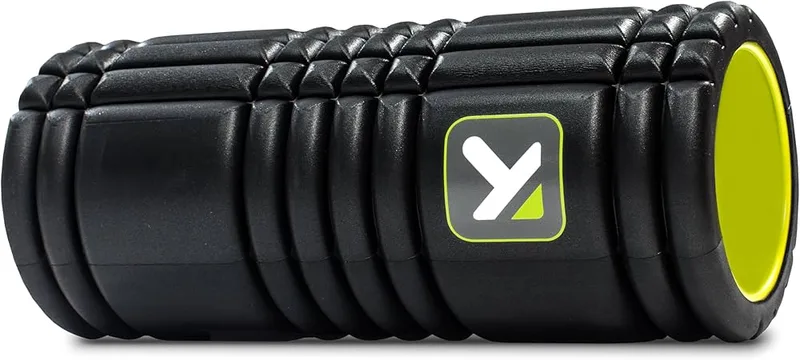
Sit on the floor with your foam roller perpendicular to your spine, positioned at the mid-back (between shoulder blades). Support your head with both hands behind your neck. Allow your upper back to gently drape over the roller, creating extension in the thoracic spine.
Hold at each segment for 10–15 seconds, then shift the roller up one inch toward your neck. Work from the lower thoracic region up to the base of the neck in segments.
This is the single most important mobility move for counteracting the rounded, desk-bound posture pattern. Most people have not moved their thoracic spine into extension in years.
3. Chest Opener / Resistance Band Pull-Apart — 90 seconds
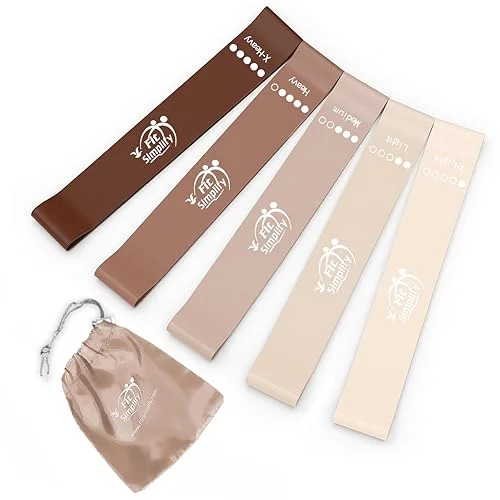
Hold a resistance band at shoulder height with arms extended in front of you, hands slightly wider than shoulder-width. Pull the band apart horizontally until your arms are fully extended to each side and the band touches your chest. Squeeze your shoulder blades together at the end range.
Perform 15–20 controlled reps rather than a static hold. The repeated movement pattern reactivates the rhomboids and mid-trapezius that sit in a lengthened, underactive state during desk work.
No band? Stand in a doorway with forearms against the door frame and lean your bodyweight slightly forward. Hold for 30–45 seconds.
4. Neck Side Stretch + Chin Tuck — 60 seconds each side
Sit upright in your chair. Drop your right ear toward your right shoulder without raising the shoulder. Use your right hand to apply gentle additional weight on the left side of your head — this stretches the left scalene and upper trapezius, the muscles most responsible for the tight, knotted feeling at the base of the neck.
Hold 30–45 seconds. Repeat on the other side.
Follow with chin tucks: pull your chin straight back (creating a “double chin”) while keeping your eyes level. This restores the natural curve of the cervical spine and activates the deep neck flexors that switch off in forward-head posture. Hold 5 seconds, repeat 10 times.
5. Wrist Flexor and Extensor Stretch — 60 seconds each
Extend your right arm straight out, palm facing up. Use your left hand to pull the fingers back toward the body. You should feel a stretch across the underside of the forearm (wrist flexors — often involved in carpal tunnel and typing overuse). Hold 30 seconds.
Then flip the palm downward and pull the fingers back in the opposite direction. This stretches the wrist extensors on the top of the forearm. Hold 30 seconds. Switch arms.
Do this before and after extended typing sessions. If you are dealing with persistent wrist pain, read our full guide on how to prevent wrist pain from typing.
6. Seated Figure-Four (Pigeon at the Chair) — 90 seconds each side
Sit at the edge of your chair. Cross your right ankle over your left knee, so the right leg forms a figure-four shape. Gently press down on the right knee and lean your torso slightly forward from the hips. You should feel a stretch deep in the right glute and hip — this is the piriformis, a small muscle that becomes chronically tight from sitting and can contribute to sciatica-like symptoms.
Hold 60–90 seconds. Focus on keeping your back straight rather than rounding forward.
Tools That Make This Routine Actually Happen
The stretches above work without any equipment. But the right tools lower friction, deepen the stretch, and make the habit sustainable.
The TriggerPoint Grid Foam Roller is the cornerstone tool for thoracic work. Its multi-density grid surface replicates different pressures in a way a smooth foam cylinder cannot — the flat zones, the ridges, and the nodules address different layers of tissue. Owner reviews consistently note that it holds its shape far longer than budget foam rollers, which compress and lose their feedback over months of use.
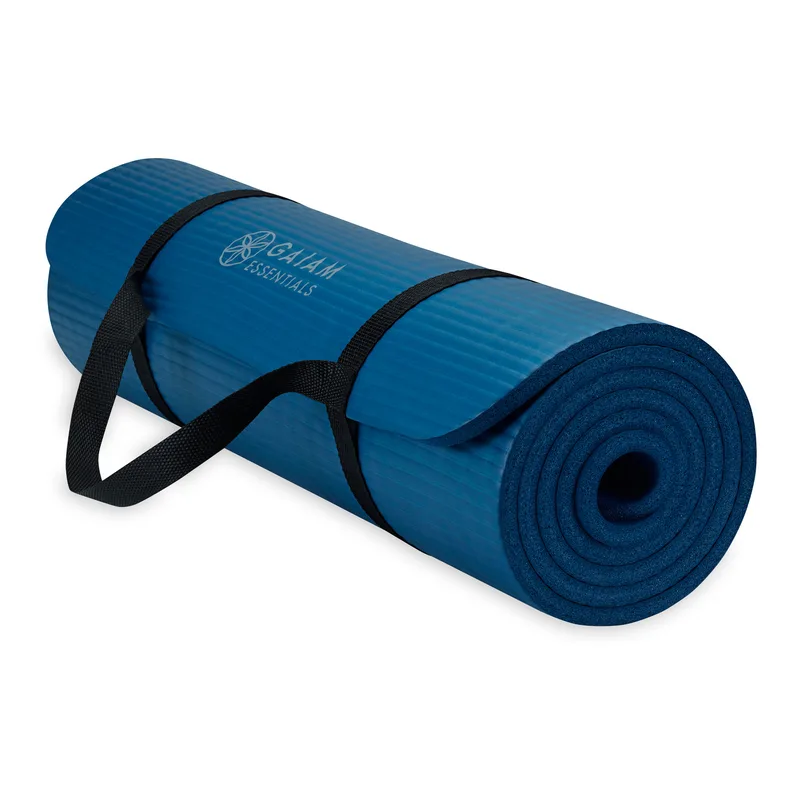
The Gaiam Essentials 10mm mat is specifically worth the 10mm thickness over the standard 6mm version. Kneeling hip flexor stretches on a hard wood or tile floor without adequate padding are painful enough that people skip the stretch. The extra cushion removes that barrier.
The Fit Simplify resistance bands stay in a desk drawer. That accessibility matters more than any technical feature — you are more likely to use them during a short break if they require zero setup and zero commute to the gym.
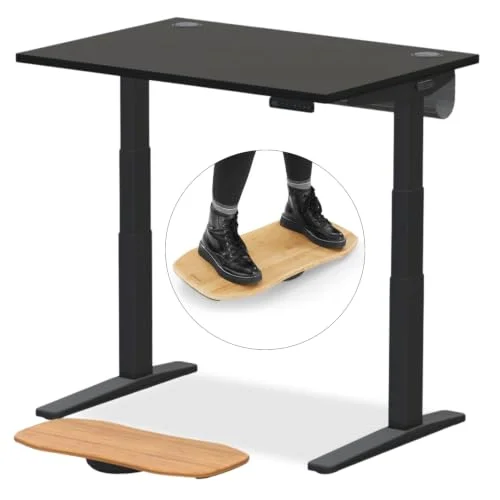
The CasaZenith footrest is the only passive option here — it works while you sit. The textured rocking surface and built-in roller keep foot and calf muscles from completely switching off during sedentary hours. It will not replace active movement, but it fills the gap between your scheduled stretch breaks.
Tool Comparison
| Tool | Primary Use | Best Stretch | Price | Active or Passive |
|---|---|---|---|---|
| TriggerPoint Grid Roller | Thoracic extension, hip flexors | Mid-back extension | Check price | Active |
| Gaiam Essentials 10mm Mat | Floor stretches, hip work | Hip flexor lunge | Unavailable | Active |
| Fit Simplify Bands (5-pack) | Chest and shoulder openers | Band pull-apart | $9.98 as of Oct 18, 2026 | Active |
| CasaZenith Footrest Roller | Foot/calf circulation | Passive calf massage | $9.99 as of Oct 18, 2026 | Passive |
Standing Desk Integration — The Missing Piece
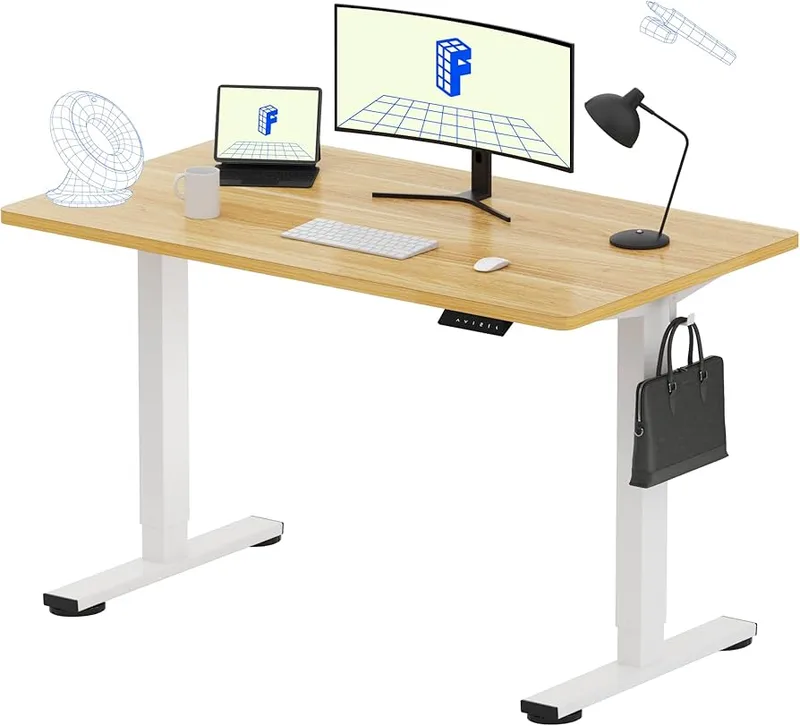
If you have a standing desk, the stretching routine above becomes significantly more effective when paired with a structured sit-stand schedule. The problem is that most people stand reactively (“my back hurts, let me stand”) rather than proactively.
A simple protocol: 45 minutes sitting, 15 minutes standing. Set a timer. During your standing intervals, do the wrist stretch and neck side stretch — they take 2 minutes and fit into a natural work pause.
Standing on an anti-fatigue mat during those intervals reduces the lower-limb fatigue that otherwise makes standing desks feel more tiring than helpful. The best standing desk mats compress slightly under your feet, encouraging the subtle weight shifting that keeps calves and glutes active.
For more active working time, a desk bike or pedal exerciser under the desk allows low-intensity leg movement during focused tasks — not a replacement for stretching, but an excellent complement to it.
How to Build the Stretch Habit
The routine above works if you do it. That sounds obvious, but habit formation is where almost every desk stretching guide fails.
Anchor the routine to an existing habit. The most reliable approach is to do your stretch routine immediately before something you already do every single day. Before your morning coffee brews. Before opening your laptop. Immediately after logging off work. The existing behavior acts as a trigger that removes the decision overhead.
Start with two stretches, not six. The 10-minute routine is the long-term goal. For the first two weeks, commit only to the hip flexor stretch and the thoracic roller. Two stretches that take four minutes. That is small enough that there is no plausible reason to skip it.
Use the Pomodoro approach for workday breaks. Ergonomics professionals increasingly recommend 25-minute focused work intervals followed by 5 minutes of active recovery — standing up, doing shoulder rolls, a quick cat-cow, refilling water. You do not need to do the full routine during every break. Even 60 seconds of thoracic extension during a Pomodoro pause compounds into meaningful mobility over weeks.
Track streaks, not perfection. Missed a day? Start the streak again. The goal is consistency over months, not flawless execution. A posture corrector worn for part of the day can supplement muscle memory during the habit-building phase.
Frequently Asked Questions
How long until I notice a difference from stretching at my desk?
Most people notice reduced end-of-day tightness within 7–10 days of daily hip flexor and thoracic work. Meaningful posture changes take 4–6 weeks. The gains come from retraining muscle memory and restoring resting length to chronically shortened tissue — that takes time, but it is reversible.
Can I stretch at my desk without getting on the floor?
Yes. The neck stretch, wrist stretch, seated figure-four, resistance band pull-apart, and chest doorway opener all work at a desk or in a chair. The foam roller thoracic extension and kneeling hip flexor stretch require floor space, but only need about 6 feet. If floor stretching is not possible at your workplace, focus on the chair-based exercises and add the floor work at home.
What is the most important stretch for lower back pain from sitting?
The hip flexor stretch. Chronically shortened hip flexors tilt the pelvis forward and load the lumbar spine. Most lower back pain in desk workers originates at the hips, not the back itself. A sustained hip flexor stretch, done daily, addresses the root cause more directly than any lower back stretch does.
How often should desk workers stretch?
Once daily is the minimum that produces results. Twice daily — once in the morning and once at the end of the workday — is meaningfully better. Mid-day micro-breaks of 2–3 minutes add up, but they supplement rather than replace a longer daily session.
Do I need all four tools, or can I start with just one?
Start with the foam roller if your primary complaint is upper back or thoracic stiffness. Start with the mat if your primary complaint is hip tightness and you have hard floors. The resistance bands are the best starting point if you spend more than 6 hours a day at a keyboard. The footrest is the easiest add-on for anyone — it requires no behavioral change at all.
Will stretching fix forward head posture?
Stretching alone will not fix it, but it is a necessary part of the solution. Forward head posture involves both tight muscles (neck extensors, pec minor) that need lengthening and weak muscles (deep neck flexors, lower trapezius) that need strengthening. Chin tucks and band pull-aparts address both sides of that equation. Consistent daily work over 6–8 weeks makes a visible difference, based on owner reports from people who have committed to the routine.
Conclusion: A 10-Minute Investment in the Joints You Will Need for Decades
Most desk workers spend 8 hours a day loading their bodies in ways evolution never intended. The good news: the body is highly adaptable, and even a short daily maintenance routine partially reverses those adaptations.
The hip flexor stretch and thoracic foam rolling are the two moves that deliver the most benefit per minute. Do those two every day and you will feel a difference within two weeks. Build out from there.
For gear, the TriggerPoint Grid roller is the best single investment for thoracic work. The Gaiam 10mm mat makes floor stretches comfortable enough to actually do. The Fit Simplify bands stay accessible in a desk drawer. The CasaZenith footrest works while you sit.
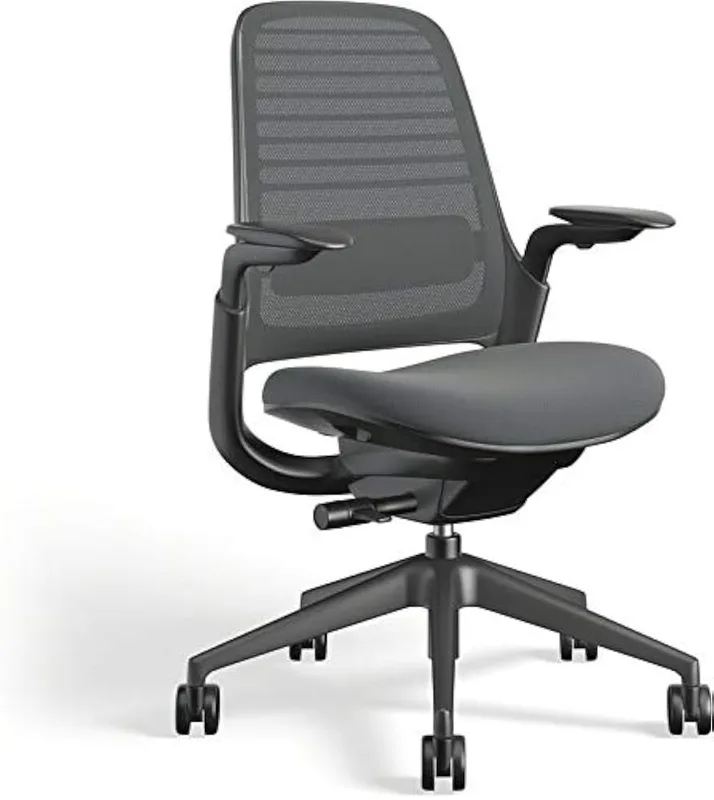
And if your chair is making sitting worse before the stretches even start, read our guide on the best ergonomic seat cushions and ergonomic chairs under $300 to address the root cause.