Disclosure: PostureRanked is reader-supported. When you buy through links on our site, we may earn an affiliate commission at no additional cost to you. Our recommendations are based on independent research and testing.
| Product | Price | Rating |
|---|---|---|
| Steelcase Series 1 | — | 9.6 |
| Herman Miller Sayl | — | 9.6 |
| Humanscale Freedom Headrest | — | 9.4 |
| Haworth Zody | — | 8.8 |
| IKEA Markus | — | 8.4 |
| Autonomous ErgoChair Core | — | 8.6 |
| HON Ignition 2.0 | — | 8.8 |
| Steelcase Think | — | 9.6 |
PostureRanked is reader-supported. When you buy through links on our site, we may earn an affiliate commission at no additional cost to you.
You just dropped $1,200 on a standing desk and a nice monitor arm. Now your back is screaming from the $89 office chair you grabbed at a big box store three years ago. Sound familiar?
Here’s the good news: you don’t need to spend $1,500 on a Herman Miller Aeron to get real ergonomic support. Four of the chairs on this list cost under $500 at retail. The other four — from Steelcase, Herman Miller, Humanscale, and Haworth — normally sell for $700–$1,700, but routinely show up refurbished or on sale for under $600. I’ve noted which chairs need deal-hunting and which you can buy right now at sticker price. For the sweet spot of quality and price, our best ergonomic chairs under $500 guide covers excellent options from Steelcase, Branch, and others that are available at retail price right now.
In a rush? The Steelcase Series 1 at $507 is the best chair you can buy under $600 without waiting for a sale. If you’re tighter on budget, the IKEA Markus at around $200 delivers 90% of the ergonomics at a fraction of the cost.
1. Steelcase Series 1 — $507
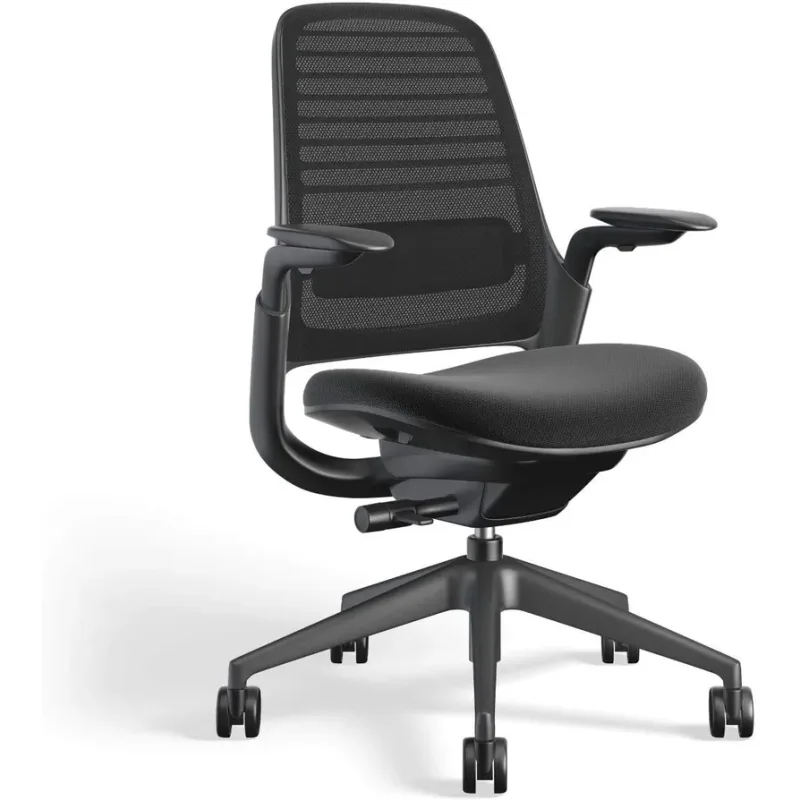
Steelcase Series 1
Pros
- ✓ LiveBack technology flexes with your spine
- ✓ 400-lb weight capacity
- ✓ 4-way adjustable arms
- ✓ 12-year warranty
Cons
- ✗ Arm adjustment feels flimsy vs. pricier Steelcase models
- ✗ Seat cushion runs firm
- ✗ Limited recline depth
Rating: 4.8/5 | Editor’s Pick
The Series 1 is the entry point to Steelcase’s lineup, and it punches well above its weight class. LiveBack technology — a flexible mesh panel that bends with your spine as you shift positions — is the standout feature. It’s not the same as the Leap’s upper-back flex, but for $507, it’s remarkably close.
The 4-way adjustable arms handle basic repositioning fine, though they feel noticeably cheaper than the arms on a Leap or Gesture. That’s the main trade-off at this price. The seat pad is firm out of the box and stays firm — if you like a plush cushion, this isn’t your chair.
Weight capacity is 400 lbs, which is generous for the price range. Assembly takes about 15 minutes with no tools required.
Who should buy this: Home office workers who want legitimate Steelcase engineering without the Steelcase price tag. It’s the safest pick on this list.
Who should skip this: Anyone who needs deep recline for afternoon reading, or who strongly prefers a padded seat over mesh.
2. Herman Miller Sayl — $695+ (Refurbished ~$400–$500)
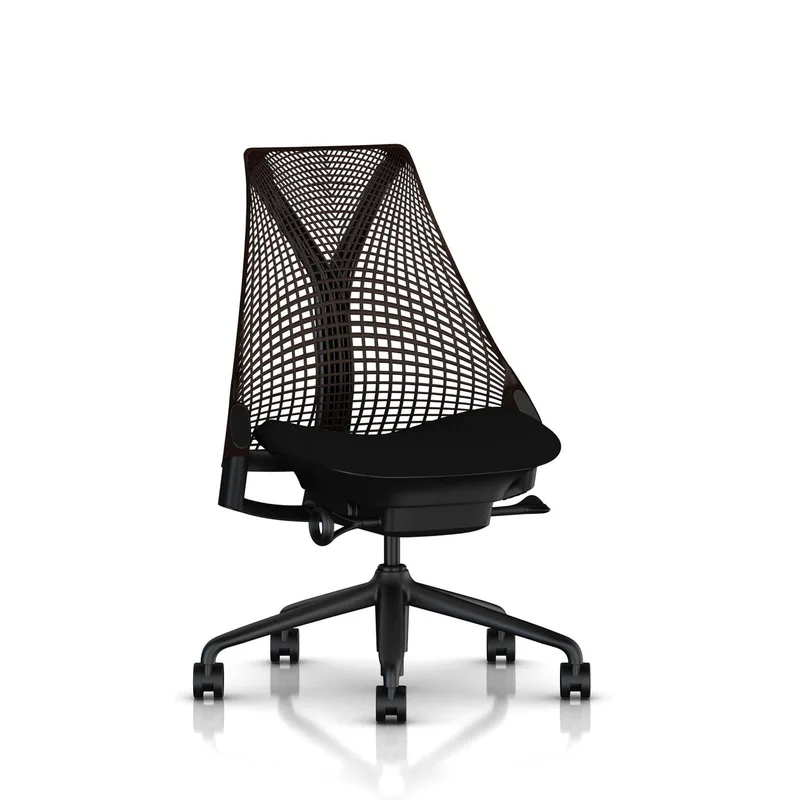
Herman Miller Sayl
Pros
- ✓ Stunning Y-Tower suspension design
- ✓ Excellent airflow through open back
- ✓ 93% recyclable materials
- ✓ 12-year warranty
Cons
- ✗ Retail price well over $600
- ✗ No headrest option
- ✗ Limited lumbar adjustment
Rating: 4.8/5 | Best Design
The Sayl’s Y-Tower suspension back is one of the most recognizable designs in office furniture. Yves Béhar modeled it after the Golden Gate Bridge’s suspension cables, and the result is a back support system that moves with you without any frame contact points. Airflow is exceptional — if your home office runs hot, this is the most breathable chair on the list.
At retail, the Sayl runs $695–$1,000 depending on configuration, which puts most versions outside our budget. But refurbished Sayls from authorized dealers regularly hit $400–$500 with the full 12-year warranty intact. Madison Seating and Crandall Office are two reliable sources.
The big miss is lumbar support. The Sayl relies on the suspension system itself for lower-back support, and it’s adequate but not adjustable. If you have specific lower-back needs, check our complete guide to ergonomic chairs for lower back pain instead.
Who should buy this: Design-conscious buyers willing to shop refurbished. Anyone who overheats in mesh chairs.
Who should skip this: People who need aggressive lumbar support or want a headrest.
3. Humanscale Freedom Headrest — Refurbished Only
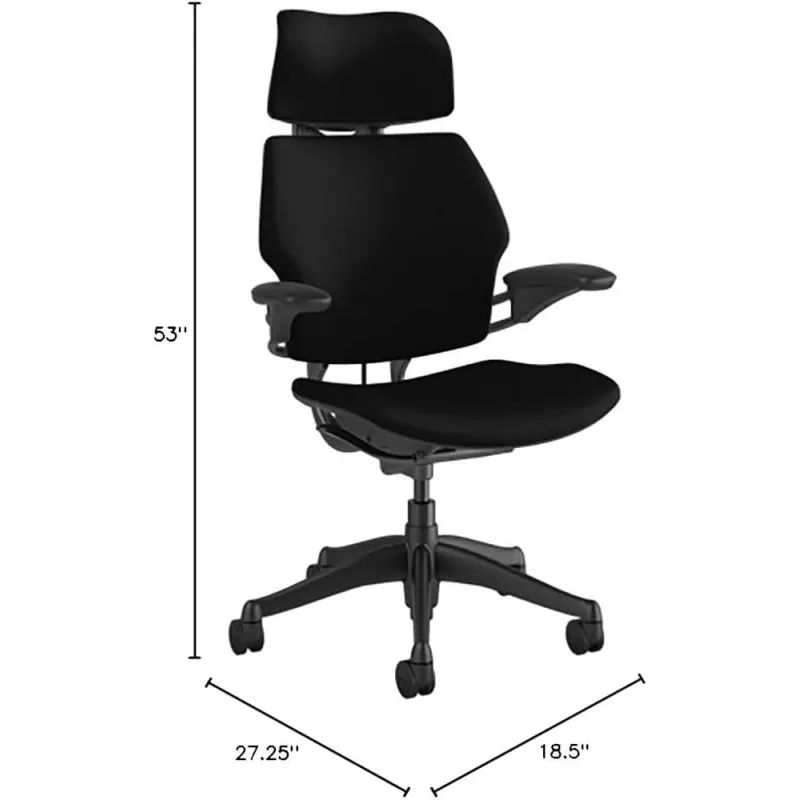
Humanscale Freedom Headrest
Pros
- ✓ Self-adjusting recline needs zero manual controls
- ✓ Gel seat stays cool for hours
- ✓ Pivoting headrest tracks your neck position
- ✓ 15-year warranty
Cons
- ✗ Retail price around $1,700
- ✗ No manual recline lock
- ✗ Hard to find under $600 even refurbished
Rating: 4.7/5
The Freedom is the most polarizing chair on this list. There are no levers, no knobs, no tension dials. You sit down and the chair adjusts to you — the recline responds to your body weight, the headrest tracks your neck angle automatically. Niels Diffrient designed it to eliminate the fidgeting that comes with traditional ergonomic chairs.
The gel-infused seat cushion stays genuinely cool during 4–5 hour sessions, which is rare. The tri-panel mesh back conforms well to different body shapes.
Here’s the catch: retail is around $1,700. Even refurbished, the Freedom with headrest rarely dips below $600. You’ll need to watch corporate liquidation sales or check eBay for decommissioned office units. The 15-year warranty is excellent, but it may not transfer to secondhand buyers depending on the seller.
Who should buy this: Patient deal-hunters who hate fiddling with chair adjustments. People who want a “set it and forget it” seating experience.
Who should skip this: Anyone who wants manual control over recline tension, or who needs a chair they can buy today at a predictable price.
4. Haworth Zody — Outlet Pricing Required
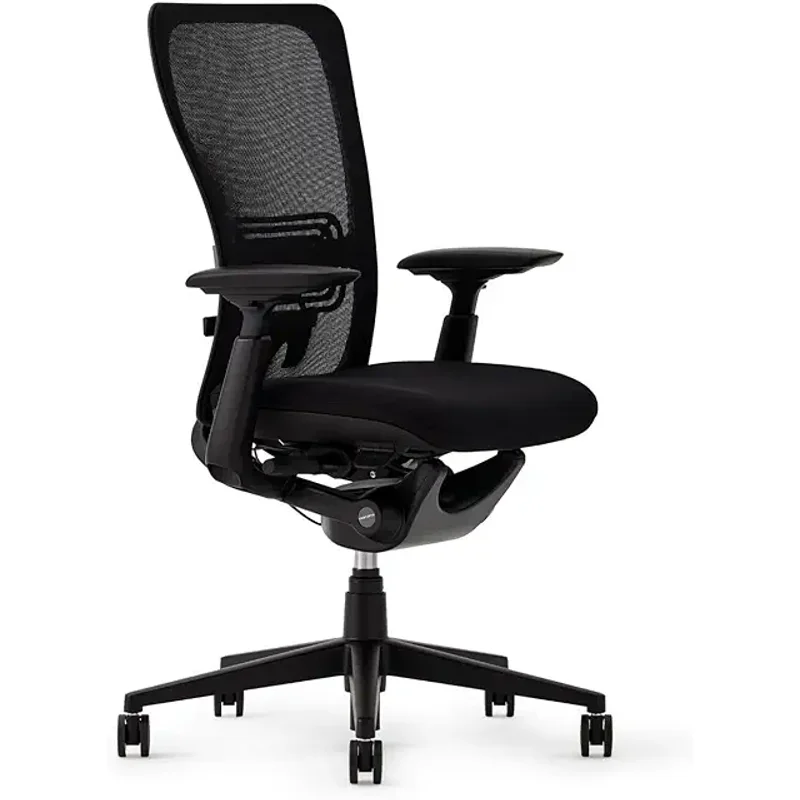
Haworth Zody
Pros
- ✓ Asymmetric lumbar matches real spine curvature
- ✓ Independent back angle adjustment
- ✓ Pelvic support system
- ✓ 12-year warranty
Cons
- ✗ Retail around $990
- ✗ Complex adjustment learning curve
- ✗ Availability varies by region
Rating: 4.4/5
The Zody’s asymmetric lumbar support system is its killer feature. Most chairs assume your spine is perfectly symmetrical — the Zody doesn’t. Two independent lumbar pads adjust separately for left and right sides, which matters if you’ve ever noticed one side of your lower back getting sore before the other.
Seven adjustment points give you granular control over seat depth, back angle, arm width, arm height, lumbar height, lumbar depth, and tilt tension. That’s a lot of dials to learn, and most people won’t touch half of them. But if you’re the type who tweaks settings until everything is exactly right, the Zody rewards the effort.
Retail sits around $990. Haworth’s own outlet runs periodic sales at 20–30% off, and authorized dealers occasionally stock the Zody under $600. It takes some hunting. For more targeted lumbar recommendations, see our complete guide to ergonomic chairs for lower back pain.
Who should buy this: Anyone with chronic lower-back asymmetry or who wants maximum adjustment control.
Who should skip this: People who prefer simple, intuitive chairs. If seven adjustment points sounds exhausting, look elsewhere.
5. IKEA Markus — $200
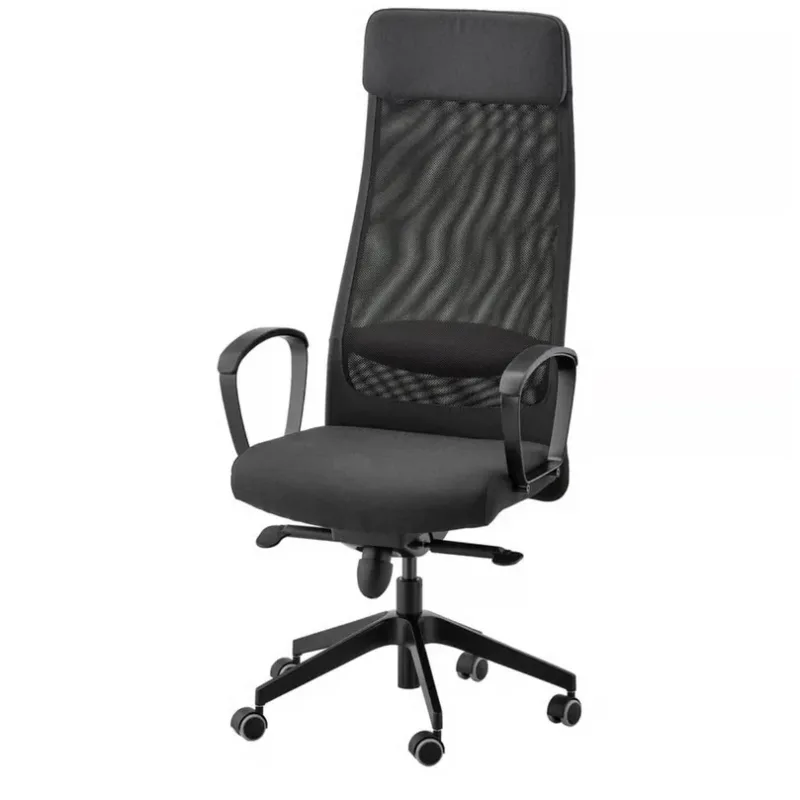
IKEA Markus
Pros
- ✓ Under $200 for legitimate ergonomic support
- ✓ 10-year warranty
- ✓ High back with integrated headrest
- ✓ Available in-store at every IKEA
Cons
- ✗ Fixed armrests
- ✗ Basic lumbar support
- ✗ 242-lb weight limit
Rating: 4.2/5 | Best Value
The Markus has no business being this good at $200. It’s been in IKEA’s lineup for over a decade, and the 2026 version still delivers the basics: a high mesh back, integrated headrest, 10-year warranty, and a seat that holds its shape after hundreds of hours.
The fixed armrests are the obvious compromise. You can’t adjust them in any direction, so if they don’t match your desk height, tough luck. Lumbar support is built into the backrest curve rather than being independently adjustable — it works for average builds but taller or shorter users may find it hits the wrong spot.
IKEA now offers a Large size variant with a wider seat and repositioned lumbar for users around 6’2”–6’4”. Worth checking if the standard size feels tight.
At this price, the Markus is the obvious recommendation for anyone building a home office on a budget. Pair it with a good anti-fatigue mat and a standing desk, and you’ve got a solid setup for under $1,000 total.
Who should buy this: Budget buyers who want something genuinely ergonomic, not just marketed as ergonomic. Students, first-apartment workers, anyone who’d rather spend money on their desk.
Who should skip this: Users over 250 lbs (the 242-lb limit is real), anyone who needs adjustable arms, or people with specific lumbar requirements.
6. Autonomous ErgoChair Core — $299
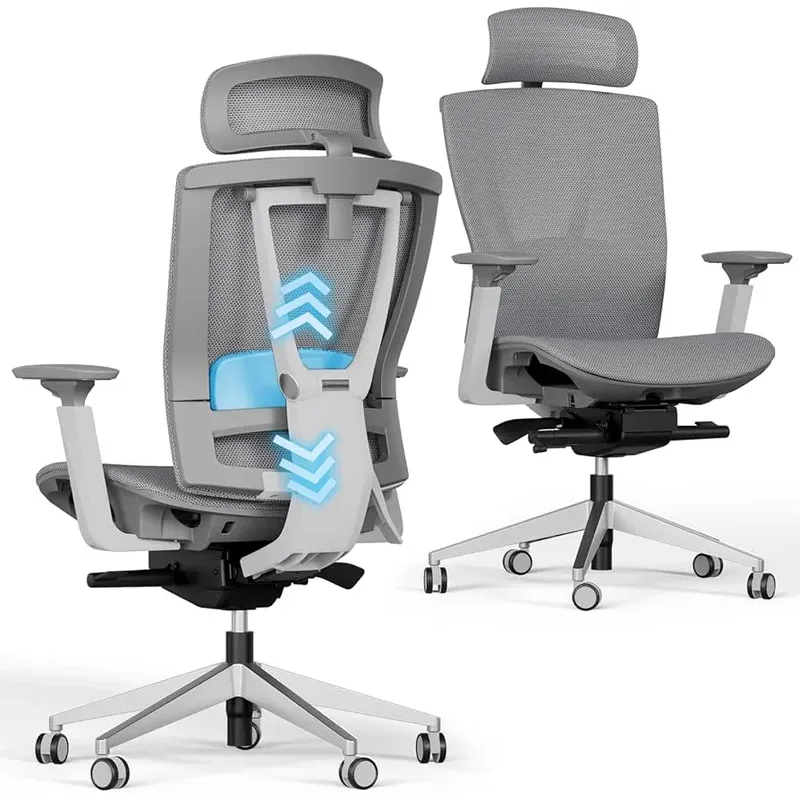
Autonomous ErgoChair Core
Pros
- ✓ Flip-up armrests save desk space
- ✓ Korean gas cylinder for smooth height adjustment
- ✓ Clean modern look
- ✓ Optional headrest add-on
Cons
- ✗ Only 250-lb capacity
- ✗ 2-year warranty is short
- ✗ Online-only purchase
Rating: 4.3/5
Autonomous cuts costs by selling direct and skipping retail markup, and the ErgoChair Core is the result: a $299 chair with flip-up armrests, adjustable lumbar, and a Korean-made gas cylinder that’s smoother than what you’ll find on most sub-$300 chairs.
The flip-up arms are genuinely useful if you work at a narrow desk or need to push the chair all the way in when you stand up. They lock firmly in the down position and flip up cleanly without wobble.
The trade-offs are real, though. A 250-lb weight capacity is the lowest on this list. The 2-year warranty is a fraction of what Steelcase, Herman Miller, and even IKEA offer. And Autonomous’s customer service has mixed reviews — returns and warranty claims can drag.
The optional headrest attachment adds $30–$50 and is worth it if you recline during calls.
Who should buy this: Tech-forward buyers comfortable ordering online-only. People with narrow desks who need flip-up arms.
Who should skip this: Anyone over 250 lbs, or who values long warranty coverage and easy customer service.
7. HON Ignition 2.0 — $399
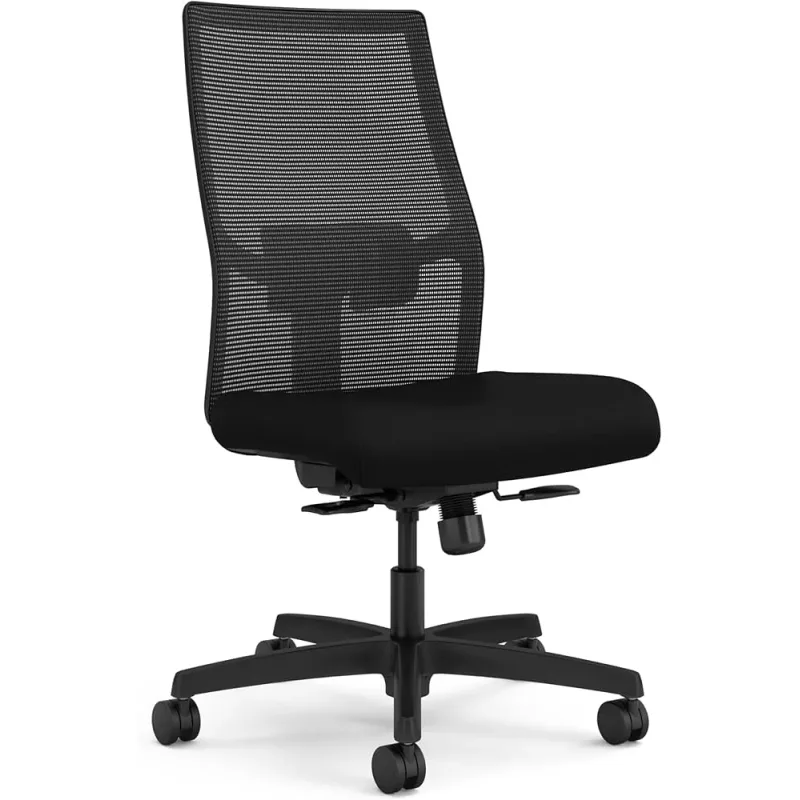
HON Ignition 2.0
Pros
- ✓ Back height adjustment is rare at this price
- ✓ 4-way lumbar support
- ✓ Built for commercial use
- ✓ Advanced synchro-tilt mechanism
Cons
- ✗ Seat padding runs thin
- ✗ Looks institutional
- ✗ 300-lb limit
Rating: 4.4/5 | Best for Offices
HON builds chairs for corporate procurement — the kind of chairs that end up in 500-person offices and need to survive years of abuse from different users every day. The Ignition 2.0 is the direct-to-consumer version of that durability.
The back height adjustment is the standout spec. Most chairs in this range have a fixed back panel — the Ignition 2.0 lets you slide the entire backrest up or down to match your torso length. Combined with the 4-way lumbar (height, depth, left-right, firmness), it accommodates a wider range of body types than anything else under $400.
The advanced synchro-tilt mechanism locks in multiple positions, and the 4-way stretch mesh breathes well during long sessions. The chair won’t win any design awards — it looks exactly like what it is, an office chair — but it works.
Who should buy this: Shared home offices where multiple people use the same chair. Anyone who prioritizes adjustability and durability over aesthetics.
Who should skip this: Buyers who want a chair that looks good in a modern home office. The institutional look is hard to dress up.
8. Steelcase Think — $1,100 Retail (Refurbished ~$400–$550)
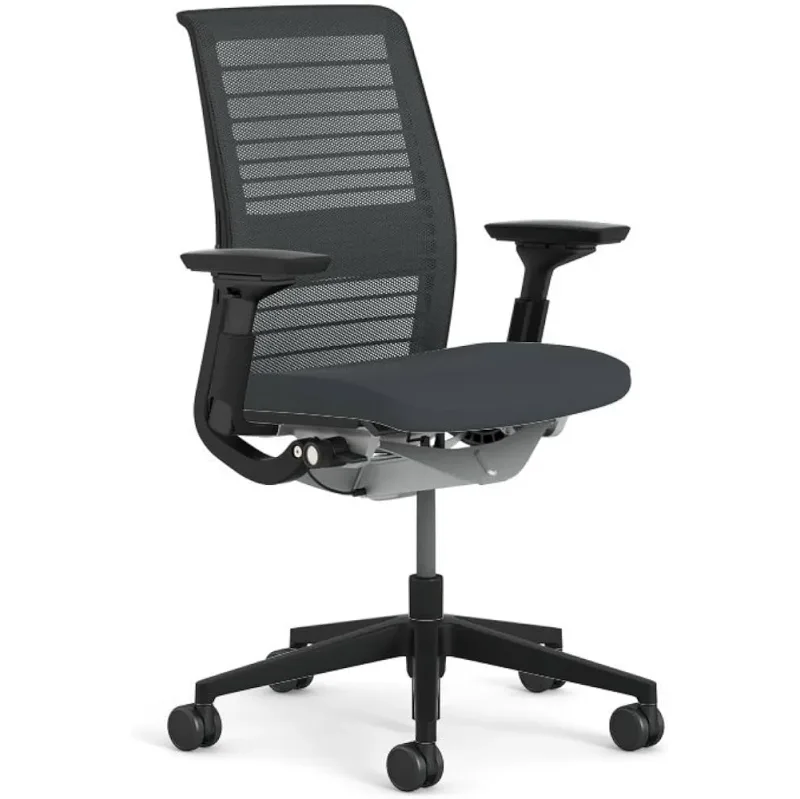
Steelcase Think
Pros
- ✓ Weight-activated tilt adjusts automatically
- ✓ Cradle to Cradle sustainability certification
- ✓ Flexible polymer back conforms to movement
- ✓ 12-year warranty
Cons
- ✗ Retail around $1,100
- ✗ Thin seat cushion
- ✗ Needs outlet or refurb pricing to fit budget
Rating: 4.8/5
The Think uses a weight-activated mechanism that automatically adjusts recline tension based on how much you weigh. Sit down, lean back, and the chair responds proportionally. It’s not as aggressive as the Freedom’s automatic approach — you still have a tension dial for fine-tuning — but it reduces the setup time compared to a fully manual chair.
The flexible polymer back conforms to lateral movement, so shifting side-to-side doesn’t create pressure points. Cradle to Cradle certification makes it the most sustainable option on this list if that matters to your purchasing decision.
At $1,100 retail, you’re looking at refurbished or outlet pricing to stay under $600. Crandall Office Furniture sells authorized factory returns in the $400–$550 range with full warranty coverage. Corporate liquidators are another solid source.
Who should buy this: Sustainability-minded buyers. Anyone who wants Steelcase quality and is willing to shop refurbished.
Who should skip this: People who want thick seat padding — the Think runs thin — or who need a chair available at retail right now.
Comparison Table
| Chair | Price | Weight Capacity | Warranty | Lumbar | Arms | Best For |
|---|---|---|---|---|---|---|
| Steelcase Series 1 | $507 | 400 lbs | 12 yr | Adjustable | 4-way | Overall pick |
| Herman Miller Sayl | $695+ / ~$450 refurb | 350 lbs | 12 yr | Built-in | Height-adjustable | Hot offices |
| Humanscale Freedom | ~$1,700 / ~$600 refurb | 300 lbs | 15 yr | Auto | Fixed | Set-and-forget |
| Haworth Zody | ~$990 / ~$550 outlet | 325 lbs | 12 yr | Asymmetric | 4-way | Back issues |
| IKEA Markus | $200 | 242 lbs | 10 yr | Built-in | Fixed | Budget pick |
| ErgoChair Core | $299 | 250 lbs | 2 yr | Adjustable | Flip-up | Small desks |
| HON Ignition 2.0 | $399 | 300 lbs | 7 yr | 4-way | Height/width | Shared offices |
| Steelcase Think | $1,100 / ~$475 refurb | 400 lbs | 12 yr | Integrated | 4-way | Eco-conscious |
Buying Guide: What Actually Matters in a Budget Ergonomic Chair
Lumbar Support
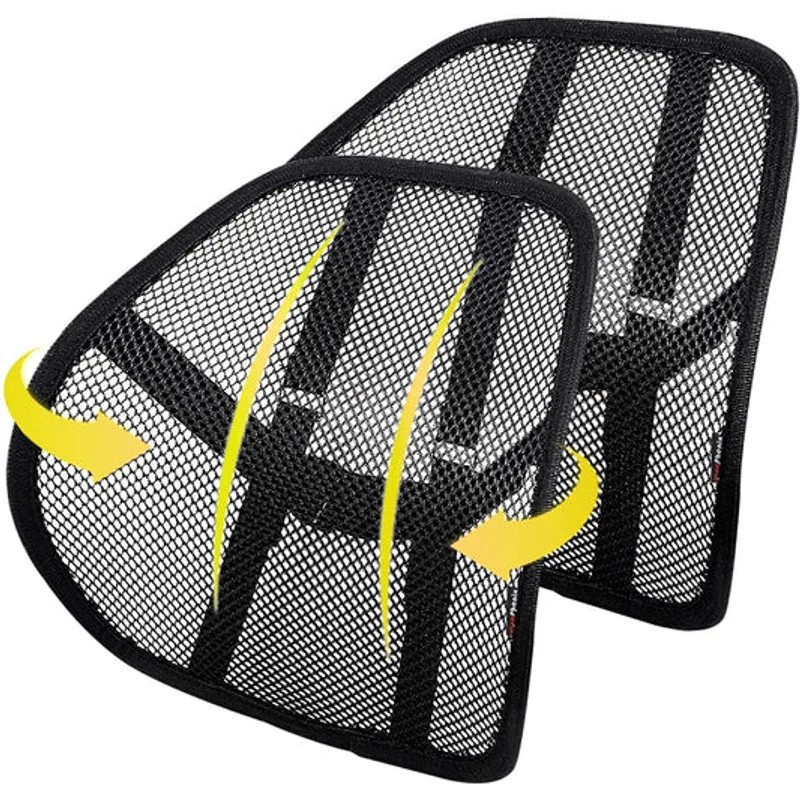
This is the one feature you can’t compromise on. A chair without adjustable lumbar support forces your lower back into whatever curve the designer picked — and if it doesn’t match yours, you’ll feel it after two hours. The HON Ignition 2.0 and Haworth Zody have the best lumbar systems on this list. The IKEA Markus and Herman Miller Sayl rely on built-in curves that work for most people but not everyone.
Weight Capacity
Manufacturer ratings aren’t just about whether the chair breaks — they affect how the mechanism performs. A 250-lb person in a chair rated for 250 lbs will max out the tilt tension and compress the seat foam faster. Buy a chair rated for at least 50 lbs above your body weight if possible.
Warranty Length
This is where budget chairs reveal their true cost. A $299 chair with a 2-year warranty costs you $150/year. A $507 chair with a 12-year warranty costs $42/year. The Steelcase and Herman Miller options are genuinely cheaper over time if you keep them, and they hold resale value if you don’t.
Armrest Adjustability
Fixed arms are fine if they happen to match your desk height. Adjustable arms matter if you switch between tasks (typing, drawing, gaming) or if multiple people share the chair. Flip-up arms on the ErgoChair Core are the best space-saving solution.
Where to Find Deals on Premium Chairs
The four higher-priced chairs on this list — Sayl, Freedom, Zody, Think — regularly show up under $600 if you know where to look:
- Authorized refurbished dealers: Crandall Office, Madison Seating, and BTOD sell factory returns with full warranties
- Corporate liquidators: Companies upgrading their office furniture sell bulk chairs at 50–70% off
- Manufacturer outlets: Haworth and Steelcase run periodic outlet sales
- Seasonal sales: Presidents’ Day, Black Friday, and back-to-school periods see the deepest discounts on Herman Miller
FAQ
Is a $200 ergonomic chair actually ergonomic?
The IKEA Markus proves that yes, basic ergonomic support exists at $200. You get a high back, integrated headrest, and a lumbar curve that works for average builds. What you lose at this price is adjustability — fixed arms, non-adjustable lumbar, limited tilt options. For 8+ hour workdays with specific back issues, spending $400–$500 gets you meaningfully better support.
Should I buy a refurbished ergonomic chair?
Absolutely, if the seller is authorized by the manufacturer. Chairs from Crandall Office or Madison Seating come with the original 12-year warranty intact. You’re getting a $1,000+ chair for $400–$500 with the same coverage as new. Avoid unverified eBay sellers — the warranty won’t transfer and you can’t inspect the gas cylinder condition.
How long do budget ergonomic chairs last?
Warranty length is a decent proxy. IKEA rates the Markus for 10 years. Steelcase and Herman Miller stand behind 12 years. HON covers 7 years. The Autonomous ErgoChair Core’s 2-year warranty is a yellow flag — expect the foam and gas cylinder to degrade faster than premium options. Real-world, a well-maintained $500 chair should last 7–10 years.
Do I need a headrest on my office chair?
Not for most desk work. Headrests help during video calls when you’re leaning back, and they prevent neck strain if you recline to read. For typing and focused work, a headrest is irrelevant — you should be sitting with your head over your shoulders, not resting it back. The Markus and Freedom include headrests; the Sayl and Ignition don’t offer them.
What’s the difference between synchro-tilt and basic tilt?
Synchro-tilt moves the seat and back together at a fixed ratio (usually 2:1), keeping your feet on the floor as you recline. Basic tilt pivots the entire seat backward, which lifts your feet and puts pressure behind your knees. Every chair on this list uses synchro-tilt or better — it’s table stakes for anything calling itself ergonomic.
Can I use an ergonomic office chair for gaming?
You can, and many people should. Ergonomic office chairs generally offer better lumbar support and longer-lasting build quality than gaming chairs at the same price. The Steelcase Series 1 and HON Ignition 2.0 both handle 3–4 hour gaming sessions well. If you want gaming-specific features like a reclining backrest and built-in speakers, check our gaming chairs guide. Looking for a dedicated gaming chair with real ergonomics? See our best gaming chairs under $500 roundup.
The Bottom Line
For most people, the Steelcase Series 1 at $507 is the pick. You get LiveBack technology, a 400-lb capacity, 4-way adjustable arms, and a 12-year warranty — all at retail price, no deal-hunting required. It’s not the cheapest chair here, but over 12 years of daily use, nothing on this list costs less per year of ownership.
If $507 is too steep right now, the IKEA Markus at $200 is the budget king. Fixed arms and basic lumbar are real compromises, but the 10-year warranty and high-back design deliver legitimate comfort that most sub-$200 chairs can’t match.
For shared offices where multiple body types use the same chair, the HON Ignition 2.0 at $399 has the most versatile adjustment range.
And if you’re patient enough to shop refurbished, a Steelcase Think or Herman Miller Sayl in the $400–$500 range is the best dollar-for-dollar value on this entire list. Same engineering, same warranty, half the price.
Your back doesn’t care about brand names. It cares about lumbar support, seat height, and whether you’ll actually sit in the thing for 8 hours without slouching. Pick the chair that fits your body, your budget, and your willingness to shop around.