Disclosure: PostureRanked is reader-supported. When you buy through links on our site, we may earn an affiliate commission at no additional cost to you. Our recommendations are based on independent research and testing.
| Product | Price | Rating |
|---|---|---|
| Ergodriven Topo Comfort Mat | $119 | 9.3 |
| ComfiLife Anti-Fatigue Floor Mat | $49 | 8.8 |
| Imprint CumulusPRO Commercial Mat | $59 | 8.6 |
| FEATOL Extra Thick Anti-Fatigue Mat | $30 | 8.3 |
| Sky Solutions Anti-Fatigue Mat | $35 | 8.1 |
| FEZIBO Standing Desk Balance Board | $50 | 8.0 |
| Amazon Basics Anti-Fatigue Standing Mat | $22 | 7.5 |
Disclosure: PostureRanked is reader-supported. When you buy through links on our site, we may earn an affiliate commission at no extra cost to you. Learn more
Standing at your desk is great for your back. Standing on hard floors for six hours? That’s a different story. Your feet ache, your knees stiffen, and by 3 PM you’re slumped back in your chair wondering why you spent $600 on a standing desk. The fix is simple: a good anti-fatigue mat absorbs the shock, cushions your joints, and can easily double the time you spend standing each day.
But “anti-fatigue mat” covers everything from a $20 foam rectangle to a $120 terrain mat with calculated ridges. Thickness, material density, and surface design all matter — and the wrong choice either bottoms out in weeks or feels like standing on a mattress. We tested seven mats across price points, materials, and styles to find the ones worth your money.
Short on time? The Ergodriven Topo is the best standing desk mat, period — its terrain design keeps you moving and it’s backed by a 7-year warranty. On a budget? The ComfiLife at $49 delivers premium memory foam comfort without the premium price.
1. Ergodriven Topo Comfort Mat — Editor’s Pick
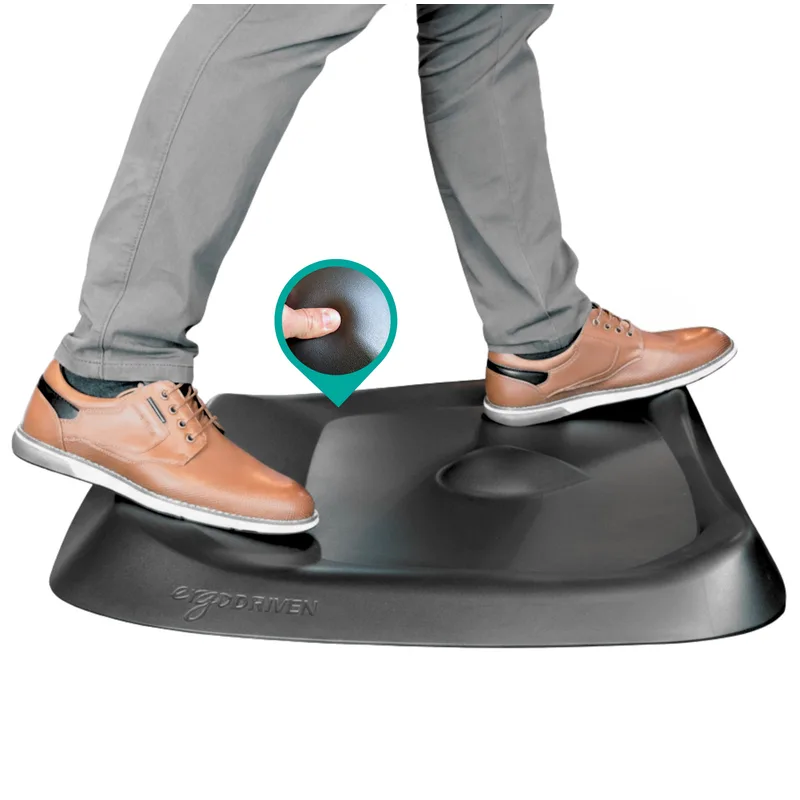
Ergodriven Topo Comfort Mat
Pros
- ✓ Terrain design forces you to shift and stretch
- ✓ Incredibly durable — 7-year warranty backs it up
- ✓ Waterproof and easy to reposition with one foot
- ✓ NYT top pick for 10 consecutive years
Cons
- ✗ Most expensive flat mat on this list
- ✗ Terrain takes a few days to feel natural
- ✗ Only one size (no compact option for tight spaces)
$119 | Buy on Amazon
The Topo isn’t just a mat — it’s a standing surface designed to keep you moving. Instead of a flat cushion, you get calculated terrain: raised edges for calf stretches, a center mound for arch massage, and side wedges that encourage you to shift your weight throughout the day. It sounds gimmicky until you use it. After a week, standing on a flat mat feels static and lifeless by comparison.
The material is 100% polyurethane foam — no PVC, no phthalates, no PFAs. At 2.7 inches at its tallest point (0.85 inches in the neutral standing area), it’s thick enough to cushion without feeling unstable. The surface has a pebbled texture that’s comfortable barefoot or in socks, and the whole thing is waterproof. Spill your coffee? Wipe it off.
Ergodriven backs the Topo with a 7-year warranty, which is the longest in the standing mat category by a wide margin. The New York Times has named it their top standing desk mat pick for ten consecutive years, and over 650,000 have been sold. At $119, it’s the priciest mat here — but the combination of movement-encouraging design, durability, and that warranty makes it the clear winner.
Best for: Anyone who stands 3+ hours daily and wants a mat that actively improves their standing posture.
2. ComfiLife Anti-Fatigue Floor Mat — Best Value
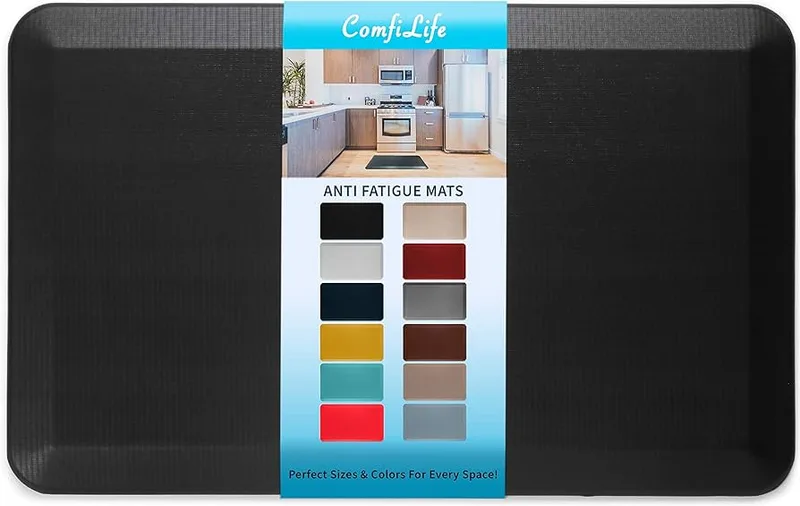
ComfiLife Anti-Fatigue Floor Mat
Pros
- ✓ Excellent cushioning at a fair price
- ✓ 13 color options to match any setup
- ✓ Stain-resistant and easy to wipe clean
- ✓ Available in three sizes including a runner
Cons
- ✗ Standard 20x32 size is a bit narrow for some
- ✗ No terrain features — purely flat cushioning
$49 | Buy on Amazon
The ComfiLife hits the sweet spot between price and quality that most people are looking for. The core is 3/4-inch high-density memory foam that compresses under your weight but springs back when you step off — even after months of daily use. It’s noticeably softer than budget foam mats, with more of that slow-recovery feel you get from a good mattress topper.
The surface coating is anti-microbial and non-PVC, with a slightly textured finish that resists stains and wipes clean in seconds. The non-slip bottom actually works — no creeping across hardwood floors. And ComfiLife offers 13 colors, which matters more than you’d think when you’re staring at a black rectangle under your desk every day.
Available in three sizes (20x32, 20x39, and a 24x70 runner), the ComfiLife scales to your workspace. The standard 20x32 is fine for most standing desks, but if you tend to shift side to side, spring for the 39-inch version. A lifetime replacement guarantee seals the deal.
Best for: Most people — this is the mat I’d recommend first if someone asked “which mat should I get?“
3. Imprint CumulusPRO Commercial Mat — Best for Long Hours
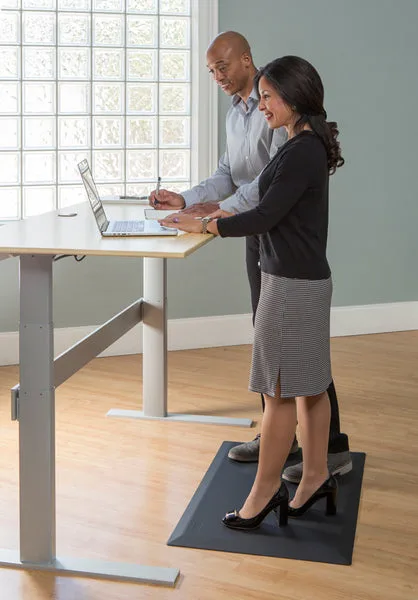
Imprint CumulusPRO Commercial Mat
Pros
- ✓ Commercial-grade density holds up for years
- ✓ OSHA-selected, ACA-endorsed
- ✓ Larger 24x36 footprint covers more floor
- ✓ 10-year warranty is best-in-class for flat mats
Cons
- ✗ Plain appearance — no color options
- ✗ Heavier and harder to reposition than foam mats
$59 | Buy on Amazon
If you’re standing 6-8 hours a day in a home office or commercial environment, the CumulusPRO is built for that. The “Cushion-Core” polyurethane construction is denser than memory foam — it doesn’t compress as much initially, but it holds its shape far longer under heavy use. This is the mat OSHA selected for their own offices, and it’s endorsed by the American Chiropractic Association.
The 24x36-inch footprint is the largest flat mat on this list, giving you room to shift without stepping off the edge. Beveled edges lie flat against the floor, and the non-slip bottom stays put on tile, hardwood, or low-pile carpet.
The CumulusPRO’s 10-year warranty is the longest among flat mats here (only the Topo’s 7-year comes close, and that’s a terrain mat). The tradeoff is aesthetics — it comes in black only, and the design is purely functional. If you want a mat that works harder than it looks, this is it.
Best for: Full-time standers, home offices, commercial spaces, anyone who prioritizes durability over design.
4. FEATOL Extra Thick Anti-Fatigue Mat
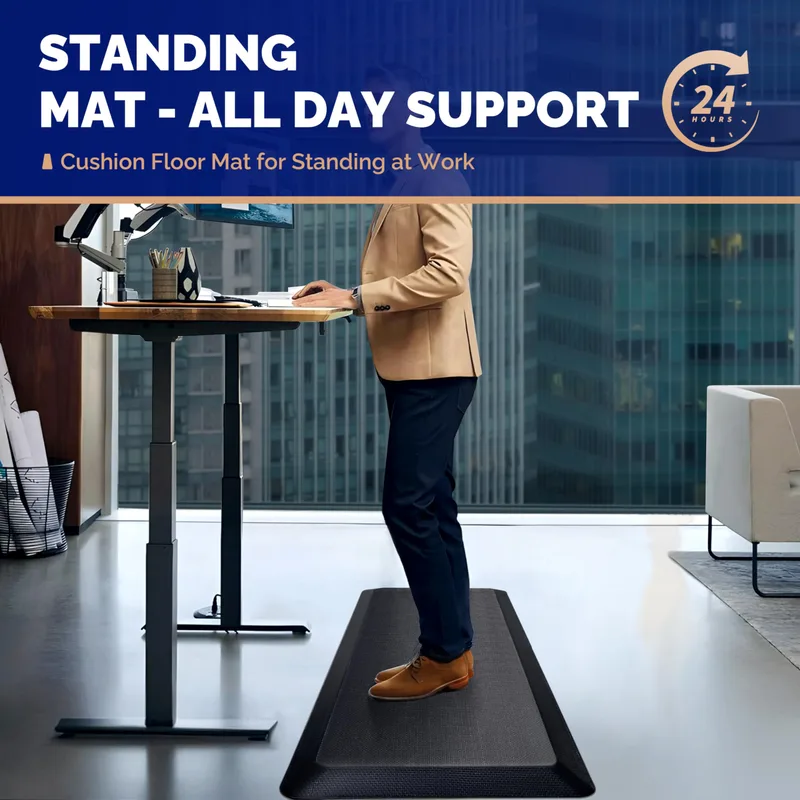
FEATOL Extra Thick Anti-Fatigue Mat
Pros
- ✓ Thickest flat mat on this list at 0.9 inches
- ✓ PU leather top resists stains and punctures
- ✓ Solid budget price for the thickness
- ✓ Beveled edges prevent tripping
Cons
- ✗ Beveled edges reduce usable standing area to ~14x26 inches
- ✗ Only available in black
- ✗ Firmer than memory foam — less plush feel
$30 | Buy on Amazon
At 0.9 inches thick, the FEATOL is the thickest flat mat on this list — 20% thicker than the standard 3/4-inch mats from ComfiLife and Sky Solutions. That extra thickness translates to noticeable cushioning, especially if you’re standing on concrete or tile.
The PU foam core sits under a PU leather surface that’s smooth, easy to clean, and resistant to tears and punctures. It won’t absorb coffee spills or show shoe scuffs the way exposed foam mats do. The beveled edges prevent tripping but do eat into the usable standing area — the actual flat surface is closer to 14x26 inches, which is tighter than the 20x32 dimensions suggest.
At $30, the FEATOL is a solid pick for anyone who wants maximum thickness without spending $50+. Just be aware that it’s firmer than memory foam — more supportive, less plush. If you prefer a sinking-in feel, the ComfiLife is a better match.
Best for: Budget buyers who want the thickest possible cushion, especially on hard concrete or tile floors.
5. Sky Solutions Anti-Fatigue Mat — Best Budget
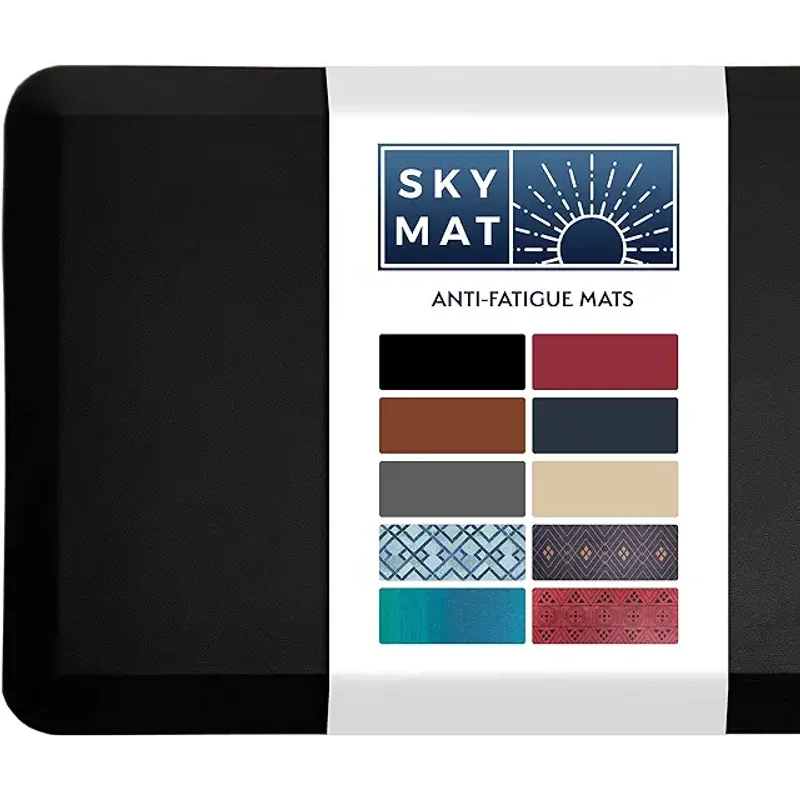
Sky Solutions Anti-Fatigue Mat
Pros
- ✓ Longest mat in this price range at 39 inches
- ✓ Good balance of softness and support
- ✓ Easy to clean — waterproof top
- ✓ Multiple size and color options
Cons
- ✗ Foam can compress over time with daily use
- ✗ Edges may curl slightly after months of use
$35 | Buy on Amazon
The Sky Mat is one of the best-selling standing desk mats on Amazon, and for good reason. At 20x39 inches, it’s the longest mat in this price range — five inches longer than most competitors at the same price. That extra length gives you room to shift your stance without stepping off the edge.
The foam core strikes a good balance between soft and supportive. It’s not as dense as the CumulusPRO or as plush as the ComfiLife, but it holds up well for the first 6-12 months of daily use. The waterproof top surface wipes clean easily, and the non-slip bottom keeps it anchored to hard floors.
Where the Sky Mat falls short is longevity. After a year of heavy use, the foam does compress noticeably, and the edges can start to curl slightly. At $35, though, you could replace it annually and still spend less than a single Topo over three years.
Best for: Budget-conscious buyers who want a large standing surface without spending more than $40.
6. FEZIBO Standing Desk Balance Board — Best for Active Standing
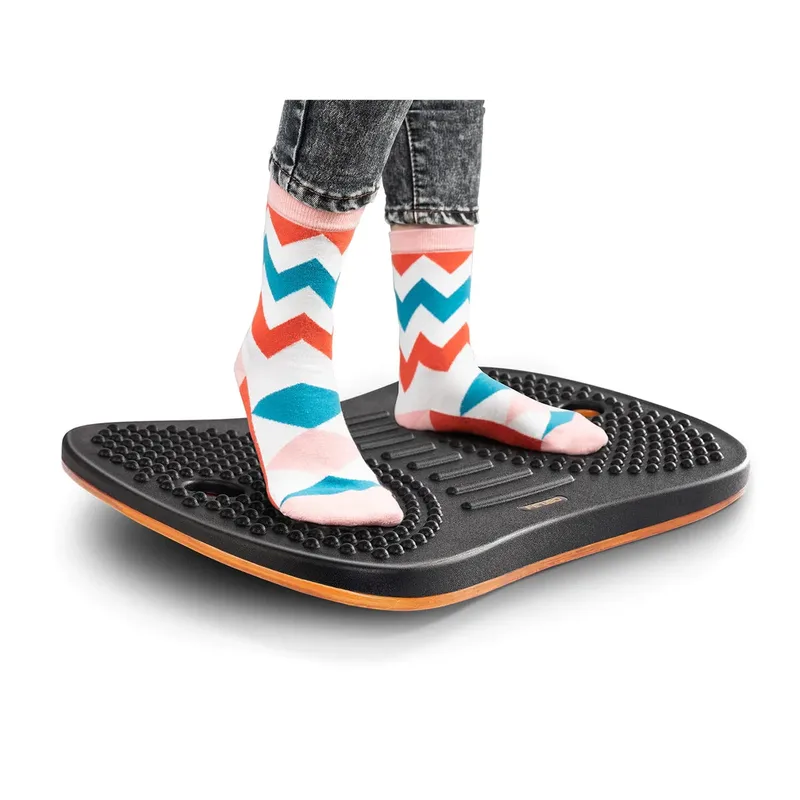
FEZIBO Standing Desk Balance Board
Pros
- ✓ Balance board forces constant micro-movements
- ✓ More engaging than a flat mat for active standers
- ✓ Compact footprint — easy to stow under desk
- ✓ Sturdy 320 lb capacity
Cons
- ✗ Small surface area — not for wide stances
- ✗ Not a cushioning mat — different kind of fatigue relief
- ✗ Can slide on carpet
$50 | Buy on Amazon
This isn’t a mat — it’s a balance board, and it takes a completely different approach to standing desk fatigue. Instead of cushioning your feet, the FEZIBO forces constant micro-adjustments as you balance on its curved base. The 8.5-degree tilt range means you can rock side to side or front to back, engaging your core and legs in ways a flat mat never will.
The top surface is high-density latex that’s firm but comfortable, with a raised “bulge bar” down the center that provides targeted pressure to the soles of your feet. The 320 lb weight capacity handles virtually any user, and the compact 20x14-inch footprint slides easily under your desk when you sit down.
The catch: the standing area is small, so if you have large feet or prefer a wide stance, you’ll feel cramped. It also works better on hard floors — carpet can cause sliding. Think of it as a complement to a regular mat rather than a replacement. Use the balance board for active 30-minute intervals, then step onto your mat for longer static standing.
Best for: Fidgeters, active standers, and anyone who gets bored on a flat mat.
7. Amazon Basics Anti-Fatigue Standing Mat
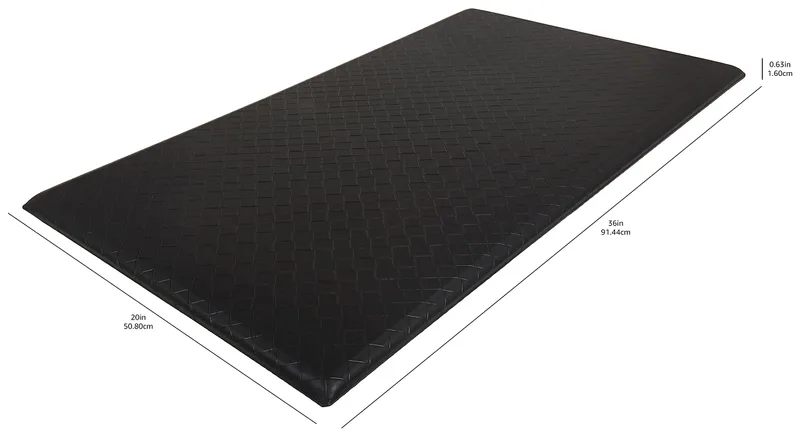
Amazon Basics Anti-Fatigue Standing Mat
Pros
- ✓ Cheapest decent mat you can buy
- ✓ Good size at 36 inches wide
- ✓ Non-curling edges stay flat
- ✓ Prime shipping and easy returns
Cons
- ✗ Thinnest mat on this list at 0.6 inches
- ✗ Foam compresses noticeably within 6-12 months
- ✗ No warranty beyond Amazon's standard return policy
$22 | Buy on Amazon
If you just want something between your feet and the floor and you don’t want to think about it, the Amazon Basics mat does the job. At $22, it’s the cheapest mat worth buying. The textured foam provides basic cushioning, the non-curling edges stay flat, and the 20x36-inch size is generous for the price.
The 0.6-inch thickness is the thinnest here, and you’ll feel it on harder floors — there’s noticeably less cushion than the FEATOL or ComfiLife. The foam also compresses faster than pricier options. Expect noticeable wear within 6-12 months of daily use. There’s no extended warranty — just Amazon’s standard return window.
But here’s the thing: at $22, even if you replace it yearly, you’re spending less than a single premium mat. If you’re testing whether you’ll actually use a standing desk mat before committing to a nicer one, this is where to start.
Best for: First-time standing desk users, budget setups, or anyone who wants to try a mat before investing more.
Comparison Table
| Mat | Price | Size | Thickness | Material | Warranty | Rating |
|---|---|---|---|---|---|---|
| Ergodriven Topo | $119 | 26” x 29” | 2.7” (terrain) | Polyurethane | 7 years | 9.3 |
| ComfiLife | $49 | 20” x 32” | 0.75” | Memory foam | Lifetime | 8.8 |
| CumulusPRO | $59 | 24” x 36” | 0.75” | Cushion-Core PU | 10 years | 8.6 |
| FEATOL | $30 | 20” x 32” | 0.9” | PU foam | 1 year | 8.3 |
| Sky Solutions | $35 | 20” x 39” | 0.75” | Comfort foam | 1 year | 8.1 |
| FEZIBO Board | $50 | 20” x 14” | 2.2” | Latex + wood | 1 year | 8.0 |
| Amazon Basics | $22 | 20” x 36” | 0.6” | Foam | 30 days | 7.5 |
Buying Guide: What to Look for in a Standing Desk Mat
Thickness
Thickness ranges from 0.6 inches (Amazon Basics) to 0.9 inches (FEATOL) for flat mats. Thicker isn’t always better — a super-thick, soft mat can actually cause instability and fatigue. The sweet spot for most people is 0.75 inches of medium-density foam. If you’re on concrete, go thicker. If you’re on carpet, you may not need a mat at all.
Material
Memory foam (ComfiLife) compresses slowly and conforms to your feet — comfortable but can retain heat. Polyurethane (Topo, CumulusPRO) is more resilient and durable, springing back faster. PU foam with leather coating (FEATOL) is easy to clean but less breathable. Avoid cheap PVC mats — they off-gas, compress quickly, and crack.
Size
Measure your standing area before buying. Most mats are 20 inches deep, which is fine. Width matters more: 32 inches is the minimum for comfortable standing, 36-39 inches gives you room to shift. The CumulusPRO at 24x36 and Sky Solutions at 20x39 are the largest flat options here.
Terrain vs. Flat
Flat mats cushion. Terrain mats (like the Topo) cushion and encourage movement — raised edges for calf stretches, mounds for arch stimulation. Research shows that movement while standing reduces fatigue more than cushioning alone. If you can afford it, terrain is worth it.
Budget Expectations
- Under $30: Basic foam cushioning. Expect 6-12 month lifespan. (FEATOL, Amazon Basics)
- $30-60: Good memory foam or commercial-grade PU. 1-3 year lifespan. (ComfiLife, Sky Solutions, CumulusPRO)
- $50-120: Terrain design or active standing boards. 3-7+ year lifespan. (Topo, FEZIBO)
Frequently Asked Questions
How thick should a standing desk mat be?
For most people, 3/4 inch (0.75”) of medium-density foam is the sweet spot. Thicker mats (0.9”+) provide more cushioning on hard surfaces like concrete, but too-soft mats can cause instability and actually increase fatigue. The material matters more than raw thickness — a 0.75-inch polyurethane mat outlasts a 1-inch cheap foam mat every time.
Are standing desk mats worth it?
Yes. Studies show that anti-fatigue mats reduce lower-body discomfort by 50% or more during prolonged standing. Without a mat, most people abandon their standing desk within weeks because the foot and knee pain isn’t worth it. A $30-50 mat can make the difference between using your standing desk daily and letting it collect dust.
How long do anti-fatigue mats last?
Budget mats ($20-35) typically compress noticeably within 6-12 months. Mid-range mats ($40-60) hold up for 1-3 years. Premium mats like the Topo ($99) come with a 7-year warranty and can last much longer. The CumulusPRO’s 10-year warranty is the longest for flat mats.
Can I use a standing desk mat on carpet?
You can, but you may not need one — carpet already provides some cushioning. If your carpet is thin or commercial-grade, a mat helps. On thick carpet, a mat can feel unstable and shift around. Balance boards (like the FEZIBO) work poorly on carpet since they need a firm surface to tilt properly.
Should I get a flat mat or a terrain mat?
If you stand for short periods (under 2 hours), a flat mat is fine. If you stand for long stretches, a terrain mat like the Topo encourages natural movement that reduces fatigue more than static cushioning. The terrain edges and mounds give your feet something to work against — stretching calves, rolling arches — which keeps blood flowing.
What’s the difference between a standing desk mat and a kitchen mat?
Standing desk mats are designed for prolonged use (4-8 hours). Kitchen mats are designed for intermittent use (30-60 minutes at a time). The practical difference is density: standing desk mats use denser foam that holds up under sustained pressure. A kitchen mat will bottom out much faster with all-day standing.
The Bottom Line
Here’s who should buy what:
Buy the Ergodriven Topo if you stand 3+ hours a day and want the best mat that exists. The terrain design is the real deal — it changes how you stand, not just how your feet feel. The 7-year warranty makes the $119 price tag easy to justify. This is the one mat I’d recommend without hesitation to anyone who takes standing seriously.
Buy the ComfiLife if you want excellent everyday comfort without spending Topo money. Forty-nine dollars, lifetime guarantee, 13 colors. It’s the right choice for most people who just got a standing desk and want to make standing comfortable without overthinking it.
Buy the CumulusPRO if you’re on your feet 6-8 hours a day and need commercial-grade durability. It’s the least glamorous mat on this list and also one of the most reliable. The 10-year warranty is unmatched for flat mats.
Buy the FEZIBO Balance Board if you get restless standing still. Pair it with a flat mat — use the board for active intervals, the mat when you need to stand comfortably for longer stretches.
Start with the Amazon Basics if you’re skeptical about anti-fatigue mats entirely. Twenty-two dollars is a low-risk way to test whether you’ll actually use one. When it wears out in 6-12 months, upgrade to the ComfiLife.
Don’t overthink this. Even the cheapest mat on this list beats standing on bare concrete. Buy something, try standing more, and upgrade once you know your habits. A mat is one piece of the standing desk puzzle — pair it with a footrest to give yourself active position changes throughout the day. For more standing desk accessories, see our best desk accessories for remote work guide, and our ergonomic workstation setup guide for positioning fundamentals that make the mat matter.