Spending over $1,000 on a chair is not a luxury impulse purchase — it is a calculated decision about where you spend 2,000+ hours per year. In 2026, the premium ergonomic chair market is more competitive than ever: Steelcase, Herman Miller, Humanscale, and Haworth have all maintained or refined their flagships, and the price-to-feature ratio on chairs like the Steelcase Gesture (still the strongest pick for high-capacity users) and the Herman Miller Aeron (the gold standard for mesh lumbar support) remains compelling. If you are on the fence about whether premium is worth it, start with Are Expensive Office Chairs Worth It? — then come back here for the rankings.
In a hurry? The Herman Miller Aeron (Size B) is the pick for most people. The 8Z Pellicle mesh, PostureFit SL dual lumbar support, and 30+ years of refinement make it the most complete all-day chair available. If you need 400 lb capacity or want arms that can follow tablet and phone use, step up to the Steelcase Gesture.
Quick Comparison: Best Luxury Ergonomic Chairs Over $1,000
| Chair | Price | Weight Cap | Warranty | Best For |
|---|---|---|---|---|
| Herman Miller Aeron (B) | $1649.99 as of Oct 18, 2026 | 300 lbs | 12 years | All-day mesh comfort |
| Steelcase Gesture | $699.00-$1510.48 as of Oct 18, 2026 | 400 lbs | 12 years | All body types, multi-device |
| Steelcase Leap V2 | $615.00-$1499.00 as of Oct 18, 2026 | 400 lbs | 12 years | Best value at this tier |
| Herman Miller Embody | $1249.00-$1919.00 as of Oct 18, 2026 | 300 lbs | 12 years | Chronic back pain |
| Humanscale Freedom | $2018.00 as of Oct 18, 2026 | 300 lbs | 15 years | Recliners and neck support |
| Haworth Fern (Executive) | Unavailable | 300 lbs | 12 years | Active sitting |
1. Herman Miller Aeron (Size B) — Editor’s Pick
Herman Miller Aeron (Size B)
Pros
- ✓ PostureFit SL independently supports both the lumbar and sacral spine — the most complete passive support system available
- ✓ 8Z Pellicle mesh evenly distributes pressure across the seat and back with no foam breakdown over time
- ✓ Four-way adjustable arms (height, width, depth, pivot) with narrow enough profile to tuck under most desks
- ✓ Forward tilt option engages active sitting posture — useful for long focused work sessions
Cons
- ✗ Must choose correctly between sizes A, B, and C before ordering — there is no one-size fits all
- ✗ No integrated headrest option from Herman Miller
- ✗ Firm seat pan takes a week or two to break in before it feels truly comfortable
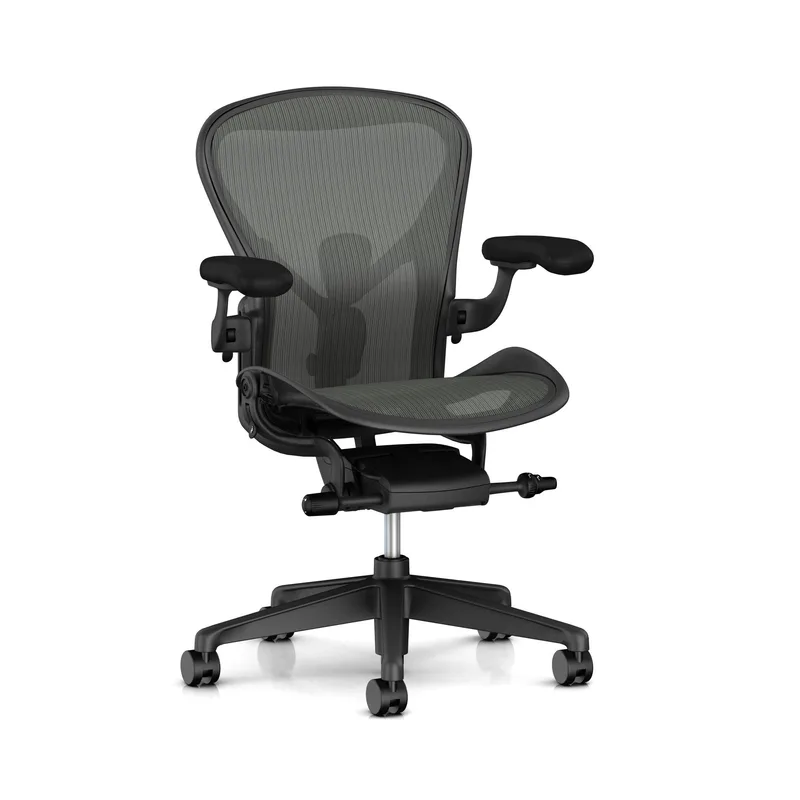
The Aeron is the most referenced ergonomic chair in occupational health research and the most imitated in the industry. That is not accident. The PostureFit SL system independently cradles the lumbar spine AND the sacral base — most chairs only address lumbar. The 8Z Pellicle mesh divides the seat into eight tension zones so pressure distributes evenly rather than concentrating under the sit bones or thighs.
The chair comes in three sizes (A, B, C). Size B fits the widest range of users — roughly 5’3” to 5’11”. Size C handles 5’11” to 6’4” with heavier builds. If you are unsure, Herman Miller’s sizing tool walks you through it in 60 seconds. Getting the size wrong is the one real pitfall here.
The Aeron is also remarkably adjustable: forward tilt (for active leaning work), recline limiter with five positions, four-way arms that fit tight under desk edges. It takes about a week to break in — the firm mesh can feel harsh the first few days before it molds to your shape.
Best for: Anyone who works 8+ hour days at a desk and wants the best passive lumbar support available. Also the pick if breathability and heat dissipation matter — the full-mesh back and seat stay cooler than any fabric alternative.
Read our full Herman Miller Aeron review | Buy on Amazon
2. Steelcase Gesture — Best for All Body Types
Steelcase Gesture
Pros
- ✓ 360-degree pivot arms handle every device position — laptop on lap, tablet at angle, phone in hand
- ✓ 400 lb weight capacity makes it the strongest luxury chair in this roundup
- ✓ 3D LiveBack flexes to follow your spine through movement rather than holding you rigid
- ✓ Seat height and depth slot suits users from 5'2" to 6'4" without modifications
Cons
- ✗ Heavy at 53 lbs — awkward to reposition or move between rooms
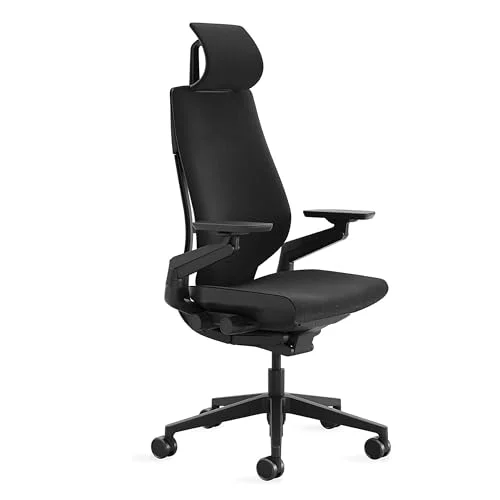
- ✗ No headrest in the base configuration
- ✗ Fabric back retains heat more than a full-mesh chair like the Aeron
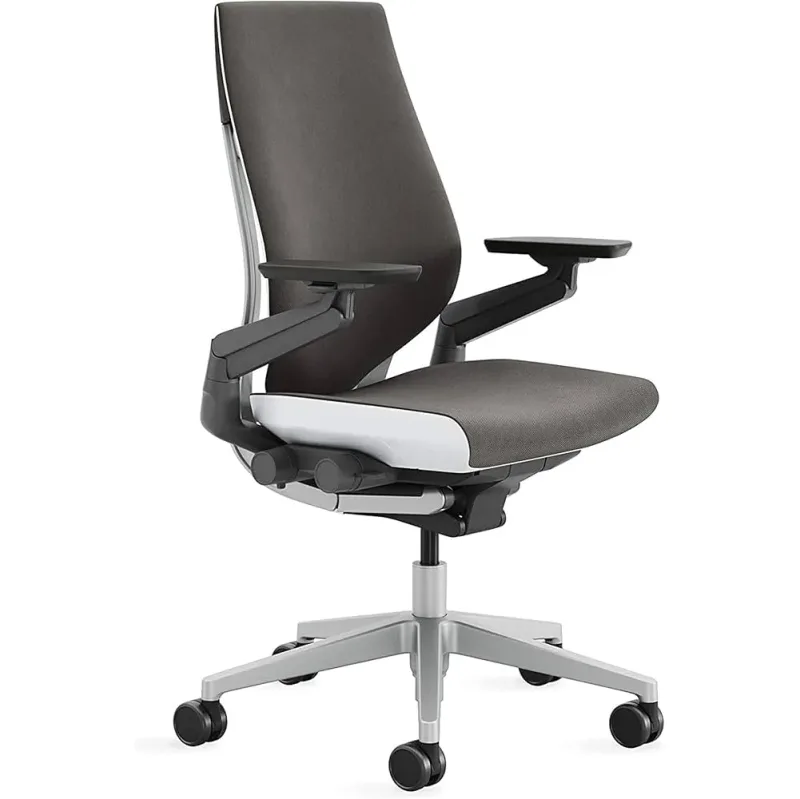
The Gesture was designed around how people actually sit in 2026: hunched over a laptop, tilted toward a second screen, cradling a phone, typing on a tablet in their lap. The 360-degree pivot arms follow every hand position without requiring the user to adjust them constantly. That alone makes this the best chair for multi-device workers.
The 3D LiveBack system is different from the Leap V2’s LiveBack — here the entire back panel flexes with three-dimensional movement to follow your torso through leans, twists, and reclines. Upper back support adjusts independently of lower back. The seat edge is firmer than the Leap’s but the seat depth slider is excellent.
At 400 lbs weight capacity with a 12-year no-questions warranty, the Gesture also wins on raw durability specs. It is heavier to move than most chairs (53 lbs) and the fabric back retains more heat than mesh, but for office environments with AC, neither matters much.
Best for: Users with varied working postures — laptops, tablets, phone-heavy days — and anyone over 250 lbs who wants the most adjustable arm system on the market.
See the Gesture vs Haworth Fern head-to-head | Buy on Amazon
3. Steelcase Leap V2 — Best Value at This Tier
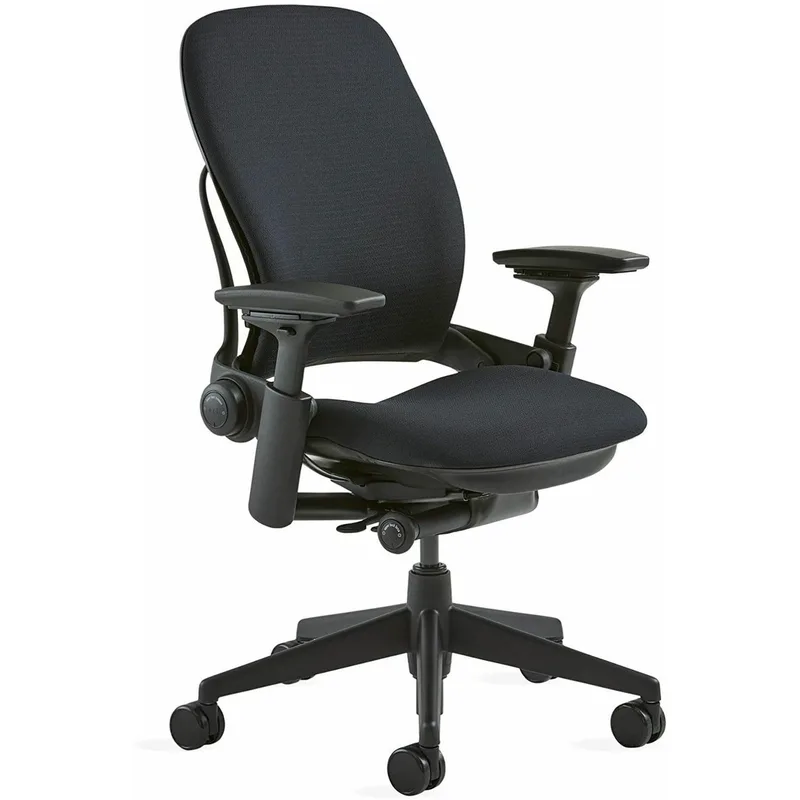
Steelcase Leap V2
Pros
- ✓ LiveBack flex works in two independent zones — upper and lower back support adjust separately to match your posture
- ✓ Flexible front seat edge reduces thigh pressure for users who sit for 6-8+ hours
- ✓ Both upper and lower back force independently tunable — the right level of firmness in each zone
- ✓ Same 12-year full warranty as the Gesture at $100 less
Cons
- ✗ Design has not been significantly updated since the V2 launched — a V3 seems overdue
- ✗ No headrest available at any configuration level
- ✗ Arm pivot range narrower than the Gesture's full 360-degree system
At $1,399, the Leap V2 is the least expensive chair in this roundup that still delivers full luxury-tier ergonomics. The LiveBack technology flexes in two independent zones — upper and lower — and the two zones adjust separately. Turn up the lower back support for lumbar pain, reduce the upper pressure for more freedom of movement.
The flexible front seat edge is underrated. Standard chairs have a hard foam lip that cuts into thigh circulation during long sits. The Leap V2’s front edge flexes downward with the legs, maintaining circulation through entire work sessions without requiring a seat-edge cut.
The main arguments against the Leap V2 in 2026: it has not been meaningfully refreshed in years. The arm system is good but doesn’t reach the 360-degree pivot of the Gesture. There is still no headrest option. It is the right pick if you want proven engineering without paying for the Gesture’s premium arm system.
Best for: Users moving up from a $400–$600 chair who want genuine improvement in lumbar support and back flex without hitting $1,499+. Also the right call for buyers who compared it to the Aeron and prefer a fabric back.
Compare the Aeron vs Leap V2 | Buy on Amazon
4. Herman Miller Embody — Best for Chronic Back Pain
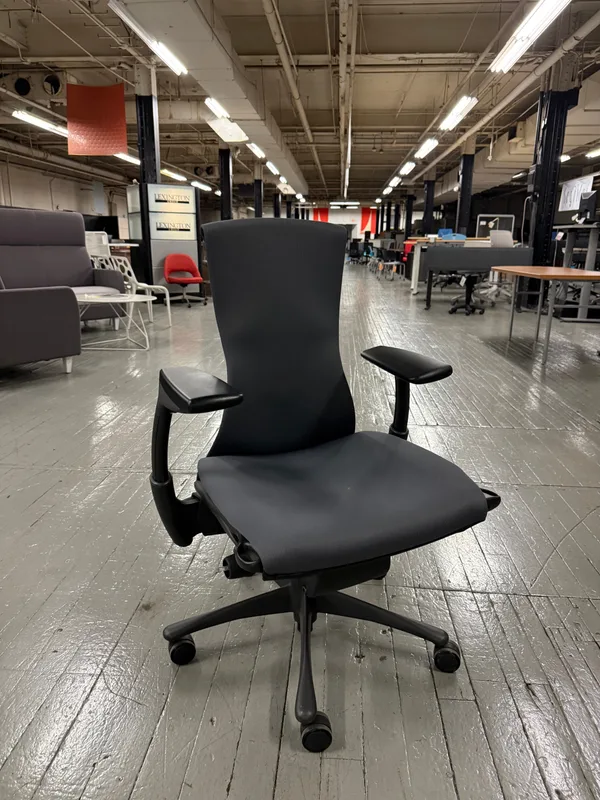
Herman Miller Embody
Pros
- ✓ Pixelated support system distributes weight across hundreds of micro-supports — pressure points essentially vanish
- ✓ Backfit adjustment aligns the chair's spinal channel to individual curvature, not a generic shape
- ✓ Dynamic tilt encourages constant subtle movement rather than static holding — reduces stiffness during marathon sessions
- ✓ Spine-channel back design promotes circulation to the discs — a genuine differentiator for anyone with chronic back issues
Cons
- ✗ Most expensive standard chair in this roundup at $2,045
- ✗ Bold, distinctive look reads as polarizing in traditional office settings
- ✗ Armrests have less lateral inward/outward travel than the Gesture's system
The Embody is the most medically-derived chair in this roundup. Herman Miller involved 20+ physicians, PhDs in biomechanics, vision specialists, and physical therapists in its design. The result is a chair built around spinal health rather than seating comfort — they are related but not identical.
The pixelated support system replaces large foam sections with hundreds of small flex points that distribute sitting pressure more evenly. The Backfit adjustment slides the spine channel to align with your individual curvature — you set it once and the back panel essentially traces your spine. Dynamic tilt encourages constant micro-movement rather than holding still, which promotes circulation through intervertebral discs.
At $2,045, the Embody is the most expensive chair in this roundup. The distinctive alien-looking back either reads as design-forward or too unconventional depending on the office setting. But for users with genuine chronic back pain who have tried and failed with other chairs, the Embody is often the first one that works.
Best for: Chronic back pain sufferers, users who have already owned an Aeron or Gesture and need something that goes further on spinal support, and home office setups where aesthetics are secondary to performance.
Read our full Herman Miller Embody review | Compare Embody vs Aeron | Buy on Amazon
5. Humanscale Freedom (Headrest) — Best for Recliners
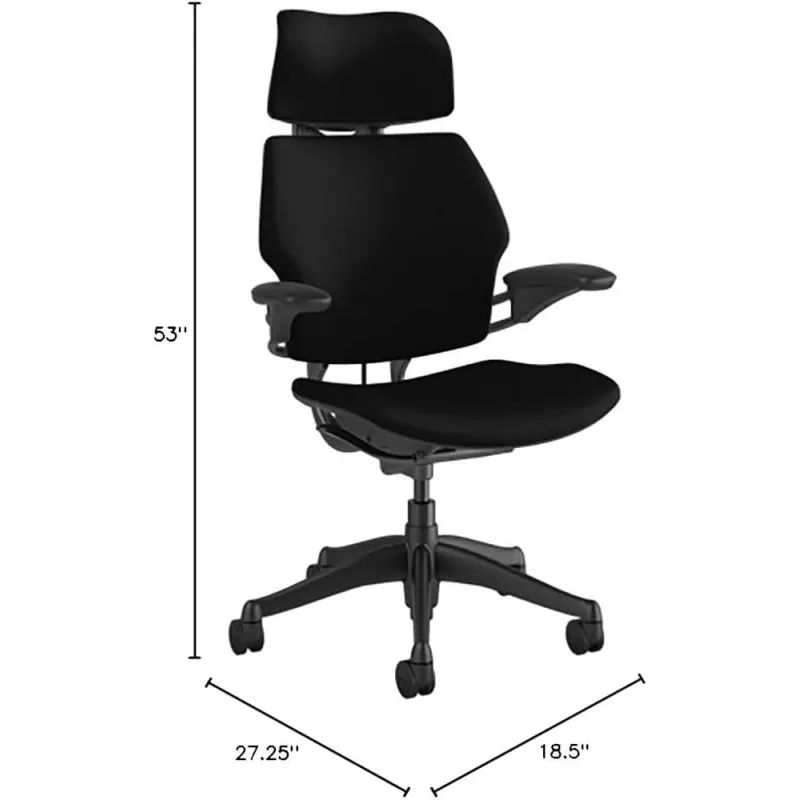
Humanscale Freedom (Headrest)
Pros
- ✓ Weight-sensitive recline mechanism requires no manual tension adjustment — the chair reads your body weight automatically
- ✓ Self-adjusting lumbar support adapts with posture changes without any buttons or levers
- ✓ Articulating headrest pivots as you recline and keeps neck supported at every angle
- ✓ 15-year warranty is the longest of any chair in this roundup
Cons
- ✗ Fewer manual overrides than the Aeron or Gesture — if you prefer dialing in exact positions, this is limiting
- ✗ Auto-recline can feel too loose for lighter users under 140 lbs
- ✗ Limited color and fabric options available through Amazon versus ordering direct
The Freedom takes a philosophically different approach to ergonomics: instead of requiring users to manually tune 12 settings, it reads body weight automatically and adjusts accordingly. The weight-sensitive recline uses counterbalancing to provide exactly the right resistance for your build — no tension knob, no calibration.
The self-adjusting lumbar works the same way: as you move, it tracks. The articulating headrest is the best factory headrest in this roundup — it pivots as you recline so your neck stays supported — upright or leaned all the way back. If you work in calls or audio sessions where looking up or back is common, the Freedom headrest makes that position sustainable for hours.
The downside of the auto-everything approach: it provides fewer hard controls than the Aeron or Gesture. Users who want to dial in precise numbers for every adjustment often feel limited. Lighter users (under 140 lbs) may find the auto-recline too loose. But for the right user — someone who finds chair setup tedious and just wants something that works — the Freedom genuinely delivers.
Best for: Managers and executives who work heavily in video calls, users who prefer reclining during reading or listening, and anyone who has found traditional chair-tuning overwhelming.
Compare Embody vs Humanscale Freedom | Buy on Amazon
6. Haworth Fern (Executive) — Best for Active Sitting
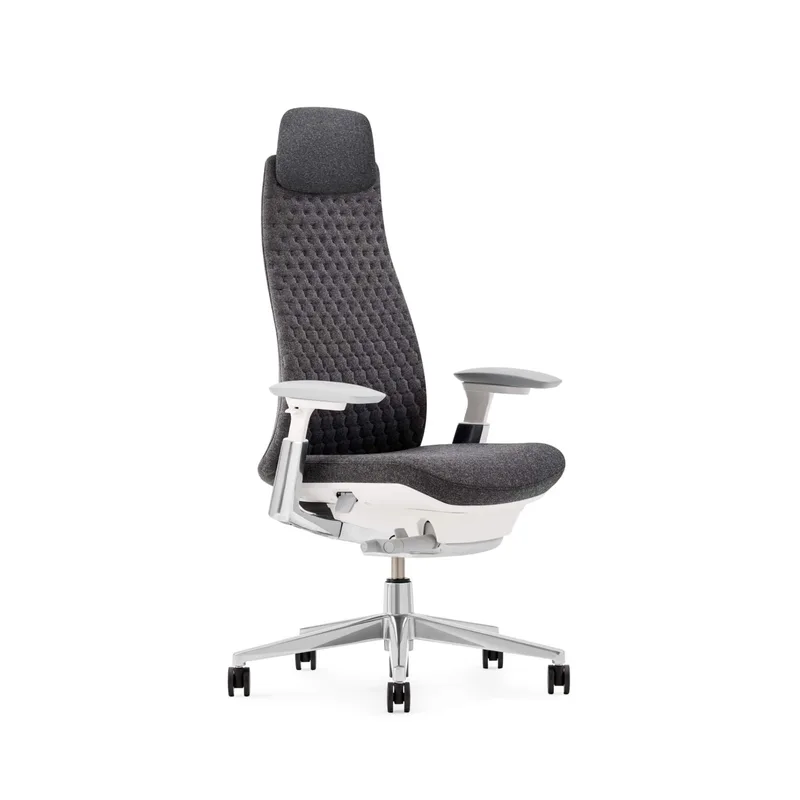
Haworth Fern (Executive)
Pros
- ✓ Flexible leaf-inspired back architecture moves independently at multiple points to support posture shifts in real time
- ✓ Digital knit mesh is more breathable than most fabric options at this price tier
- ✓ Executive version includes adjustable headrest and lumbar support — solid feature set for the entry-level luxury price
- ✓ Active sitting design keeps you moving subtly throughout the day, which benefits circulation and focus
Cons
- ✗ Less brand recognition than Herman Miller or Steelcase in enterprise purchasing contexts
- ✗ Fewer configuration choices on Amazon compared to Haworth's direct store
- ✗ Leaf back design feels unfamiliar to users who prefer traditional firm lumbar pads
The Fern’s back is built around a flexible leaf architecture: instead of a solid panel, multiple independently-moving structural elements support your back at different points and flex with movement. The goal is active sitting — keeping your body in subtle motion rather than locked into one held position.
The digital knit mesh across the back is notably breathable, and the Executive version included here adds an adjustable headrest and lumbar support at a starting price that beats every other chair in this roundup. If you want a luxury chair with a genuine active-sitting ethos, the Fern is the one.
Haworth is a respected manufacturer — they make chairs for corporate office environments globally — but the brand does not carry the consumer recognition of Herman Miller or Steelcase. That matters if you are purchasing for a corporate environment with brand preferences, but not at all for a home office. The fewer configuration options on Amazon versus Haworth’s direct store is a minor friction point.
Best for: Users who feel stiff after hours in static lumbar-support chairs, remote workers who want an executive feel without the premium Herman Miller premium pricing, and anyone whose priority is ventilation and active back movement.
See Gesture vs Fern head-to-head | Buy on Amazon
What Makes a $1,000+ Chair Worth It?
Most chairs under $600 share two failure modes: foam compression (seat and back padding flattening within 2-3 years, creating pressure points) and static support (lumbar in one fixed position, no adaptation to posture changes). The chairs in this roundup address both.
Materials that last
Mesh seats like the Aeron’s 8Z Pellicle do not compress. The mesh tensioning may loosen slightly over a decade, but you never get the dead-pancake feel of cheap foam. Fabric-back chairs like the Gesture use structural polymer frames rather than foam core, so the adjustment range stays consistent over years of use.
Adaptive lumbar vs. fixed lumbar
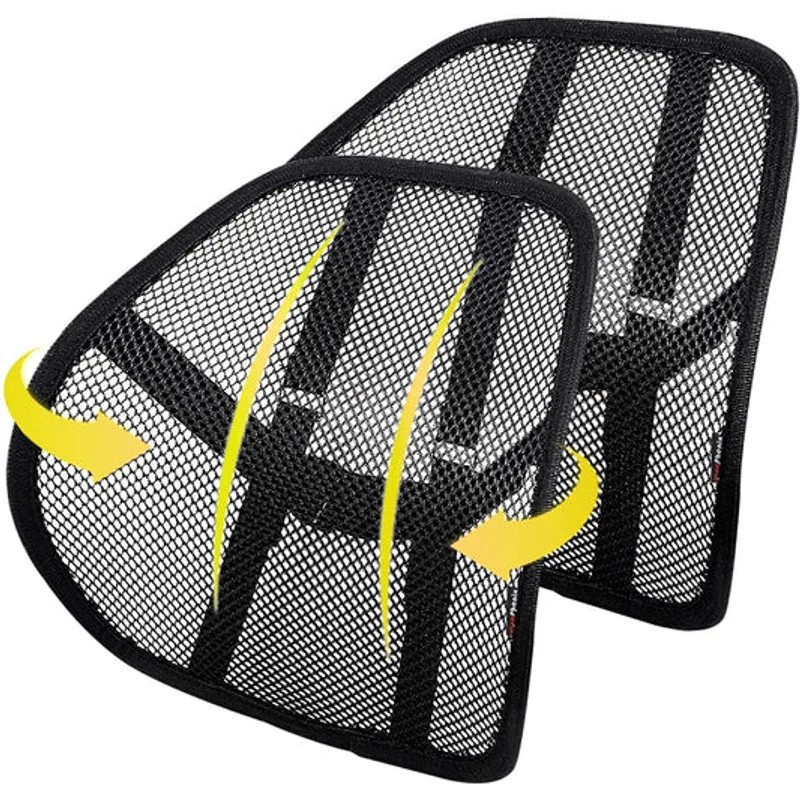
Fixed lumbar pads push at one point. The Aeron’s PostureFit SL, the Leap V2’s variable lumbar, and the Freedom’s self-adjusting system all move with your body rather than against it. At 6+ hours of daily use, the difference between adaptive and fixed lumbar is the difference between energized and exhausted at day’s end.
Warranty signals build confidence
Every chair here carries a 12-year warranty. The Freedom carries 15 years. That is not marketing — it signals genuine engineering confidence in materials quality. A $1,200 chair that lasts 15 years costs $80/year. A $200 chair that needs replacing every 3 years costs $67/year and gives you back pain in the process.
What to look for at this price
- Weight capacity: 300 lbs minimum, 400 lbs if you are over 220 lbs and sit hard
- Lumbar type: PostureFit SL (Aeron), LiveBack (Steelcase), or auto-adjusting (Freedom)
- Seat depth adjustment: Required for thigh pressure relief in long sessions
- Arm adjustability: 4D minimum (height, width, depth, pivot). Gesture adds 360-degree rotation.
- Headrest: Not everyone needs one, but if you work in calls or recline often, factor this in
Budget Comparison: When to Go Cheaper
Not every situation requires a $1,000+ chair. If you sit fewer than 5 hours daily, or you’re buying for multiple people, the sub-$500 tier has genuinely improved:
- Best Ergonomic Chairs Under $500 in 2026
- Best Ergonomic Chairs Under $300 in 2026
- Best Chairs for Programmers in 2026 — includes the Gesture alongside $400–$500 alternatives
The general rule: if you sit 7+ hours daily and plan to keep the chair for 5+ years, the premium tier pays for itself in avoided replacements and avoided back doctor visits.
FAQ
Which is better: Herman Miller Aeron or Steelcase Gesture?
Depends on your priority. The Aeron wins on lumbar support, breathability, and passive ergonomics — it is designed for users who sit and focus. The Gesture wins on arm adjustability, weight capacity (400 lbs vs 300 lbs), and support for multi-device working. Most full-time desk workers prefer the Aeron. Users with laptops, tablets, and heavy phone use often prefer the Gesture.
Is the Herman Miller Embody worth $2,045?
For most users: no. The Aeron and Gesture deliver excellent ergonomics at $1,499–$1,520. The Embody is worth the premium primarily for users with chronic back pain, disc issues, or anyone who has tried other premium chairs and still has pain. It was designed with significantly more medical input than standard ergonomic chairs, and that shows for specific pain patterns.
What is the best luxury chair for users over 6 feet tall?
The Steelcase Gesture or Humanscale Freedom — both fit users up to 6’7”. The Aeron Size C fits users 5’11” to 6’4” with proportional torso length. For very tall users, the Freedom’s auto-adjusting mechanism tends to work well for larger frames. Verify seat height maximums and back height before buying if you’re above 6’3”.
Is Humanscale Freedom available on Amazon?
Yes. The Freedom with headrest is available on Amazon in multiple fabric configurations. The Graphite frame with Black Fourtis Fabric and Advanced Duron arms is a well-stocked configuration. Humanscale also sells direct with a wider range of fabric and color options.
How long do premium ergonomic chairs last?
With normal use (one person, 8 hours/day, standard weight range), the chairs in this roundup routinely last 10–15+ years. The 12-year full warranties reflect manufacturer confidence. The Aeron in particular has a massive secondary market — well-maintained used Aerons from 2014–2018 still sell for $400–$600 and remain fully functional.
What should I look for in a luxury ergonomic chair if I have lower back pain?
Prioritize: (1) PostureFit SL-style support that addresses both lumbar and sacral spine, (2) independently adjustable upper and lower back force, and (3) dynamic movement rather than static hold. The Herman Miller Embody is the most specifically engineered for back pain. The Aeron and Leap V2 are strong alternatives. Read The Complete Guide to Ergonomic Chairs for Lower Back Pain before making the final call.
Final Verdict
For most remote workers and full-time desk users, the Herman Miller Aeron (Size B) at $1,520 remains the best overall luxury ergonomic chair in 2026. PostureFit SL, 8Z Pellicle mesh, four-way arms, and a 30-year track record of refinement — it is hard to argue against.
If you work across multiple devices and need arms that follow every posture, the Steelcase Gesture at $1,499 is the smarter call. If you have chronic back pain that other chairs haven’t solved, the Herman Miller Embody at $2,045 is the one to try. Budget-conscious luxury shoppers get real value from the Steelcase Leap V2 at $1,399 or the Haworth Fern starting at $1,325.
For a full comparison of premium home office furniture — desks, arms, lighting, and more — see the Luxury Home Office Setup Guide.