If you’ve ever stood up from a long work session with a sharp ache in your hips or a throbbing tailbone, you know how quickly a bad chair can derail your entire day. Hip pain and coccyx pain (coccydynia) are two of the most common complaints among desk workers in 2026 — and in most cases, the chair is directly to blame. The wrong seat pan geometry, insufficient foam thickness, or a flat edge that compresses the back of your thighs can all cause or worsen hip and tailbone issues over months of daily use.
The good news: the right chair design can genuinely change this. Waterfall edge seats, adjustable seat depth, wide seat pans, and designs that keep your tailbone off the surface are all real solutions — not marketing fluff.
This guide covers six chairs that specifically address hip and coccyx pain, from a $159 budget pick to an active-sitting chair that physically cannot contact your tailbone. Our top overall pick is the Branch Ergonomic Chair — it combines adjustable seat depth (the most underrated feature for hip pain) with a firm lumbar system that keeps your pelvis in neutral. If your coccyx is the primary issue, the CoreChair Classic is in a category of its own.
1. Branch Ergonomic Chair — Editor’s Pick
Branch Ergonomic Chair
Pros
- ✓ Adjustable seat depth is the single most important feature for hip pain relief — Branch nails it
- ✓ Firm contoured lumbar holds the pelvis in neutral, which directly reduces hip flexor strain
- ✓ Breathable mesh backrest keeps you from sweating and shifting uncomfortably in extended sessions
- ✓ 8-point adjustment system lets you dial in a truly custom fit — height, depth, lumbar, armrests, tilt tension
Cons
- ✗ 1-year warranty is shorter than competitors at this price point
- ✗ 275 lbs weight limit may exclude bigger-framed users
- ✗ Armrests are height-only — no lateral or pivot adjustment in the standard model
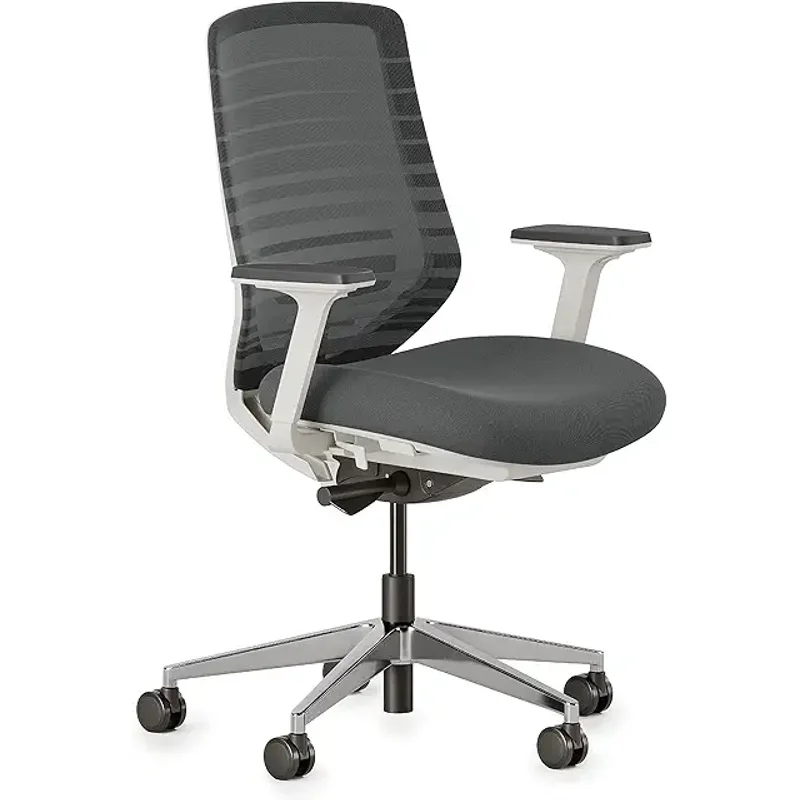
The Branch Ergonomic Chair is the chair we’d recommend to most people dealing with hip pain. Not because it’s flashy, but because it gets the fundamentals right in a way that budget chairs simply don’t.
The key feature for hip pain is adjustable seat depth. When your seat pan is too long, you either sit on the edge (losing back support) or let the edge press against the back of your knees, tilting your pelvis backward and compressing your hip flexors all day. Branch’s sliding seat lets you move the cushion forward or back to match your leg length exactly — a feature that should be standard but rarely is below $400.
The lumbar support is firmer than most, which takes getting used to, but it’s exactly what your pelvis needs. A properly supported lumbar curve keeps your hips from rotating backward (posterior pelvic tilt), which is the mechanical source of much hip and tailbone pain. The breathable mesh backrest adds airflow that reduces the restless shifting that aggravates an already irritated coccyx.
Eight adjustment points isn’t as many as Branch’s Pro model, but it covers everything that matters: seat height, depth, tilt tension, tilt lock, lumbar height, and armrest height. At $329, it’s priced fairly for what you get.
Best for: Anyone with general hip pain who wants a reliable, adjustable chair that addresses the mechanical root causes.
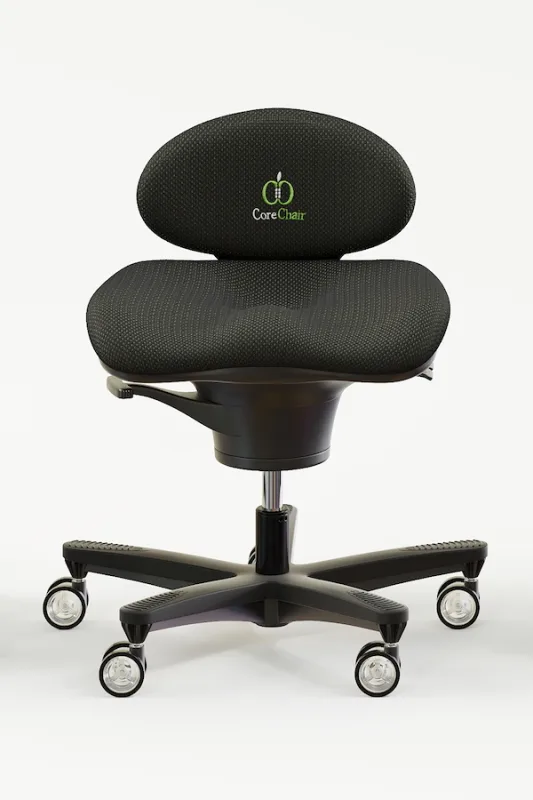
2. CoreChair Classic — Best for Coccyx Pain
CoreChair Classic
Pros
- ✓ The only chair on this list where your tailbone literally never contacts the seat — built-in coccyx relief by design
- ✓ Constant 14° micro-movement keeps blood flowing in the hips and pelvis instead of pooling
- ✓ Pelvic support cups the sitting bones correctly, reducing ischial tuberosity pressure
- ✓ Mayo Clinic NEAT certification and University of Waterloo research backing — rare third-party validation
Cons
- ✗ No backrest — requires good core strength; not suitable for everyone, especially those with lower back issues
- ✗ Highest price in this roundup at $499
- ✗ Takes 1–2 weeks to adapt to active sitting; expect initial fatigue
If your primary issue is tailbone pain specifically — particularly coccydynia or post-injury coccyx sensitivity — the CoreChair operates on a completely different principle than every other chair on this list.
There is no backrest. Instead, you sit on a pelvic support saddle that cups your sitting bones (ischial tuberosities) and keeps your tailbone suspended in open air. It cannot make contact with the seat because the seat geometry physically doesn’t extend that far back. This isn’t a soft cushion reducing pressure — it’s a design that removes the contact entirely.
The seat allows 14° of multidirectional movement in all directions, which means you’re constantly making small micro-adjustments. Research from the University of Waterloo (cited by CoreChair) found this continuous movement improves hip mobility and reduces static loading on the joints. The chair is also NEAT certified by the Mayo Clinic, which is unusually rigorous third-party validation for an office chair.
The downsides are real. No backrest means your core and back extensors do more work — the first week or two, you may feel muscle fatigue in your lower back. It’s not suitable for users who need a traditional lumbar backrest, such as those with existing lower back injuries alongside coccyx pain. And $499 is the highest price in this roundup.
But for pure coccyx pain relief, nothing else compares. If you have coccydynia and your chair is the last thing between you and a productive workday, this is the chair.
Best for: Users with coccydynia or tailbone injury who have decent core strength and want a clinically-backed solution.
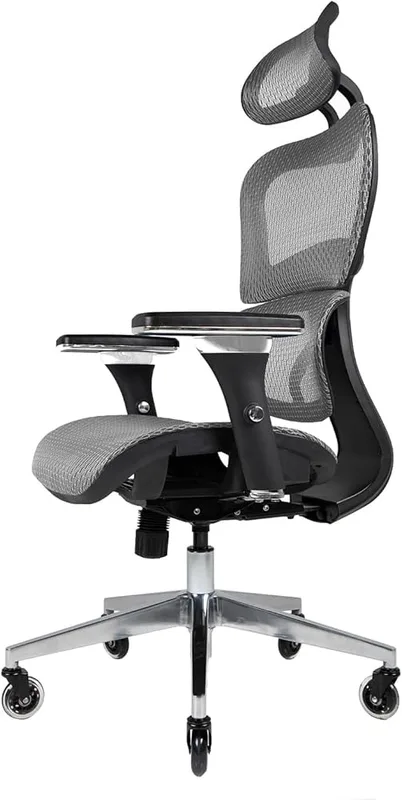
3. Nouhaus Ergo3D — Best Lumbar Support
Nouhaus Ergo3D
Pros
- ✓ 3D lumbar adjusts in three directions (height, depth, tilt) — best lumbar system for the money
- ✓ Proper lumbar support keeps the pelvis from posterior tilting, which is a primary cause of hip flexor compression
- ✓ 4D armrests reduce shoulder load that cascades into hip tension over long sessions
- ✓ 135° recline with tilt lock allows genuine hip decompression breaks throughout the day
Cons
- ✗ Seat isn't the thickest — users with coccyx sensitivity may still want a cushion add-on
- ✗ Build quality feels average for the price; plastic components creak in some units after extended use
- ✗ Headrest is functional but not remarkable
Hip pain and lumbar pain are deeply connected. When your lower back support is wrong — too low, too shallow, or angled incorrectly — your pelvis tilts backward and your hips rotate into a compressed position. The Nouhaus Ergo3D addresses this with its standout 3D lumbar system.
Unlike most chairs that only let you adjust lumbar height, the Ergo3D’s lumbar support adjusts in three dimensions: height, depth (how far it pushes into your back), and angle. Most people never find a lumbar that actually fits them on a standard chair. The 3D adjustment changes that.
The 4D armrests are also worth calling out. When your arms aren’t supported properly, you compensate by hunching your shoulders — which shifts your whole upper body forward and loads your hips unevenly. Proper armrest positioning matters more than most people realize for hip pain.
At 135° recline with a tilt lock, you can genuinely recline and decompress your hip joints throughout the day rather than being locked at 90°. The 330 lbs weight capacity and extra blade wheels make it functional for a wide range of users. At $279, it’s strong value for the lumbar system alone.
Best for: Users whose hip pain is connected to lumbar issues — people who find that when their lower back is properly supported, their hips feel better too.
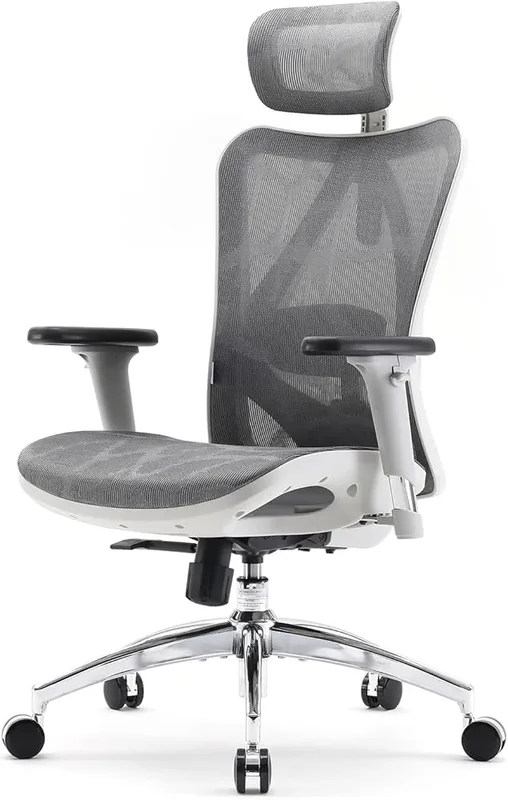
4. SIHOO M57 Ergonomic Chair — Best Mid-Range
SIHOO M57 Ergonomic Chair
Pros
- ✓ Waterfall edge seat is the most important hip-friendly feature — eliminates thigh compression that reduces circulation to the hips
- ✓ W-shaped seat contour distributes weight away from the coccyx and toward the ischial tuberosities where it belongs
- ✓ Split backrest design keeps the spine from touching the chair back, reducing pressure point buildup
- ✓ Adjustable lumbar height and depth for properly placed lower back support
Cons
- ✗ Seat padding is medium-density — not as thick as Ticova's foam; users over 200 lbs may bottom out slightly
- ✗ Recline max of 126° is more limited than some competitors
- ✗ Assembly instructions are somewhat unclear; budget extra time
The SIHOO M57 doesn’t get as much press as some competitors, but its seat design is specifically thoughtful about pressure relief. Two features stand out for hip and coccyx pain.
First, the waterfall edge seat. Most budget and mid-range chairs have a flat or minimally contoured front edge, which creates a pressure ridge across the back of your thighs. This compression reduces circulation to the legs and hips over time and increases the perceived pressure on the coccyx as your body shifts to compensate. The M57’s waterfall edge angles downward, eliminating that ridge entirely.
Second, the W-shaped seat contour. Rather than a flat seat that concentrates pressure on the ischial tuberosities and coccyx, the W-shape distributes weight across a broader area and naturally directs pressure away from the tailbone center.
The split backrest — two separate panels rather than one solid back — means the spine isn’t pressing against a rigid surface. The 3D armrests adjust in height, depth, and angle. At $229 with a 3-year warranty, the M57 is a legitimately good chair for the money, particularly for users who find their primary discomfort comes from the seat pan rather than lumbar issues.
Best for: Mid-range budget shoppers who need a seat designed for pressure relief without going over $250.
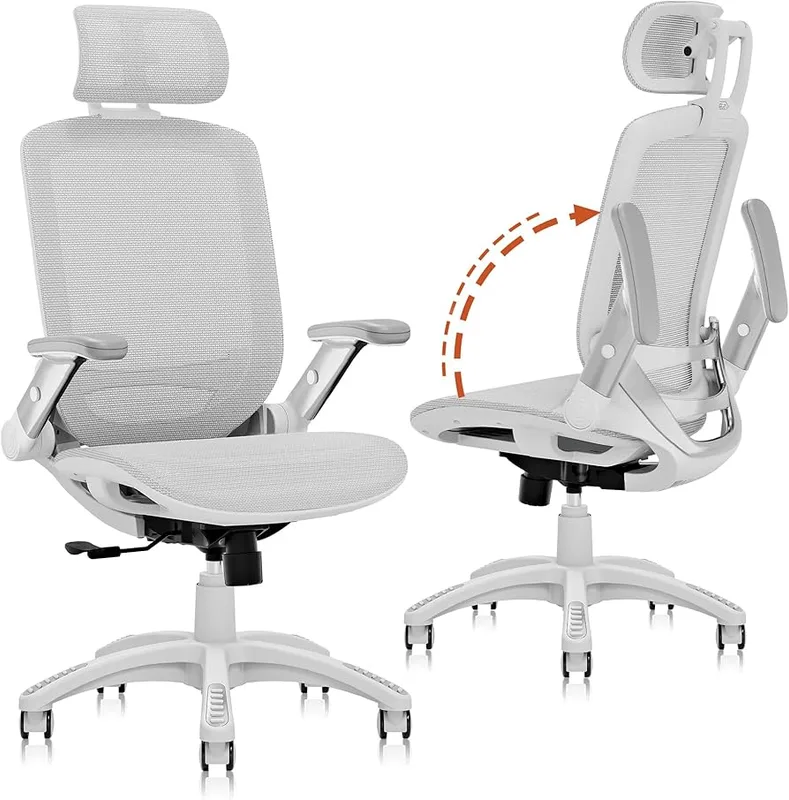
5. GABRYLLY GY01 — Best Value
GABRYLLY GY01 Ergonomic Chair
Pros
- ✓ Extra-wide seat pan spreads body weight across a larger surface area — reduces pressure per square inch on hips and tailbone
- ✓ Flip-up arms let you position yourself freely and shift hip weight without armrest obstruction
- ✓ 5-year warranty at under $220 is one of the best in this price range
- ✓ High 300 lbs capacity with wider seat panel makes this a strong pick for big-and-tall users
Cons
- ✗ Lumbar support is built into the mesh curvature, not independently adjustable — may not hit the right spot for everyone
- ✗ Tilt mechanism has been reported to develop clicking after 12–18 months in a portion of units
- ✗ Not the most refined aesthetics; looks more functional than premium
The GABRYLLY GY01 doesn’t have the most refined ergonomic pedigree, but it has one specific advantage for hip pain that deserves attention: the seat is wide. Genuinely wide.
For users with wider hips or hip bursitis — where the greater trochanter (outer hip bone) is already irritated — a narrow seat that squeezes inward is a real problem. The GY01’s extra-large seat pan spreads body weight across a larger surface area, which mechanically reduces pressure per square inch. Less pressure = less aggravation of hip soft tissue.
The flip-up armrests are more useful for hip pain sufferers than you might expect. Being able to completely remove armrest obstruction lets you shift your hip position freely — leaning left, centering, shifting right — without the armrests creating resistance. People with hip pain tend to shift frequently, and flip-up arms accommodate that.
The 5-year warranty at under $220 is exceptional for the price tier. The tilt mechanism has some durability question marks past the 18-month mark based on owner reports, but for the first couple of years this is a solid, wide, breathable mesh chair that handles hip pain better than most alternatives near $200.
Best for: Users with hip bursitis or wider builds who need a wide seat pan without spending over $220.
6. Ticova Ergonomic Chair — Best Budget
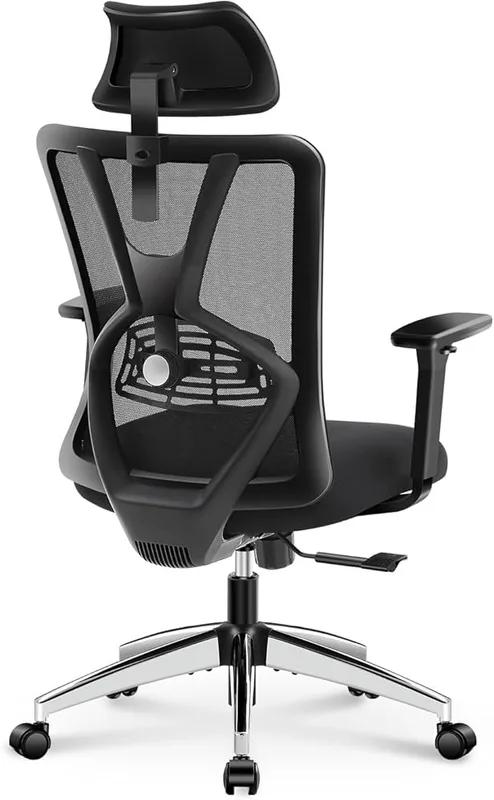
Ticova Ergonomic Chair
Pros
- ✓ Best seat cushion at this price — 3.5 inches of W-shaped foam genuinely reduces pressure on hips and tailbone
- ✓ Waterfall edge design takes pressure off the back of the thighs, improving circulation
- ✓ 130° recline for hip decompression breaks throughout the day
- ✓ 400 lbs weight capacity is impressive for a sub-$200 chair
Cons
- ✗ Lumbar support height is not adjustable — may not hit the right spot for taller users
- ✗ Mesh quality feels slightly cheaper than SIHOO or Branch at this price
- ✗ Long-term durability (18+ months) is average — foam does soften over time
If you’re trying to solve hip or coccyx pain on a tight budget, the Ticova is the clearest choice under $200. The reason comes down to one thing: the seat cushion.
Most budget office chairs use 1.5–2 inches of foam that compresses quickly under body weight. The Ticova uses 3.5 inches of high-density foam with a W-shaped waterfall edge design. That’s significantly more material, and the W-shape means weight is distributed properly rather than funneled onto the coccyx. You’re getting mid-range seat quality at a budget price point.
The 130° recline allows you to take pressure off your hips during brief recline breaks — even a 2-minute recline every 30 minutes makes a measurable difference in hip joint load over the course of a day. The 400 lbs weight capacity is excellent for a chair this price, and the rotatable headrest keeps your neck supported without rigid lockdown.
The limitations are real at $159. Lumbar isn’t independently adjustable, mesh quality is average, and the foam will soften after 18 months of heavy use. But as a starting point for hip and coccyx pain — particularly if you’re upgrading from a dining chair or cheap task chair — the Ticova makes a meaningful difference.
Best for: Budget-conscious shoppers who want real foam seat quality without spending $200+.
Comparison Table
| Chair | Price | Seat Design | Lumbar | Seat Depth Adjust | Weight Cap | Rating |
|---|---|---|---|---|---|---|
| Branch Ergonomic | Unavailable | Contoured foam | Adjustable, firm | Yes | 275 lbs | 9.0 |
| CoreChair Classic | Unavailable | Pelvic saddle (no coccyx contact) | N/A (no back) | N/A | N/A | 8.8 |
| Nouhaus Ergo3D | $329.99 as of Oct 18, 2026 | Mesh | 3D adjustable | No | 330 lbs | 8.5 |
| SIHOO M57 | $239.88 as of Oct 18, 2026 | Waterfall + W-shaped | Adjustable height/depth | No | 330 lbs | 8.3 |
| GABRYLLY GY01 | $219.50-$239.50 as of Oct 18, 2026 | Wide foam, extra-large pan | Fixed curve | No | 300 lbs | 8.0 |
| Ticova | Unavailable | 3.5” foam, W-shaped waterfall | Fixed height | No | 400 lbs | 7.8 |
Buying Guide: What Actually Helps Hip and Tailbone Pain
Not all ergonomic claims are equal. Here’s what the seat specs actually mean for coccyx and hip pain:
Waterfall Edge vs. Flat Edge
A waterfall edge angles downward at the front of the seat, eliminating the pressure ridge that forms across the back of your thighs on flat seats. This compression isn’t just uncomfortable — it reduces circulation to the lower legs and causes micro-shifting that aggravates hip and coccyx pressure. If you currently sit on a flat-front seat, switching to a waterfall edge chair is one of the highest-impact changes you can make.
Seat Thickness and Density
Foam thickness matters most when it’s combined with appropriate density. A 4-inch foam seat that compresses to 1 inch under your weight is worse than a 3-inch high-density seat that holds its shape. Look for seats described as “high-density foam” with at least 2.5–3.5 inches of stated thickness. The Ticova and SIHOO M57 are standouts here in the under-$250 range.
Seat Depth Adjustment
Adjustable seat depth is the most important and most overlooked feature for hip pain. If your seat pan is too long for your legs, you either sit on the edge (losing lumbar support) or press the seat edge into the back of your knees, tilting your pelvis backward all day. This posterior pelvic tilt is a primary mechanical cause of hip flexor compression. Only Branch in this roundup offers seat depth adjustment in the standard configuration.
Coccyx Cutout vs. General Design
True coccyx cutout chairs have a U-shaped notch at the back of the seat that lets the tailbone float. These are common in medical-grade seating but less so in mainstream office chairs. The CoreChair takes this further by removing seat contact entirely. If you don’t want to go the active sitting route, a coccyx seat cushion added to any chair on this list can achieve a similar effect for $30–$60.
Recline Range
Being locked at 90° all day is hard on hip joints. A chair that reclines to at least 120°–130° lets you decompress your hip flexors periodically. Even 2-minute recline breaks every 30 minutes reduce the cumulative load on hip cartilage over a full workday.
Budget Expectations
- Under $200: Ticova is the clear choice. You’re getting above-average seat quality at this price.
- $200–$300: GABRYLLY GY01 and SIHOO M57 both offer specific features for hip/coccyx pain. SIHOO if seat design matters most; GABRYLLY if seat width is the priority.
- $300–$400: Branch Ergonomic is the best all-around ergonomic chair in this range and addresses hip pain through adjustability and lumbar.
- $500+: CoreChair for coccyx pain specifically. Nothing else in this price range is designed as deliberately for tailbone relief.
Should You Add a Coccyx Cushion?
Even a well-designed chair can benefit from a coccyx cushion if your pain is acute. A U-shaped memory foam seat pad adds a cutout that suspends your tailbone regardless of your chair’s seat geometry. Our ergonomic seat cushion guide covers the best options starting under $40. A cushion is also a good interim solution while you save for a better chair, or a diagnostic tool — if a coccyx cushion solves your pain, you know the tailbone contact is the issue.
For related conditions, our guides on chairs for sciatica and chairs for lower back pain cover overlapping solutions. Kneeling chairs and saddle chairs are also worth exploring for hip decompression — see our kneeling chair roundup and saddle chair guide.
FAQ
What chair features actually help coccyx pain?
Three features make the biggest practical difference: (1) a waterfall edge or sloped front that doesn’t compress the back of your thighs, (2) a W-shaped or contoured seat that directs weight toward your sitting bones and away from the tailbone, and (3) a coccyx cutout or — like the CoreChair — a design that removes tailbone contact entirely. Seat thickness (at least 3 inches of high-density foam) is also important for sustained relief.
Can a chair fix hip bursitis?
A chair won’t cure hip bursitis (trochanteric bursitis), but the right seat design reduces the aggravation that makes it worse. Wide seat pans reduce lateral pressure on the outer hip. Adjustable lumbar keeps your pelvis from tilting and loading the hip unevenly. A physiotherapist or orthopedist should address the underlying bursa inflammation, but a better chair reduces the daily irritation that prevents recovery.
What’s the difference between hip pain and tailbone pain when sitting?
Hip pain from sitting typically radiates from the outer hip (greater trochanter area), groin, or deep in the gluteal muscles. It’s often caused by hip flexor compression (from a seat too deep or lumbar not supported) or lateral pressure on the hip. Tailbone (coccyx) pain is localized at the base of the spine, directly at the sit point. Coccyx pain is usually caused by direct contact and pressure on the coccyx bone itself — a design issue with flat seat geometry. Many people experience both simultaneously, which is why seat design addressing both pressure distribution and contact geometry matters.
Is a coccyx cushion better than a new chair?
A coccyx cushion is a cheaper, faster fix and a useful diagnostic tool — if adding a $35 U-shaped cushion to your current chair eliminates your pain, you’ve confirmed the problem is seat geometry and tailbone contact rather than lumbar or posture. A new chair is the more complete long-term solution because it also addresses lumbar, seat depth, and overall posture — a coccyx cushion only solves the contact issue. Use both if your pain is significant.
How long should I sit before taking a break with hip or coccyx pain?
The 30/5 rule is commonly cited by physiotherapists: stand up for 5 minutes for every 30 minutes of sitting. For acute coccyx or hip pain, some practitioners recommend movement every 20–25 minutes. The brief 2-minute reclines available on most chairs in this list also reduce hip joint load without requiring you to leave your desk. A standing desk is a complementary solution — our guide on standing desk ergonomics covers how to alternate correctly.
Are saddle chairs good for tailbone pain?
Saddle chairs — like the CoreChair or traditional saddle-style seats — can be excellent for tailbone pain because they shift your weight forward onto your thighs, reducing coccyx contact pressure. However, they require a period of adaptation and good core strength. They also typically lack traditional backrests. Our saddle chair guide covers the best options if you want to explore this category.
Conclusion
Hip pain and coccyx pain from sitting are almost always a chair problem, not just a posture problem. The right seat geometry, foam thickness, and lumbar support change the mechanics of how you sit — and that changes everything.
For most people: the Branch Ergonomic Chair ($329) is the best overall pick. Adjustable seat depth, firm lumbar, and breathable mesh address the mechanical root causes of hip pain.
For coccyx pain specifically: the CoreChair Classic ($499) is in a category of its own — no other office chair keeps your tailbone from contacting the seat by design.
On a budget: the Ticova Ergonomic Chair ($159) delivers above-average seat foam quality at the most accessible price point.
Whatever you choose, pair it with movement breaks — even the best chair can’t substitute for standing up, walking, and letting your hip joints decompress naturally throughout the day.