Not every home office needs a $1,500 ergonomic throne. If you move around frequently, use multiple workspaces, or just don’t want to spend half your furniture budget on a chair, a task chair is the smarter call. They’re lighter, less bulky, and easier to reposition — without sacrificing the basics you actually need for a comfortable workday.
In 2026, the task chair category has expanded meaningfully. More brands are entering the space with mesh backs, better lumbar systems, and longer warranties at the same price points that used to mean you were stuck with a squeaky chair from a big-box store. At the same time, Steelcase released the Karman High Back with extended shoulder support, signaling that even premium brands are paying attention to posture at every price tier.
The Herman Miller Sayl is the best task chair for most home office workers — it delivers genuine build quality and support in a lightweight, well-designed package. If budget is the primary concern, the HON Ignition 2.0 offers commercial-grade durability at $399 with a lifetime warranty that’s hard to beat.
1. Herman Miller Sayl Chair — Editor’s Pick
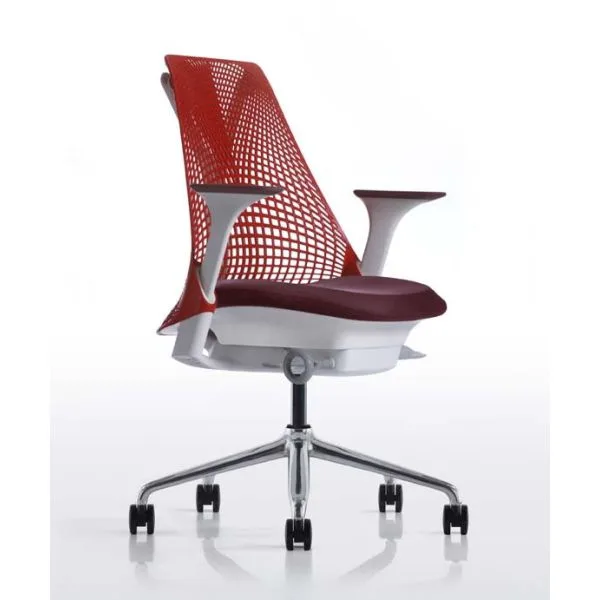
Herman Miller Sayl Chair
Pros
- ✓ Iconic open-frame web back feels genuinely different to sit in — no hot spots or pressure points across your back
- ✓ Lightweight at just 23 lbs, easy to move between rooms or desk setups
- ✓ Tilt limiter and adjustable lumbar let you dial in support without a 20-step setup process
- ✓ Backed by Herman Miller's 12-year warranty — one of the best in the industry
Cons
- ✗ Lumbar adjustment is more limited than HM's Aeron or Embody — deep lumbar sufferers may want more control
- ✗ Seat cushion is firm; add a pad if you sit on hard surfaces all day
- ✗ At $499, it's still a meaningful spend for a task chair — you're paying for the name and build quality
The Sayl is the odd one out in Herman Miller’s lineup. Where the Aeron and Embody are heavy ergonomic workhorses, the Sayl is light, sculptural, and actually pleasant to look at. The open-frame web back is the signature feature — it provides natural flex and airflow without the rigid plastic frame you get on most task chairs.
Based on user feedback across several years of ownership reports, the Sayl’s back suspension adapts well to different postures throughout the day. You’re not fighting the chair — it follows you. The tilt limiter has four positions, the lumbar support adjusts in height, and arm height and width are both adjustable.
At 23 lbs, it’s easy to move between a desk and a secondary workstation, which is exactly what flexible home office setups need. The 350 lb weight capacity is also higher than you’d expect for a chair this light.
The catch is the price: $499 isn’t cheap for something labeled a “task chair.” But Herman Miller’s 12-year warranty means you’re buying once. Long-term, the cost per year often beats cheaper chairs that need replacing every 3-4 years.
Best for: Home office workers who want a premium, lightweight chair that looks as good as it performs, and who’d rather pay once than replace a cheaper chair every few years.
2. Steelcase Series 1 — Best Value
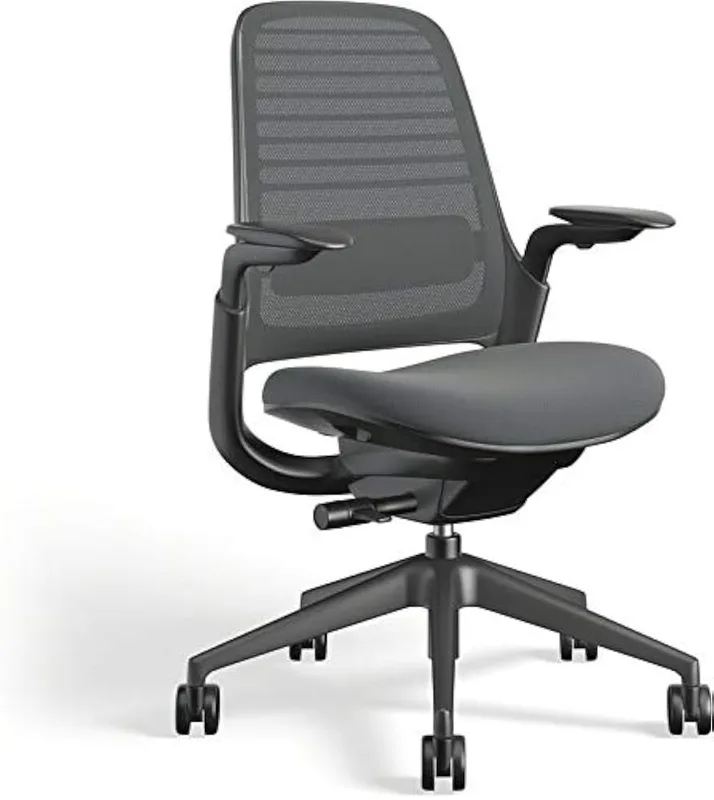
Steelcase Series 1 Office Chair
Pros
- ✓ Weight-activated recline means the chair responds to your body — no tilt knob to fiddle with during the workday
- ✓ Steelcase's 12-year warranty covers everything, which makes the $499 price feel much more reasonable long-term
- ✓ 3D Microknit back is breathable and holds its shape well, per owner reports across multiple years of use
- ✓ Smaller, cleaner footprint than the Leap or Gesture — doesn't overwhelm a home office
Cons
- ✗ No adjustable lumbar — the built-in curve works for most but not everyone
- ✗ Arm height/width adjust but no depth or pivot — arms can feel limited for wider frames
- ✗ Not ideal for those who want full ergonomic control; this is a simple, well-made task chair
The Series 1 is Steelcase’s entry point — designed to be simpler and more affordable than the Leap or Gesture while sharing the same commercial-grade build quality. And it delivers on that promise remarkably well.
The weight-activated recline is the headline feature. Rather than a manual tilt knob you adjust once and forget, the Series 1 reclines based on how much pressure you apply — sit back hard, and the chair gives; sit upright and it firms up. Owner reports consistently note this feels more natural for working sessions that alternate between focus work and leaning back for calls.
What you give up: there’s no adjustable lumbar (the built-in curve works for most people but can’t be tuned for specific lower back positions), and arm adjustability stops at height and width. These are conscious trade-offs Steelcase made to hit the price point.
At $499 with a 12-year warranty, this is one of the few chairs where “value” actually means something. The same warranty coverage you get on a $1,500 Gesture. Same commercial manufacturing. Just fewer knobs.
Best for: Workers who want Steelcase reliability without the complexity or price of the Leap or Gesture. A particularly strong pick for smaller home offices where footprint matters.
3. Branch Ergonomic Chair — Best for Remote Workers
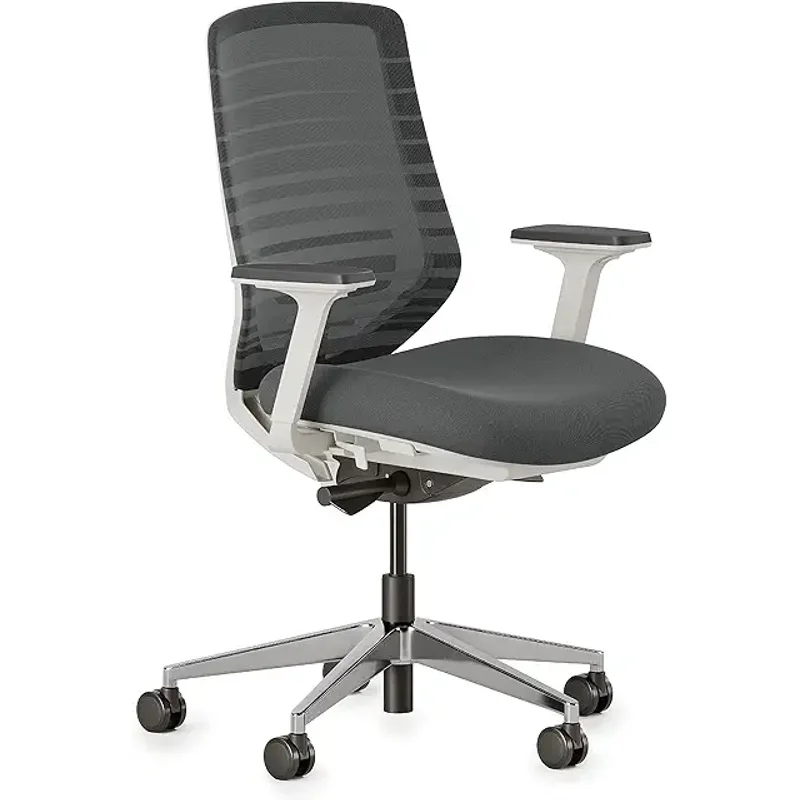
Branch Ergonomic Chair
Pros
- ✓ Eight adjustment points at $299 is impressive — includes seat depth, lumbar height, and arm height/width
- ✓ Breathable mesh back keeps you cool during long video calls and concentrated work blocks
- ✓ Assembly is straightforward; owner reports consistently say under 20 minutes
- ✓ Available in multiple color options — works in home offices that aren't all-black everything
Cons
- ✗ Two-year warranty is shorter than Steelcase or HM — reflects the price difference
- ✗ Headrest is not included on the standard model; you'd need to upgrade to the Pro
- ✗ Lumbar support isn't adjustable in depth, only height — limited for some body types
Branch started as a direct-to-consumer furniture company and their standard Ergonomic Chair punches above its $299 price tag — primarily because of how many adjustments they’ve packed in. Eight adjustment points at this price includes seat depth (which most chairs skip), lumbar height, arm height, and arm width.
The mesh back is consistently rated well in owner reviews for breathability. If your home office runs warm or you tend to generate heat during long work sessions, the mesh here is genuinely better than fabric alternatives at the same price.
Where Branch falls short is the warranty. Two years is the minimum you’d hope for, and it reflects the brand’s relative youth in the industry. It’s not necessarily a sign of poor quality — Branch has a solid track record of honoring claims — but it’s a meaningful contrast against the lifetime/12-year warranties on the HON and Steelcase options.
For remote workers who need a solid chair for 40-hour weeks without spending Aeron money, this is a realistic, honest option.
Best for: Remote workers on a mid-range budget who sit regularly but don’t need every ergonomic adjustment under the sun.
4. HON Ignition 2.0 — Best for Durability
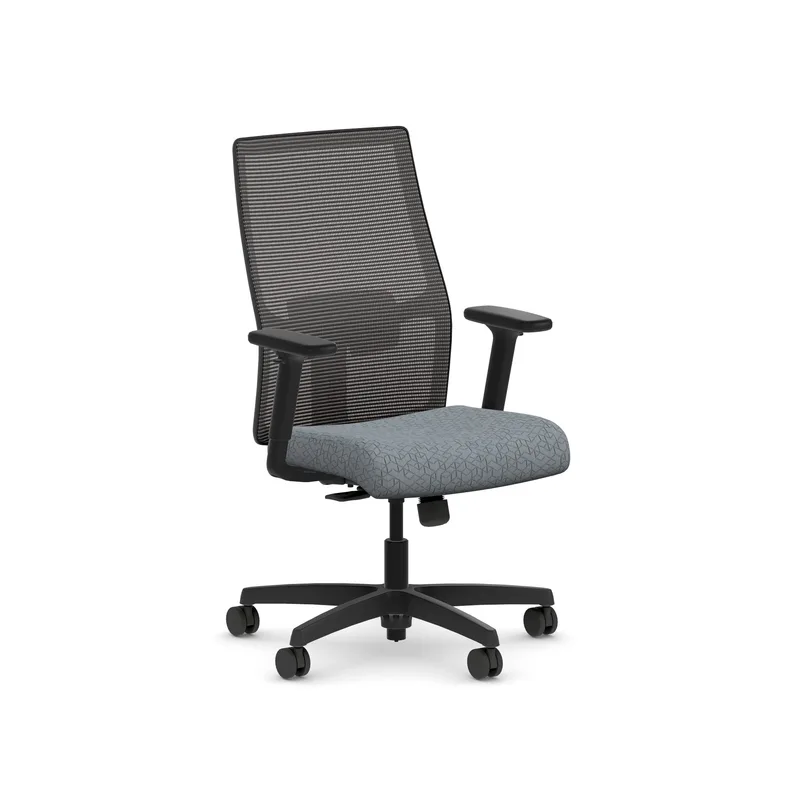
HON Ignition 2.0 Mid Back Task Chair
Pros
- ✓ HON's lifetime frame warranty is exceptional at this price — this chair is built for commercial use, not consumer replacement cycles
- ✓ Synchro-tilt mechanism moves seat and back in tandem — more natural movement than basic tilt
- ✓ Height and width adjustable arms on a $399 chair is rare and appreciated
- ✓ Commercial-grade construction means it handles daily heavy use better than most budget picks
Cons
- ✗ Lumbar support is fixed, not adjustable — works for average builds but not ideal for everyone
- ✗ Aesthetics are purely functional — it looks like an office supply closet chair, not a home office centerpiece
- ✗ Seat cushion compresses over time faster than premium alternatives
HON has been making commercial office furniture for decades, and the Ignition 2.0 reflects that institutional knowledge. This chair is built for contract environments — think multi-person offices, call centers, shared workspaces — which means it’s overbuilt for the average home office worker, in the best way.
The synchro-tilt mechanism moves the seat and back together as you recline, which feels more natural than a simple back-only tilt. Height and width adjustable arms are included, the 300 lb capacity is solid, and the construction feels dense and reliable in a way that most chairs under $300 don’t.
The aesthetics are purely functional — this looks like a contract office chair because that’s what it is. If your home office is a dedicated workspace where appearances don’t matter, that’s fine. If you care about your setup looking intentional, the HON won’t help with that.
The lifetime frame warranty is legitimately rare at $399 and is the single strongest argument for this chair over anything else at a similar price.
Best for: Anyone who wants maximum durability for the money and doesn’t mind a purely utilitarian look. Also a strong pick for home offices that double as part-time professional spaces.
5. SIHOO Doro S100
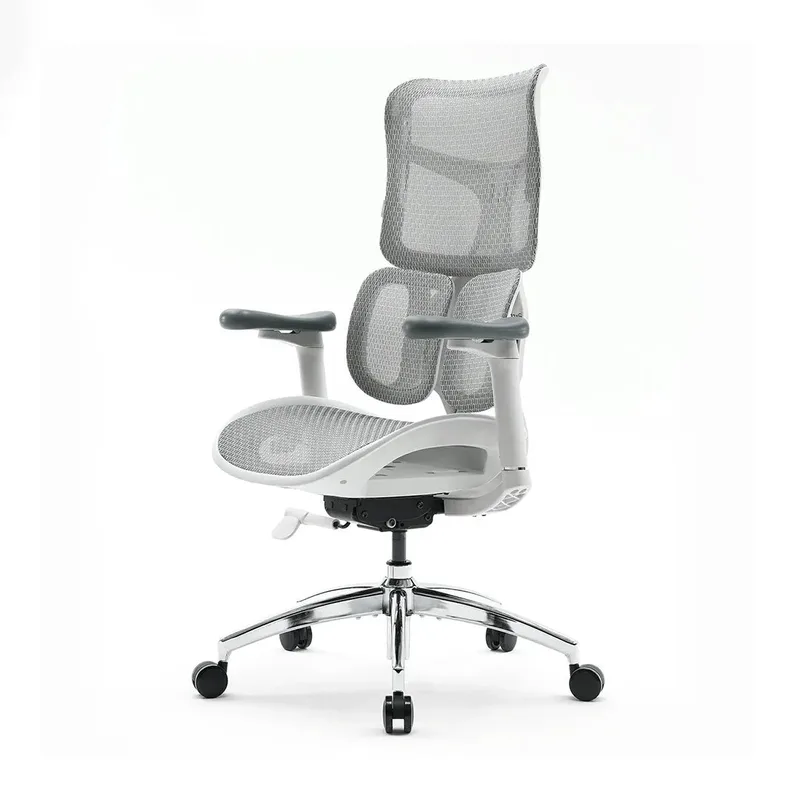
SIHOO Doro S100 Ergonomic Chair
Pros
- ✓ Dual dynamic lumbar system actively follows your back as you recline — rare at this price point
- ✓ 4D coordinated armrests (height, width, depth, pivot) on a $240 chair is genuinely impressive
- ✓ 135-degree recline makes midday breaks more comfortable without needing a separate lounger
- ✓ 330 lb weight capacity is above average for budget chairs
Cons
- ✗ Build quality reflects the price — plastics feel less substantial than HON or Steelcase at twice the price
- ✗ The dynamic lumbar, while clever, can feel intrusive for some users who prefer a fixed support
- ✗ Seat cushion is on the thinner side — fatigue sets in faster than with premium options on 8+ hour days
The S100 is SIHOO’s mid-tier ergonomic offering and has gained real traction in 2026 as a legitimate budget ergonomic alternative. The dual dynamic lumbar support — which adjusts as you recline — is the feature that separates it from cheaper mesh chairs where the lumbar is a fixed plastic bump.
4D coordinated armrests at $240 is objectively impressive. You get height, width, depth, and pivot adjustment, which most chairs at twice the price don’t offer. The 135-degree recline is deep enough for actual relaxation.
The trade-off is build quality. The plastics and materials don’t approach the durability of HON or Steelcase, and user reports note that the dynamic lumbar mechanism can feel slightly loose after extended use. For someone who needs a capable chair for a few years on a tight budget, it’s a fair deal.
Best for: Budget-conscious buyers who want actual ergonomic features — not just the promise of them — and can tolerate less premium materials.
6. NOUHAUS ErgoTASK
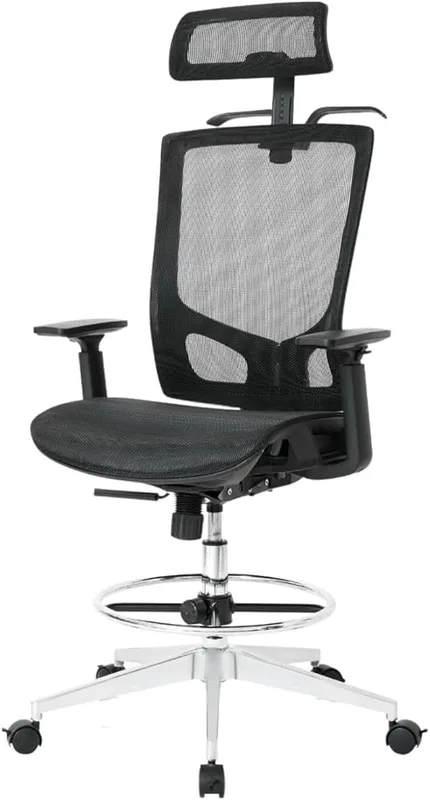
NOUHAUS ErgoTASK Chair
Pros
- ✓ Rollerblade-style casters glide exceptionally smoothly on hard floors — no floor mat needed
- ✓ Headrest is included at $199 — unusual for this price tier
- ✓ Compact footprint fits smaller home offices and shared spaces
- ✓ Lightweight enough to move without disrupting your setup
Cons
- ✗ 250 lb weight limit is the lowest on this list — not suitable for heavier users
- ✗ One-year warranty suggests limited long-term confidence from the manufacturer
- ✗ Lumbar support is fixed and relatively basic — fine for occasional use, less so for 8-hour workdays
The ErgoTASK earns its spot here primarily because of two things: the rollerblade-style casters and the included headrest at $199. Most task chairs at this price ship with standard hard casters that scratch hardwood floors and require a floor mat. The rollerblade wheels are quieter, smoother, and floor-safe.
The headrest inclusion is also notable — it’s typically an upgrade even on chairs double this price, and it helps if you take calls or lean back regularly during the day.
The downsides are real: the 250 lb weight limit is the lowest on this list, the warranty is just one year, and the lumbar support is fixed and basic. This is a chair for lighter, shorter-duration use — someone who works three to four hours at a desk and wants something better than a dining chair.
Best for: Occasional work-from-home setups, secondary workspaces, or lighter users who want smooth hard-floor casters and a headrest without breaking the bank.
Comparison Table
| Chair | Price | Back Type | Warranty | Weight | Weight Cap |
|---|---|---|---|---|---|
| Herman Miller Sayl | Unavailable | Suspension mesh | 12 years | 23 lbs | 350 lbs |
| Steelcase Series 1 | $499.00 as of Oct 18, 2026 | 3D Microknit | 12 years | 28 lbs | 300 lbs |
| Branch Ergonomic Chair | Unavailable | Breathable mesh | 2 years | 25 lbs | 300 lbs |
| HON Ignition 2.0 | $404.89-$453.44 as of Oct 18, 2026 | Mesh back | Lifetime frame | 35 lbs | 300 lbs |
| SIHOO Doro S100 | Unavailable | Dynamic lumbar mesh | 3 years | 30 lbs | 330 lbs |
| NOUHAUS ErgoTASK | Unavailable | Ergonomic mesh | 1 year | 22 lbs | 250 lbs |
Task Chair Buying Guide
Task Chair vs. Full Ergonomic Chair — What’s the Difference?
A task chair prioritizes mobility and simplicity over maximum adjustability. You typically get:
- Fewer adjustment points — seat height, tilt, and basic arms are standard; seat depth and full lumbar control are often extras
- Lighter weight — task chairs generally run 20-35 lbs vs. 35-55 lbs for full ergonomic chairs
- Smaller footprint — easier to tuck under a desk or move between spaces
- Lower price — you’re not paying for mechanisms you may not need
If you sit eight-plus hours per day in a fixed position, a full ergonomic chair like the Steelcase Leap or Herman Miller Aeron is worth the investment. If you move around, split time between locations, or sit for shorter stretches, a task chair makes more sense.
For a deeper look at when premium ergonomic chairs justify their price, read our are expensive office chairs worth it guide.
Key Specs to Evaluate
Seat height range: Look for at least a 4-inch range. For most people (5’2” to 6’2”), you need adjustment between 16 and 21 inches. Shorter users should check the minimum seat height specifically.
Weight capacity: Match it to your weight with some margin. A chair rated for 300 lbs that you’re using at 290 lbs will wear faster and feel less stable than one rated for 350+.
Warranty length: This is the clearest signal of manufacturer confidence. Steelcase and Herman Miller offer 12 years. HON’s lifetime frame warranty is exceptional. Budget brands offering 1 year are telling you something about expected lifespan.
Back type: Mesh backs breathe better — important for warm rooms and warmer climates. Upholstered backs feel more cushioned initially but trap heat. For task chairs used in warm home offices, mesh is almost always the better call.
Lumbar adjustability: A fixed lumbar curve works fine for average builds. If you have specific lower back needs or a non-average spine shape, look for adjustable lumbar height at minimum. See our guide to ergonomic chairs for lower back pain if lumbar support is your primary concern.
Budget Expectations
- Under $200: You’re in truly budget territory. The NOUHAUS ErgoTASK is worth considering, but set expectations accordingly on durability and warranty.
- $200–$350: The sweet spot for capable task chairs. The SIHOO Doro S100 ($240) and Branch Ergonomic Chair ($299) both live here with meaningful differentiation.
- $350–$550: Strong mid-range territory — the HON Ignition 2.0 ($399), Steelcase Series 1 ($499), and Herman Miller Sayl ($499) all live here. The Sayl and Series 1 sit at the upper end; you’re paying for commercial-grade build quality and 12-year warranties.
If you’re specifically looking for chairs under $300, our best ergonomic chairs under $300 roundup covers that segment in more depth.
FAQ
What makes a chair a “task chair” vs. an office chair?
The distinction is mostly about complexity and intended use. Task chairs are designed for mobility — lighter, with fewer adjustments, easier to move between workstations. Traditional “office chairs” or “ergonomic chairs” prioritize maximum adjustability for long, fixed seated sessions. The Herman Miller Sayl and Steelcase Series 1 on this list sit at the crossover — they’re marketed as task chairs but offer genuine ergonomic support.
Can I use a task chair all day, or is it only for short sessions?
Depends on the chair. The Herman Miller Sayl, Steelcase Series 1, and Branch Ergonomic Chair are all comfortable for full 8-hour days based on owner reports. The NOUHAUS ErgoTASK and budget tier picks are better suited to 4-6 hours. If you’re sitting all day, prioritize adjustable lumbar support and a seat with meaningful cushion depth.
How important is seat depth adjustment?
More than most people realize. If you can’t push the seat pan far enough forward or back to support your thighs without pressing on the back of your knees, you’ll get pressure point discomfort within a few hours. Branch’s standard Ergonomic Chair includes seat depth adjustment, which is one reason it overperforms at $299.
Is a mesh back worth it for home office use?
For most home offices, yes. Mesh promotes airflow, which reduces heat buildup during long work sessions. The one exception: if your home office runs cold, the extra ventilation of a mesh back can actually make you feel colder. In that case, an upholstered back or a jacket is the easier fix.
Do I need a headrest on a task chair?
Not necessarily. Headrests are most useful if you recline regularly during calls or take breaks in the chair. If you sit upright while working, a headrest often just gets in the way. The NOUHAUS ErgoTASK includes one if you want it; the Sayl and Series 1 have it as an optional add-on.
What’s the best task chair for programmers specifically?
Check our best ergonomic chairs for programmers guide for a focused look. Short answer: the Steelcase Series 1 or Herman Miller Sayl both work well for extended coding sessions — the Sayl’s back flex is particularly good for the slight forward lean that programmers tend to adopt.
Final Verdict
The Herman Miller Sayl is the right call if you want a task chair you’ll keep for a decade and never think about replacing. The combination of lightweight build, 12-year warranty, and genuinely different-feeling back suspension makes the $499 price easier to justify than it looks at first.
If the budget is tighter, the Steelcase Series 1 at $499 covers most of the same ground — Steelcase quality, 12-year warranty, and a weight-activated recline that’s smarter than it looks.
For the true budget pick with the best long-term story, the HON Ignition 2.0 at $399 is hard to argue with. The lifetime frame warranty means you might be sitting in this chair in 2036, and that’s not a bad outcome for a $399 purchase.
| Use Case | Recommended Pick |
|---|---|
| Best overall task chair | Herman Miller Sayl |
| Best value | Steelcase Series 1 |
| Best for remote workers | Branch Ergonomic Chair |
| Best durability for the money | HON Ignition 2.0 |
| Best budget with real features | SIHOO Doro S100 |
| Best ultra-budget / occasional use | NOUHAUS ErgoTASK |