Disclosure: PostureRanked is reader-supported. When you buy through links on our site, we may earn an affiliate commission at no additional cost to you. Our recommendations are based on independent research and testing.
| Product | Price | Rating |
|---|---|---|
| HAG Capisco 8106 | $1,080 | 9.2 |
| Salli MultiAdjuster Split Saddle Chair | $1,299 | 8.8 |
| Branch Saddle Chair (ILOA Plus) | $289 | 8.7 |
| Varier Move Tilting Saddle Stool | $499 | 8.5 |
| Jobri BetterPosture Saddle Chair | $199 | 7.8 |
Disclosure: PostureRanked is reader-supported. When you buy through links on our site, we may earn an affiliate commission at no extra cost to you. Learn more
If you’ve spent any time in ergonomics forums in 2026, you’ve noticed saddle chairs becoming a serious topic. The broader shift toward active sitting — driven in part by years of remote work data showing the damage that static seated posture does — has pushed saddle chairs from medical offices into home workspaces. More people are pairing them with height-adjustable standing desks as part of a sit-stand-saddle workflow that keeps posture dynamic throughout the day.
The idea behind saddle seating is simple: tilt your pelvis forward, open up the hip angle, and let the spine stack naturally. No backrest needed. No lumbar pillow required. The seat does the postural work that an ergonomic chair tries to do mechanically. It sounds counterintuitive — less support leads to better posture — but for many people, it genuinely works.
If you want the short answer: The HAG Capisco 8106 is the best saddle chair you can buy. It’s the only one that gives you a real backrest, multiple seating orientations, and a design that works at both sitting and standing desk heights. For a budget entry point, the Branch Saddle Chair at $289 is the value pick. If you’re a medical professional or need a true split-saddle design, the Salli MultiAdjuster is in a class of its own.
HAG Capisco 8106 — Editor’s Pick
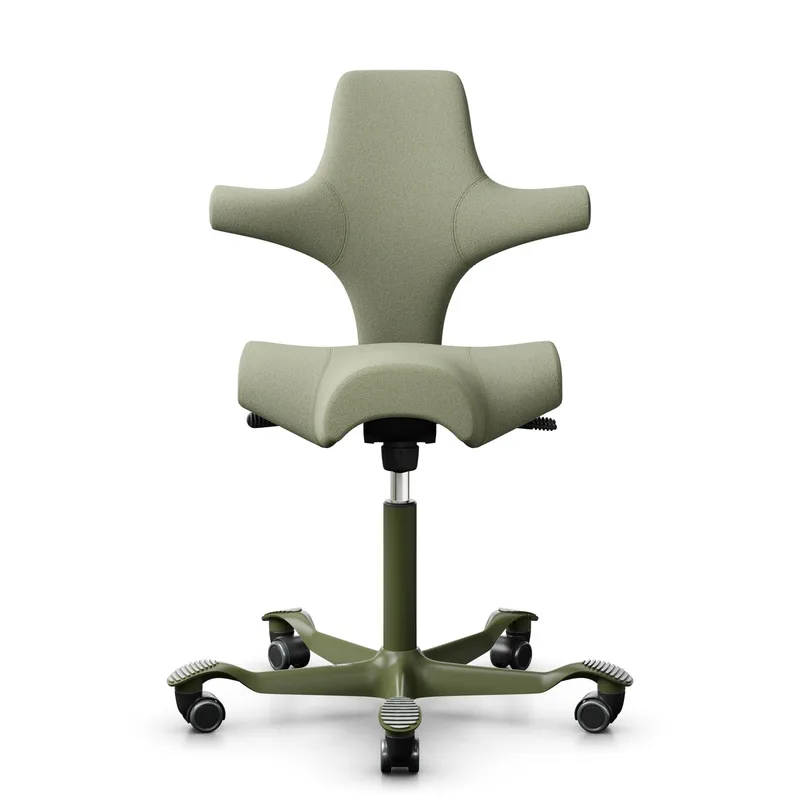
HAG Capisco 8106
Pros
- ✓ Multiple seating positions: forward saddle, backward, sideways perch
- ✓ Backrest adjusts independently — use it or ditch it depending on task
- ✓ Built to pair with height-adjustable desks in sit-stand workflows
- ✓ 10-year warranty and award-winning Scandinavian build quality
Cons
- ✗ Expensive starting price puts it out of reach for many budgets
- ✗ 300 lb weight limit is lower than some heavy-duty alternatives
- ✗ Takes 2–4 weeks for your body to fully adapt to the saddle position
The HAG Capisco has been around since 1984. That’s four decades as the benchmark for saddle chair design, and it still hasn’t been meaningfully surpassed. The 8106 is the flagship model — the one with the full backrest — and it remains the easiest saddle chair to actually live with day to day.
What makes the Capisco different from every other saddle chair is the backrest. Every other option on this list is a backrest-free stool. The Capisco gives you a chair. The backrest is independently adjustable and designed so you can rotate the whole chair backward and straddle the seat, using the backrest as a front support — a completely different seating orientation that changes how your back and hips are loaded.
The seat height ranges from 16.5 to 32 inches depending on which gas lift you choose (there are three options). The standard CY29 lift (19–26 inches) suits most conventional desks. If you’re pairing with a standing desk frame, the CY37 lift (22.5–32 inches) is what you want — it puts you at a semi-standing perch position that’s perfect for standing desk workflows.
Build quality is excellent. GreenGuard Gold certified, over 50% recycled materials, and a 10-year warranty that covers actual use, not just manufacturing defects. The 300 lb weight limit is the one knock — it’s lower than some heavy-duty alternatives. But for most users, this is the one saddle chair worth buying.
Best For: Anyone who wants a full saddle chair experience with back support, multiple seating positions, and standing desk compatibility.
Salli MultiAdjuster Split Saddle Chair — Best for Professionals
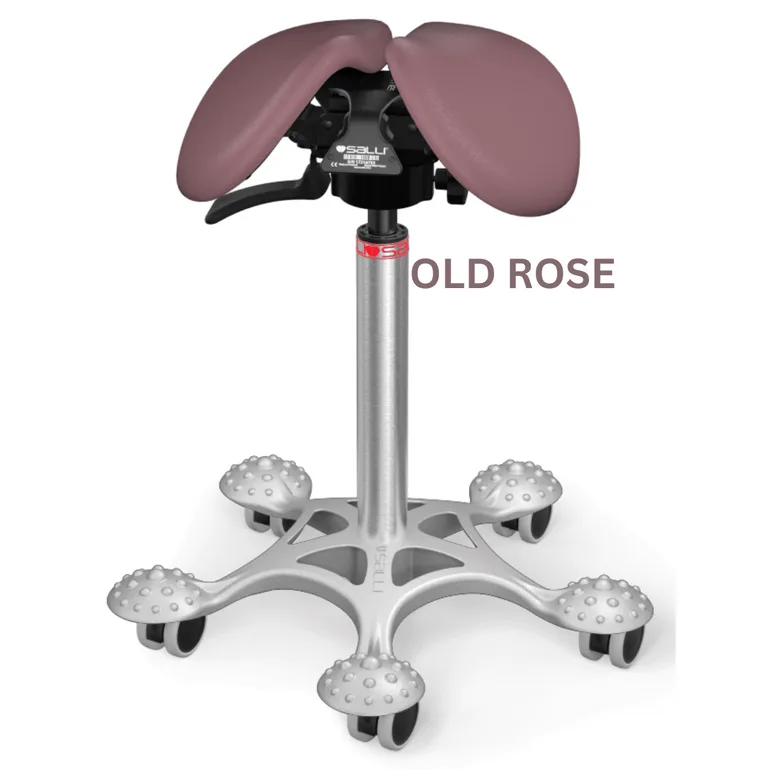
Salli MultiAdjuster Split Saddle Chair
Pros
- ✓ Split seat design eliminates perineal pressure — key for long sessions
- ✓ Highly adjustable: seat width, angle, and height all tunable
- ✓ Trusted by dentists, surgeons, and sonographers worldwide
- ✓ 10-year seat warranty reflects genuine professional-grade durability
Cons
- ✗ Most expensive option on this list at $1,299
- ✗ No backrest — requires core strength or very gradual adaptation
- ✗ Ships from Finland with 4–8 week lead time
The Salli MultiAdjuster is what dentists, surgeons, and sonographers use when they need to sit for hours while maintaining precise positioning. It’s not designed to look good on a Zoom call. It’s designed to eliminate the one genuine problem with saddle chairs: perineal pressure.
Standard saddle chairs have a single solid seat that presses against the perineum during extended sitting — uncomfortable and potentially problematic over time. The Salli’s split design solves this with two independent seat pads separated by a gap. Each pad supports one thigh. The gap eliminates perineal contact entirely. For anyone who’s tried saddle chairs and found them uncomfortable for long sessions, this is the reason.
The seat width is adjustable, accommodating a range of body sizes. The tilt angle adjusts up to 30 degrees forward. Made in Finland with serious quality control and a 10-year seat warranty. The downside is the price ($1,299) and the lead time — expect 4–8 weeks for delivery from Europe.
If you’re setting up a home office for clinical work or you’re a professional who spends most of the day hunched over a patient or instrument, the Salli justifies its price. For office workers just looking to improve posture, start with the HAG Capisco or Branch first.
Best For: Medical professionals, dental hygienists, and power users who need the split-saddle design to eliminate perineal pressure during long working sessions.
Branch Saddle Chair (ILOA Plus) — Best Value
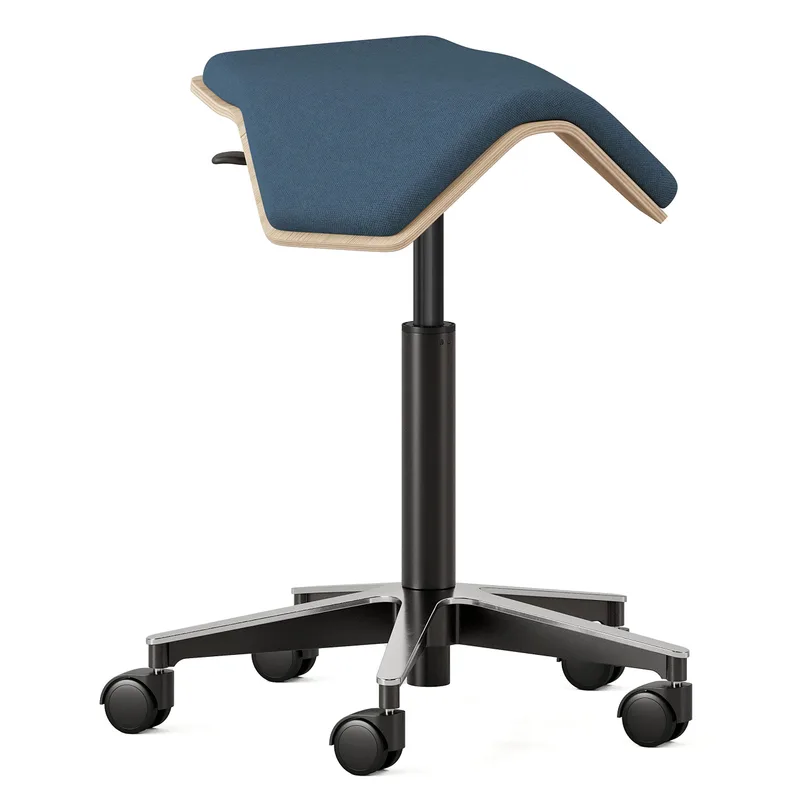
Branch Saddle Chair (ILOA Plus)
Pros
- ✓ Best price-to-quality ratio in the saddle chair market
- ✓ Sustainable materials: certified wood frame, recycled seat fabric
- ✓ Clean modern look that works in home offices, not just clinical settings
- ✓ Ships domestically — no 4–8 week European import wait
Cons
- ✗ 265 lb weight capacity is the lowest on this list
- ✗ No backrest — not suitable for anyone with existing back injuries
- ✗ Less adjustability than the HAG Capisco or Salli options
The Branch Saddle Chair — also known as the ILOA Plus — is the saddle chair to buy if you’re not ready to spend $1,000+. At $289, it undercuts the HAG Capisco by nearly $800 and delivers a genuinely well-made seat.
The frame is PEFC-certified birch plywood. The upholstery is 98% post-consumer recycled polyester. The base is powder-coated aluminum. These are materials choices that punch above the price point — you’re not getting cheap plastic or foam that compresses within a year.
The design is clean enough for a home office. No clinical look, no exposed gas cylinder hardware. It ships domestically (unlike the European imports), so you’re looking at a normal delivery timeline rather than a multi-week wait. The 265 lb weight limit and lack of adjustability are real drawbacks compared to premium options, but for an introduction to saddle seating, this is the pick.
One honest caveat: there’s no backrest. If you have existing back pain or lumbar issues, start with the Capisco. If you’re in reasonable shape and want to try active sitting without a big financial commitment, Branch is the answer.
Best For: Home office workers who want to try quality saddle seating at a reasonable price without the European import wait or premium price tag.
Varier Move Tilting Saddle Stool — Best for Standing Desk Users
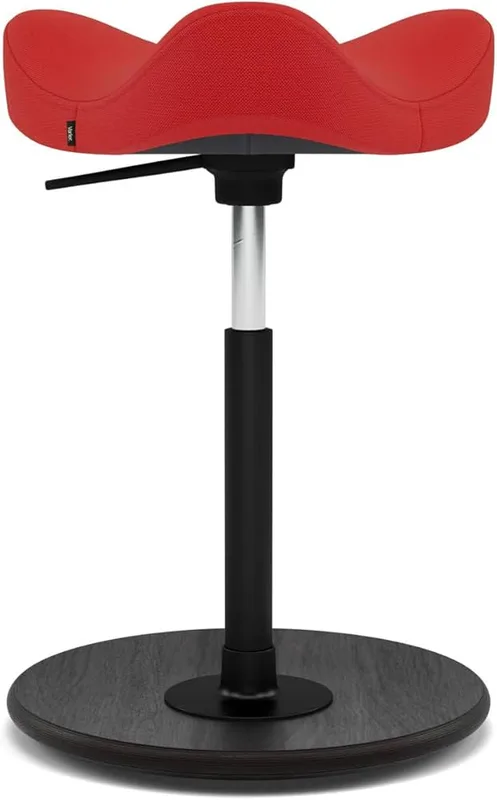
Varier Move Tilting Saddle Stool
Pros
- ✓ 360-degree tilt engages your core constantly — true active seating
- ✓ 22–32 inch height range pairs perfectly with standing desk frames
- ✓ Norwegian ergonomic heritage and 10-year warranty
- ✓ Lightweight at 15 lbs — easy to move between workstations
Cons
- ✗ No backrest or lumbar support at all
- ✗ Constant tilt is fatiguing early on — steep learning curve
- ✗ Availability can be limited at some US retailers
Varier is the Norwegian design house behind the original kneeling chair (the Balans) and several other active seating classics. The Move is their saddle stool, and it takes active sitting further than most: the entire seat tilts in 360 degrees, meaning your body is constantly making micro-adjustments to stay balanced.
The height range of 22–32 inches makes it the best match for standing desk users who want a perch-height seat to take weight off their feet while still maintaining an elevated posture. If you’re using a standing desk and finding that full standing periods are tiring, the Varier Move at semi-perch height is a genuine middle ground.
At $499, it’s mid-range for saddle seating. The 10-year warranty is solid. The lack of backrest and the constant tilt mechanism make it demanding on your core — plan for a 2–3 week adaptation period. It’s not an all-day option for newcomers, but for standing desk users who want to add a third sitting position (sit, stand, perch), it earns its place.
Best For: Standing desk users who want a semi-perch option that keeps them active and at the right height for their adjustable frame.
Jobri BetterPosture Saddle Chair — Best Budget
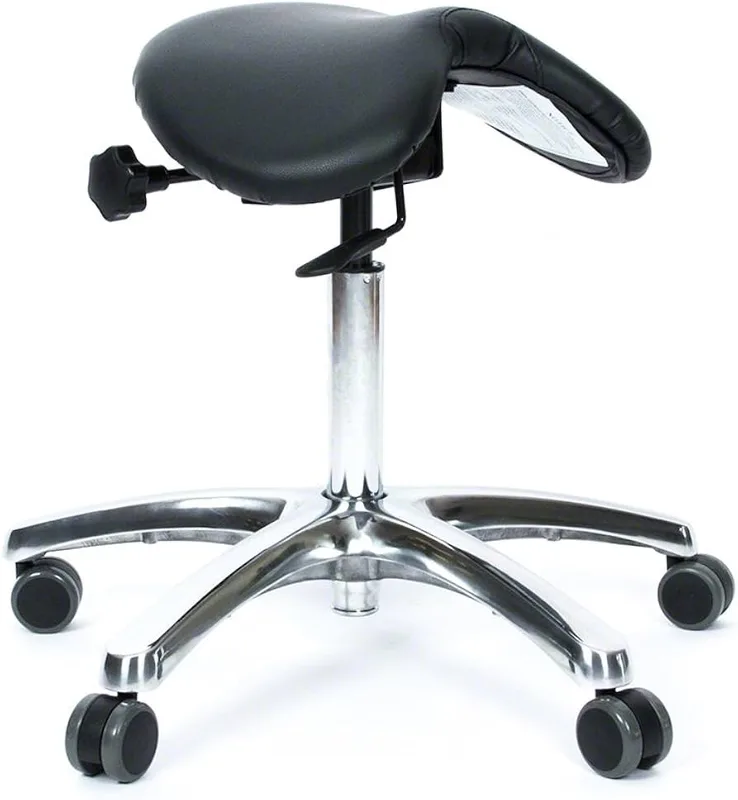
Jobri BetterPosture Saddle Chair
Pros
- ✓ Most affordable way to try saddle seating without a big commitment
- ✓ Adjustable seat tilt lets you dial in a comfortable forward angle
- ✓ Polished aluminum base looks more premium than the sub-$200 price
- ✓ Waterfall seat edge reduces pressure behind the thighs
Cons
- ✗ Pleather is less breathable than fabric — warm in summer
- ✗ 250 lb weight capacity is the lowest on this list
- ✗ Limited adjustability compared to premium saddle chairs
The Jobri BetterPosture is the simplest entry into saddle seating on this list. At $199, it costs less than a quarter of the HAG Capisco. The construction is straightforward: a pleather saddle seat with an adjustable tilt angle, mounted on a 5-point polished aluminum base with casters.
The adjustable seat tilt is the key feature. You can set how aggressively the seat tilts forward, which affects how much the saddle position opens your hip angle and engages your lower back. The waterfall front edge reduces pressure behind the thighs — a nice touch at this price.
The pleather isn’t breathable, so summer use can get warm. The 250 lb weight limit is the lowest on this list. The build quality is fine but not impressive. This is a chair for testing whether saddle seating works for your body before spending serious money. If you use it for two months and love it, upgrade to the HAG Capisco. If it doesn’t suit you, you’ve lost $199 instead of $1,000.
Best For: Budget-conscious buyers who want to try saddle seating before committing to a premium option.
Saddle Chair Comparison
| Chair | Price | Height Range | Weight Limit | Backrest | Best For |
|---|---|---|---|---|---|
| HAG Capisco 8106 | $1,080 | 16.5–32” | 300 lbs | Yes | Overall best |
| Salli MultiAdjuster | $1,299 | Adjustable | N/A | No | Medical professionals |
| Branch Saddle Chair | $289 | Adjustable | 265 lbs | No | Best value |
| Varier Move | $499 | 22–32” | N/A | No | Standing desk users |
| Jobri BetterPosture | $199 | 21–28” | 250 lbs | No | Budget trial |
Saddle Chair Buying Guide
What Is Active Sitting, and Why Does It Matter?
Saddle chairs work differently from ergonomic office chairs. Instead of supporting your back into a neutral position, they put your pelvis in a forward tilt that causes your spine to stack naturally — lumbar curve intact, thoracic spine erect. The absence of a backrest means your postural muscles have to do the work. Over time, this builds the core and back endurance that makes sitting for extended periods less damaging.
This is why saddle chairs are popular with people who struggle with lower back pain from desk work. A traditional ergonomic chair with lumbar support can mask muscle weakness. A saddle chair forces engagement. Neither approach is universally better — they serve different goals.
Saddle Chair vs Kneeling Chair
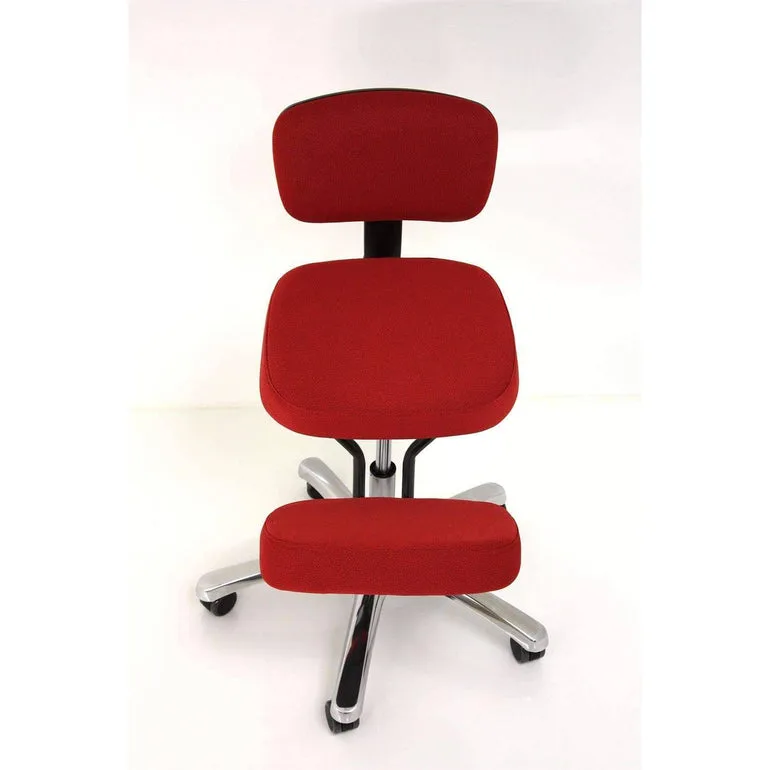
Both saddle chairs and kneeling chairs achieve similar things: a forward pelvic tilt and an open hip angle that keeps the spine extended. The key difference is weight distribution. Kneeling chairs offload weight onto the shins and knees — which some people find uncomfortable. Saddle chairs distribute weight entirely through the thighs and seat bones, with no shin contact. For most people who can’t tolerate kneeling chairs, saddle chairs are more sustainable long-term.
Do You Need a Backrest?
Only the HAG Capisco on this list has a real backrest. If you’re new to saddle seating, the Capisco’s backrest is a genuine advantage — it gives you a fallback for moments when your core fatigues, and it enables backward-straddling seating positions that pure stools can’t replicate.
For experienced saddle sitters or people who’ve adapted to backrest-free seating, the stool-style options (Branch, Varier, Salli) are fine. If you have a diagnosed back condition, consult a physical therapist before committing to a backrest-free option.
Height Considerations
This is the most important spec to get right. Your saddle chair height should put your hips slightly above your knees, with your thighs sloping downward at about 45 degrees. For a conventional desk (28–30 inches high), this typically means a seat height of 20–24 inches. For a standing desk at perch height, you’ll want 28–32 inches.
The Varier Move’s 22–32 inch range is specifically designed for standing desk integration. The HAG Capisco’s three lift options let you choose at purchase time based on your primary desk height. Budget options like the Jobri top out at 28 inches, which may be limiting if you’re using a raised desk.
Adaptation Period
Every saddle chair requires adaptation. Your postural muscles — particularly the paraspinal muscles and hip flexors — aren’t conditioned for this seated position if you’ve spent years in a conventional chair. Plan to start with 1–2 hours per day and increase gradually over 2–4 weeks. Trying to sit in a saddle chair all day from day one leads to muscle fatigue and reinforces the idea that the chair is uncomfortable. It’s not — you’re just not conditioned yet.
Pairing your saddle chair with regular standing periods using a height-adjustable desk and an anti-fatigue mat creates the most sustainable active-sitting workflow.
Split Saddle vs Traditional Saddle
If you’re male and concerned about perineal pressure from extended saddle sitting, a split-saddle design (like the Salli MultiAdjuster) is worth considering. Traditional saddle chairs include a center ridge that can put pressure on soft tissue during long sessions. Split-saddle designs eliminate this entirely. The downside is cost — split-saddle chairs are almost exclusively at the premium end of the market.
FAQ
Are saddle chairs good for your back?
For most people, saddle chairs can improve lower back posture by encouraging a natural lumbar curve through forward pelvic tilt. Owner feedback and ergonomic research both suggest they reduce lower back strain compared to traditional flat-seat office chairs. However, they require muscular adaptation — the first few weeks may feel uncomfortable as your core and back muscles adjust. If you have a diagnosed spinal condition, consult a physiotherapist before switching.
Can you sit in a saddle chair all day?
Yes, once you’ve adapted — but adaptation takes 2–4 weeks of gradual use. Start with 1–2 hours per day and increase slowly. Most experienced saddle chair users mix saddle sitting with standing periods and occasional breaks in a conventional chair rather than staying in any single position all day. A sit-stand desk workflow is the ideal complement.
What is the best saddle chair for standing desk users?
The Varier Move (22–32 inch height range) is specifically designed for standing desk integration. The HAG Capisco with the CY37 gas lift (22.5–32 inches) is another excellent choice — it adds a backrest and multiple seating positions on top of the standing-desk-compatible height range. If you’re primarily buying a saddle chair to use with your standing desk, either of these is the right call.
How long does it take to get used to a saddle chair?
Most people need 2–4 weeks of consistent use to fully adapt. The first few days often feel awkward, and some muscle soreness in the lower back and hips is normal. By week two, most users report the position starts to feel natural. By week four, most find it difficult to go back to conventional seating for extended periods.
Are saddle chairs good for people with lower back pain?
Many people with chronic lower back pain report improvement with saddle chairs, because the forward pelvic tilt naturally restores lumbar curvature that conventional chairs often flatten. That said, saddle chairs require muscular engagement — if your back pain is severe or relates to a specific diagnosis, get professional advice before switching. They’re generally better suited for prevention and mild chronic pain than for acute conditions.
Are there saddle chairs with backrests?
The HAG Capisco 8106 is the standout option with a genuine, fully adjustable backrest. Most saddle chairs are designed as stools without back support, operating on the theory that the saddle position itself provides postural correction. The Capisco’s backrest is independently adjustable and doubles as a front chest support when the chair is reversed — making it significantly more versatile than stool-only designs.
Final Recommendations
The HAG Capisco 8106 is the clear overall pick. It’s the only saddle chair with a proper backrest, it’s built for a 10-year lifespan, and it handles both conventional desk and standing desk heights depending on which gas lift you choose. At $1,080, it’s a serious investment — but it’s the one you keep for a decade.
The Branch Saddle Chair at $289 is the right move if you’re not ready to commit to four figures. The materials are genuinely good, it ships quickly, and it’ll tell you whether saddle seating is for you before you spend real money.
The Varier Move earns its $499 if you have a standing desk and want a semi-perch seat that integrates naturally into a sit-stand-perch workflow.
The Salli MultiAdjuster is for professionals with specific perineal pressure concerns. It’s not the answer for most office workers, but for medical and dental professionals, nothing else comes close.
The Jobri BetterPosture is a $199 experiment. If it works, upgrade. If it doesn’t, you’ve learned something without a painful financial lesson.
Whatever you choose, pair it with a proper ergonomic workspace setup and allow time for adaptation. Saddle seating is a genuine upgrade for most desk workers — but only if you give it the adjustment period it needs.