Sciatica is one of the most common desk-worker complaints in 2026 — and one of the most misunderstood. The sciatic nerve runs from the lower spine through the buttocks and down both legs, and prolonged sitting in the wrong chair compresses it directly. The result: burning, shooting, or numbing pain that can make eight hours at a desk genuinely unbearable.
The good news is that the right chair can make a measurable difference. Features like adjustable seat depth, proper lumbar positioning, and hip-angle control reduce the pressure points that aggravate the nerve. In 2026, a new generation of self-adaptive lumbar systems — pioneered by brands like SIHOO — have made dynamic support more accessible without a four-figure price tag.
If you need a quick answer: the Herman Miller Aeron is the top pick for most sciatica sufferers thanks to its PostureFit SL dual-lumbar system. For a tighter budget, the Branch Ergonomic Chair offers adjustable lumbar support and a 7-year warranty at $299.
Here are the six best office chairs for sciatica based on ergonomic features, user feedback, and current pricing.
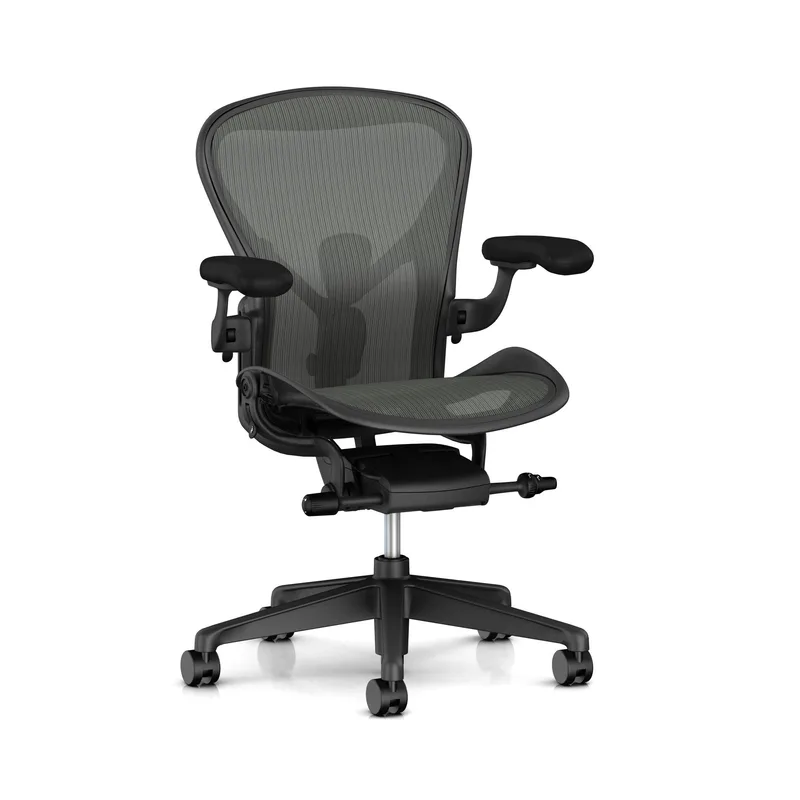
Herman Miller Aeron Chair
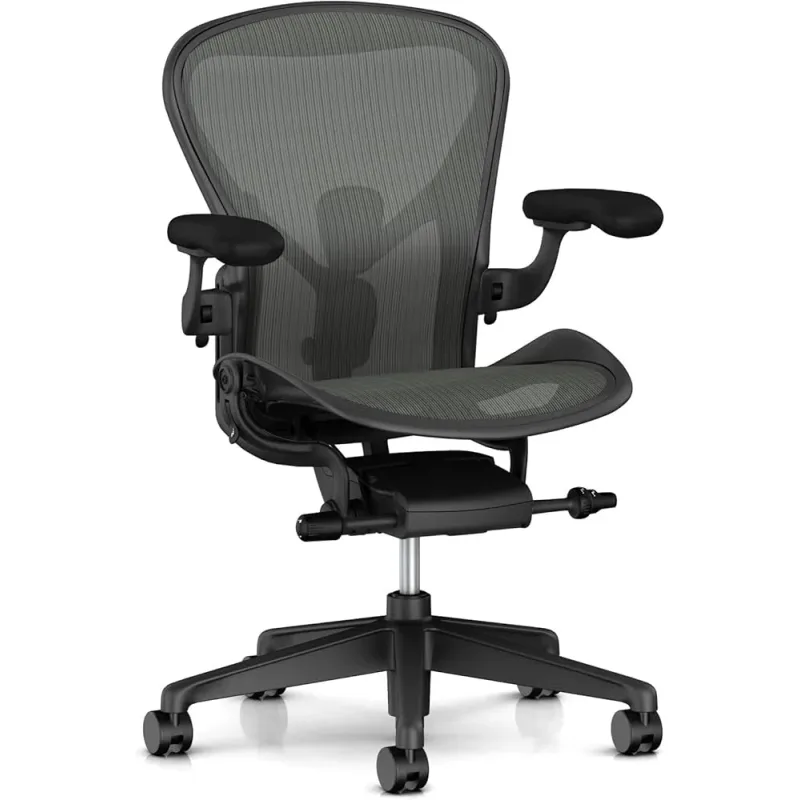
Herman Miller Aeron Chair
Pros
- ✓ PostureFit SL supports both the sacrum and lower back — reduces pressure on the sciatic nerve better than single-point lumbar systems
- ✓ 8Z Pellicle mesh distributes your weight evenly across the seat, preventing the pressure buildup that aggravates sciatica
- ✓ Forward tilt option lets you shift the pelvis forward to open the hip angle and relieve leg nerve compression
- ✓ Three true sizes (A/B/C) ensure a proper fit — critical because an undersized seat compresses the thighs and worsens sciatic symptoms
Cons
- ✗ $1,538 list price — watch for Herman Miller sales (25% off is common) or consider certified refurbished units
- ✗ No seat depth adjustment — correct size selection is essential
- ✗ Firm mesh seat takes adjustment for people used to foam padding
The Aeron has been the benchmark for ergonomic seating for years, and its PostureFit SL system makes it particularly effective for sciatica. Unlike single-pad lumbar systems, PostureFit SL uses two independent pads — one that targets the sacrum (the base of the spine) and one for the lumbar — that adjust separately. This dual-contact design supports the natural S-curve of the lower back and reduces the forward pelvic tilt that pinches the sciatic nerve at the L4/L5 level.
The 8Z Pellicle mesh seat divides into eight tension zones that vary across the seat surface. The outer zones are firmer for edge support; the central zones are softer to reduce ischial pressure — the exact spot where the sciatic nerve pathway runs through the buttocks. It’s a more sophisticated weight distribution than any foam seat at any price.
The forward tilt lever is underrated for sciatica. Setting the seat at a slight forward angle opens the hip-to-thigh relationship to around 100°–110°, which ergonomics research associates with reduced lumbar disk compression. People with piriformis-related sciatica (where the nerve is compressed by a tight piriformis muscle rather than a disk) benefit particularly from this.
Available in three sizes — A for smaller frames, B for most adults (5’2”–6’2”), C for larger bodies — the Aeron is one of the few chairs that properly accounts for seat depth in the sizing itself. An undersized chair compresses the back of the thighs, directly increasing sciatic nerve pressure.
Read the full Herman Miller Aeron review for a detailed breakdown of sizing and adjustment.
Best For: People with lumbar-origin sciatica (L4/L5 or L5/S1) who want the most clinically-respected lumbar support system available.
Steelcase Leap V2
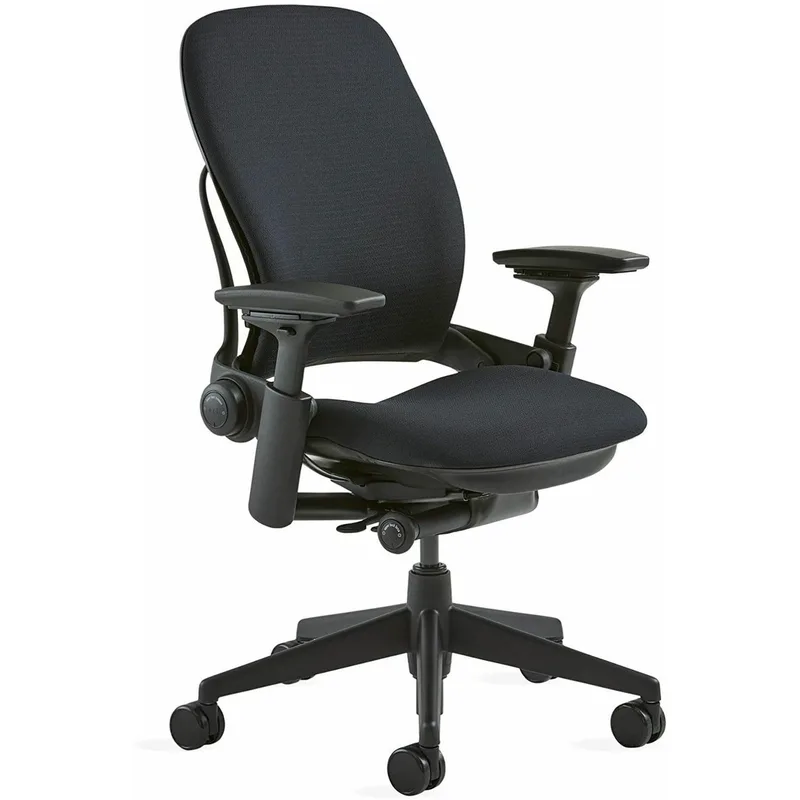
Steelcase Leap V2
Pros
- ✓ LiveBack technology flexes the upper and lower back sections independently, maintaining spinal support through every posture change
- ✓ Adjustable lumbar firmness dial lets you reduce or increase lower back pressure independently of position — rare at any price
- ✓ Natural Glide System slides the seat forward during recline, keeping thigh pressure constant and avoiding nerve compression
- ✓ 400 lb weight capacity is higher than most premium ergonomic chairs
Cons
- ✗ $1,399 is a significant investment — certified refurbished Leap V2 units from reliable dealers are worth considering
- ✗ Heavier build (46 lbs) makes repositioning the chair more effort
- ✗ Design looks dated compared to newer mesh chairs
The Leap V2’s LiveBack technology is the feature that matters most here. The backrest is split into upper and lower sections that flex independently, following the natural movement of your spine rather than forcing you to hold a static position. When your upper back rounds (as it does during focused work), the upper section follows. The lower section maintains contact with your lumbar regardless.
For sciatica sufferers, the adjustable lumbar firmness dial is invaluable. You can increase lower back support pressure to actively support the lumbar curve, or reduce it if your sciatica is aggravated by direct pressure. Most chairs offer lumbar height adjustment; the Leap V2 gives you both height and firmness — a meaningful clinical difference.
The Natural Glide System slides the seat pan forward as you recline, preventing the hip angle from opening past the comfortable range. Many people unconsciously recline to relieve sciatica pressure, only to find the seat edge digs into their thighs and makes things worse. The Leap V2 solves this.
At 400 lbs weight capacity, it also supports a broader range of body types than most premium chairs.
For a head-to-head breakdown, see Herman Miller Aeron vs Steelcase Leap.
Best For: People who shift positions frequently throughout the day and need a chair that adapts to movement rather than requiring you to manually readjust.
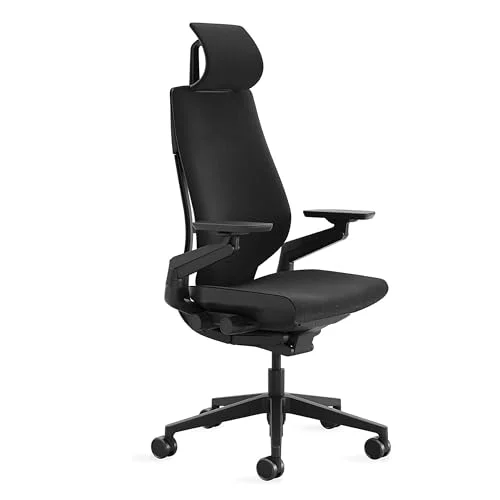
Humanscale Freedom Chair with Headrest
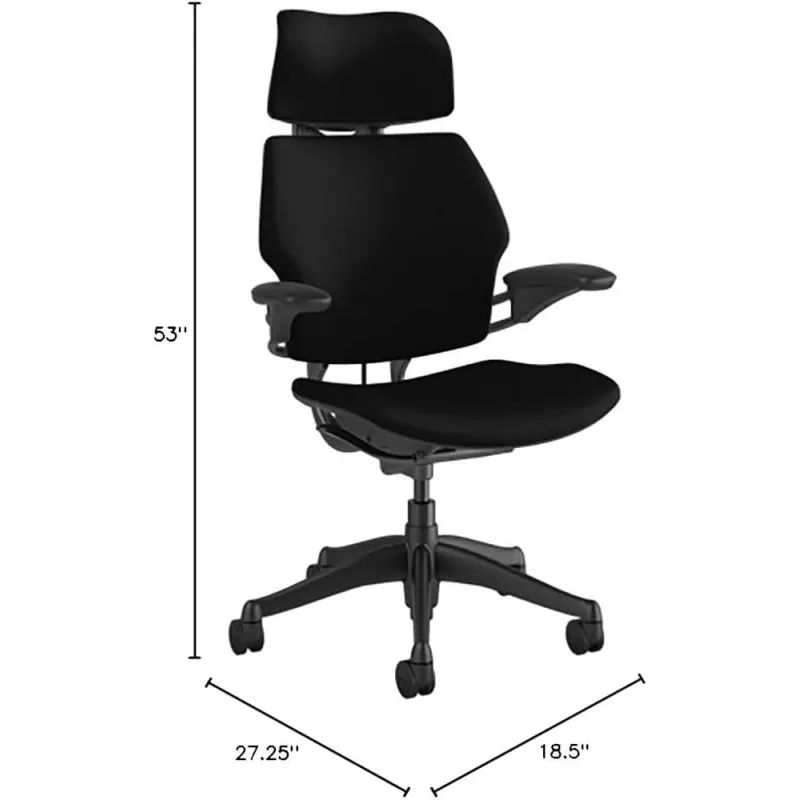
Humanscale Freedom Chair with Headrest
Pros
- ✓ Weight-sensitive recline adjusts automatically to your body weight with no manual tension knobs — eliminates the most common setup mistake that worsens sciatica
- ✓ Self-adjusting headrest follows your neck position through recline, reducing upper-body tension that radiates into the lower back
- ✓ 15-year warranty is among the longest in the entire office chair market
- ✓ Minimal design with no protruding levers means you naturally move without bracing against hardware
Cons
- ✗ Fixed lumbar contour doesn't work for everyone — if the curve hits the wrong spot, there's no easy adjustment
- ✗ No seat depth adjustment in the base configuration
- ✗ Duron arms don't pivot or move in depth like true 4D arms on Aeron or Leap
The Freedom takes the opposite approach to adjustment: eliminate the knobs entirely. Its weight-sensitive recline mechanism uses a counterbalance calibrated to your body weight, so the chair reclines naturally as you lean back without a lever to pull first. For sciatica sufferers who unconsciously resist leaning back (because they don’t want to fumble with a tension knob mid-thought), this removes a real barrier.
The self-adjusting headrest follows your neck position through recline. Upper-body tension — tight traps, rounded shoulders — is a common sciatica aggravator, and having neck support that tracks your posture rather than requiring a manual stop reduces that tension passively.
The built-in lumbar contour is well-positioned for neutral spinal alignment, though it’s not adjustable in the standard configuration. This is the Freedom’s main limitation for sciatica specifically: if the fixed curve hits you in the wrong spot, there’s no easy correction. People between 5’5” and 6’1” tend to fit the standard Freedom well; outside that range, results vary.
See the full Humanscale Freedom review for sizing guidance.
Best For: People who want a premium chair with zero manual adjustment — ideal if you find yourself ignoring complex controls and just sitting in whatever position the chair allows.
Branch Ergonomic Chair
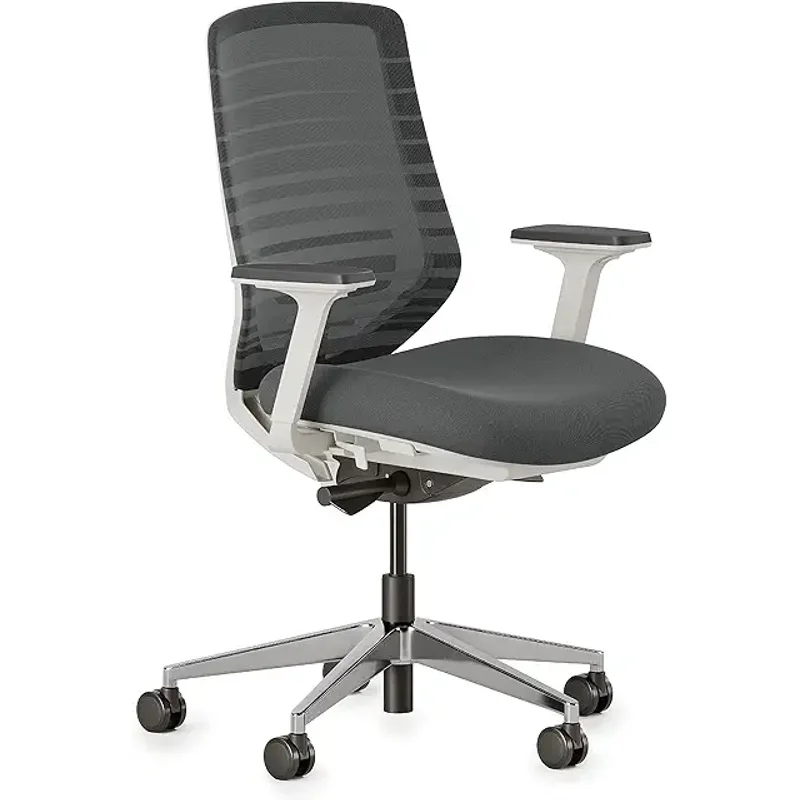
Branch Ergonomic Chair
Pros
- ✓ Height-adjustable lumbar support lets you position the pad exactly where your lower back needs it — directly over the L4/L5 region where most sciatica originates
- ✓ Breathable mesh prevents the heat buildup that increases nerve sensitivity during long sits
- ✓ 7-year warranty at $299 is exceptional — better than many chairs costing twice as much
- ✓ Removable lumbar pad is useful if your sciatica is hip-based and the support makes things worse
Cons
- ✗ No headrest — additional upper body support requires a separate purchase
- ✗ 2-way armrests (up/down only) rather than full 4D — less ability to reduce shoulder tension
- ✗ Less precise lumbar control than premium LiveBack or PostureFit SL systems
At $299, the Branch is the best value chair for sciatica on this list. The adjustable lumbar support rides up and down the backrest, letting you position it precisely at the L4/L5 region where most disc-origin sciatica starts. It’s also removable — if your sciatica is hip or piriformis-based and lumbar pressure makes it worse, you can simply detach it.
The breathable mesh prevents heat buildup, which matters for sciatica because nerve sensitivity increases with inflammation, and sitting in a hot chair for hours doesn’t help. The 7-year warranty is exceptional at this price — better than what some $1,000+ chairs offer.
What the Branch doesn’t have is seat depth adjustment, 4D armrests, or a headrest in the standard version. If seat depth is critical for your sciatica (it is for many people with piriformis or hip-based nerve compression), look at the SIDIZ T50 instead.
If you’re looking for more sub-$500 options, best ergonomic chairs under $500 covers several strong picks.
Best For: People with lumbar-origin sciatica on a mid-range budget who prioritize adjustable lumbar support and long warranty coverage.
SIDIZ T50 Ergonomic Chair
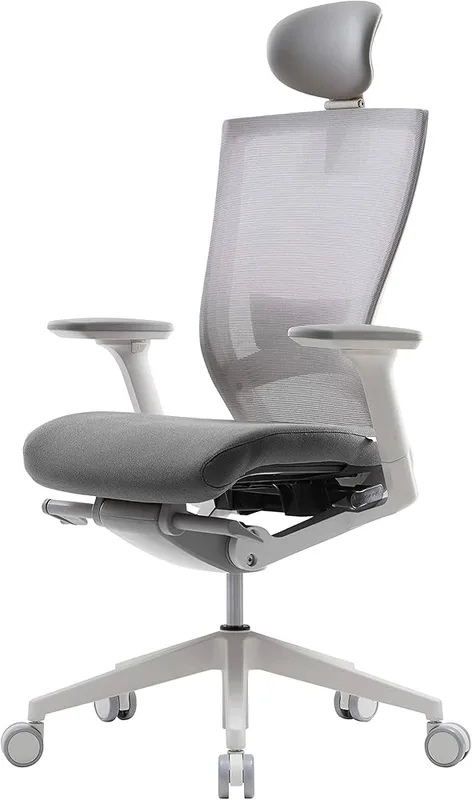
SIDIZ T50 Ergonomic Chair
Pros
- ✓ Adjustable seat depth is the single most important feature for sciatica — moving the seat forward reduces thigh pressure on the femoral nerve
- ✓ Included headrest reduces the upper-body tension that often radiates into the lower back and aggravates sciatic symptoms
- ✓ 10+ adjustment functions give more customization than most sub-$500 chairs
- ✓ Forward tilt function encourages active sitting posture that reduces hip flexor tightness
Cons
- ✗ 3-year warranty is the shortest on this list — Branch's 7-year coverage is much better value
- ✗ 275 lb weight capacity is lower than competitors at a similar price
- ✗ Lumbar support less sophisticated than premium LiveBack or PostureFit SL systems
The SIDIZ T50 earns its place here primarily for seat depth adjustment — the feature most other chairs at this price omit. A seat that’s too deep digs into the back of the thighs, compressing the femoral and sciatic nerve pathways. The T50’s seat slide lets you move the seat pan in and out to dial in the correct thigh clearance for your leg length. This single feature can make a larger difference in sciatica symptoms than lumbar support adjustments for some people.
The included adjustable headrest and 3D armrests give more total adjustment than the Branch at a similar price. The forward tilt function promotes active sitting posture — pelvis slightly forward, spine in a more natural S-curve — which reduces cumulative disk compression over long work sessions.
The 275 lb weight capacity and 3-year warranty are the weak points. If you’re near or over the capacity limit, the Leap V2 or Aeron are more appropriate choices.
Best For: People whose sciatica is worsened by seat depth pressure on the thighs, or who need the most adjustment options possible at under $400.
SIHOO Doro C300 Ergonomic Chair
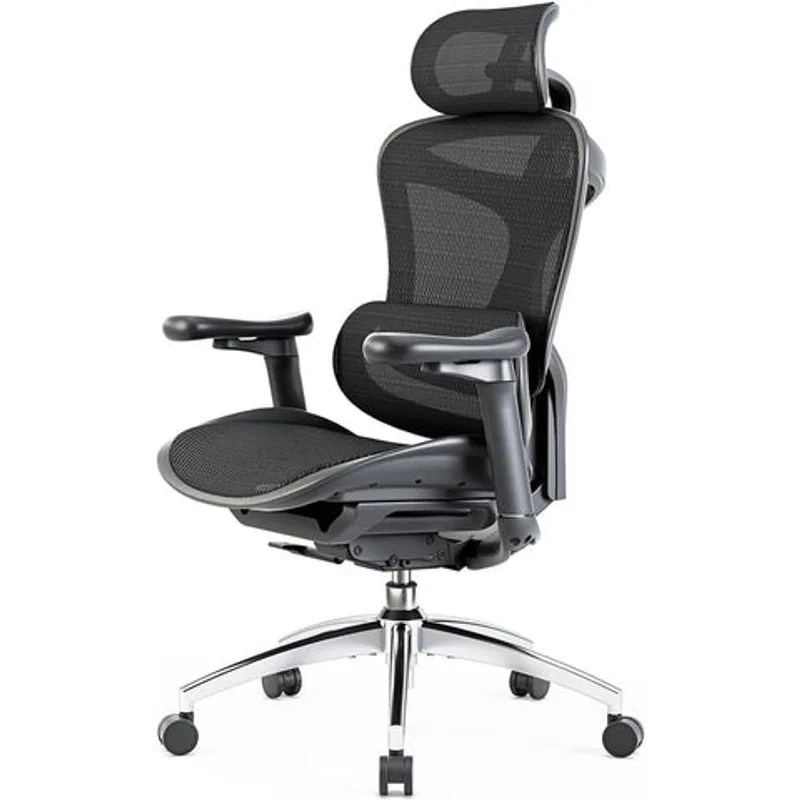
SIHOO Doro C300 Ergonomic Chair
Pros
- ✓ Dynamic self-adaptive lumbar pivots as you move, maintaining contact with your lower back through posture shifts — unlike static pads that only work when you hold still
- ✓ 330 lb weight capacity is higher than Branch and SIDIZ at similar or lower prices
- ✓ Ultra-soft 3D armrests absorb shoulder and arm tension that can contribute to referred nerve pain
- ✓ BIFMA certified structural integrity testing — strong build quality at $369
Cons
- ✗ No seat depth adjustment — limits direct control over thigh nerve compression
- ✗ 3-year warranty is shorter than Branch's 7-year guarantee
- ✗ More plastic construction relative to premium chairs affects long-term durability
The SIHOO Doro C300 has been generating notable attention in 2026 for its approach to lumbar support. Instead of a static pad you adjust once and hope stays in position, the C300’s dynamic lumbar pivots continuously as you move. When you lean forward, the lumbar tracks forward. When you shift side-to-side, it moves with you. This matters for sciatica specifically because the sciatic nerve is often most compressed during transitions — the moment you lean forward to reach for something, or twist to look at a second monitor.
The coordinated linkage system in the backrest maintains approximately a 120° hip angle through recline. That angle is generally associated with reduced lumbar disk pressure compared to the 90° “perfect posture” position that many people force themselves into.
At $369, the C300 offers a lumbar innovation that genuinely costs $400–$800 more to get from premium brands. The trade-offs are real — no seat depth adjustment, shorter warranty, more plastic construction — but for a home office worker with sciatica who can’t justify $1,400+, it’s a serious contender.
For a broader look at managing lower back pain through better ergonomics, see the complete guide to ergonomic chairs for lower back pain relief.
Best For: Budget-conscious buyers with movement-aggravated sciatica who want dynamic lumbar support without paying premium prices.
Comparison Table
| Chair | Price | Lumbar System | Seat Depth Adj. | Weight Cap. | Warranty | Rating |
|---|---|---|---|---|---|---|
| Herman Miller Aeron | $1,538 | PostureFit SL (dual-pad) | No (size-dependent) | 300 lbs | 12 years | 9.3 |
| Steelcase Leap V2 | $615.00-$1499.00 as of Oct 18, 2026 | Height + firmness adj. | Yes (3 inches) | 400 lbs | 12 years | 9.0 |
| Humanscale Freedom | $1921.00 as of Oct 18, 2026 | Fixed contour | No | 300 lbs | 15 years | 8.8 |
| Branch Ergonomic | Unavailable | Height-adjustable pad | No | 300 lbs | 7 years | 8.5 |
| SIDIZ T50 | $449.00 as of Oct 18, 2026 | 2-way (height + depth) | Yes (slide) | 275 lbs | 3 years | 8.3 |
| SIHOO Doro C300 | $299.99-$349.99 as of Oct 18, 2026 | Dynamic adaptive pivot | No | 330 lbs | 3 years | 8.2 |
What to Look for in a Chair for Sciatica
Seat Depth Adjustment
This is the most overlooked feature for sciatica. If the seat pan is too long, the front edge presses into the back of your thighs, compressing the sciatic and femoral nerves directly. Look for at least 2–3 inches of seat depth adjustment. The Leap V2 and SIDIZ T50 both offer this.
Lumbar Support Type
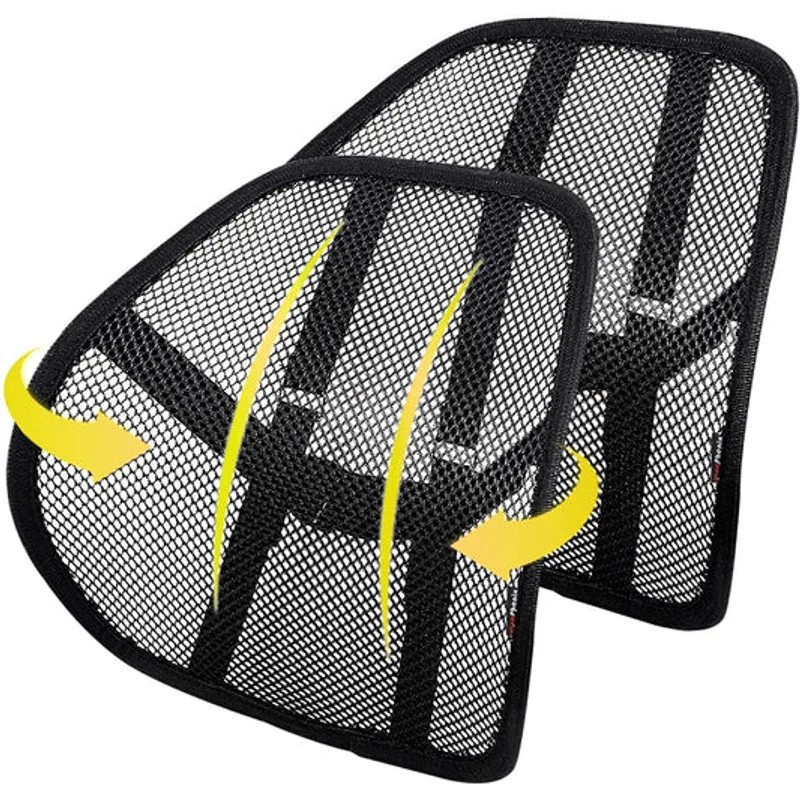
Static lumbar pads work if you sit still in exactly the right position. Dynamic or multi-point systems (PostureFit SL, LiveBack) work across a range of positions. For sciatica specifically, a lumbar system that maintains contact as you shift is more effective than one that’s only correct when you’re perfectly upright.
Hip Angle Control
Sitting at exactly 90° is not ideal for sciatica. A 100°–120° hip angle (slightly reclined or forward-tilted seat) reduces disk compression on the L4/L5 and L5/S1 vertebrae where the sciatic nerve exits the spine. Look for chairs with tilt tension adjustment, forward tilt capability, or synchro-tilt mechanisms that keep the seat and back moving together.
Armrest Quality
Armrests that are too low force the shoulders to drop and round, increasing thoracic tension that radiates into the lower back. Armrests that are too high hike the shoulders up, same result. Adjustable-height armrests (minimum 3D, ideally 4D) help eliminate this indirect sciatica aggravator. The Aeron and Leap V2 both offer 8-way and 4D arms respectively.
Budget Expectations
- Under $400: Branch Ergonomic ($299) is the strongest option under $400. The SIDIZ T50 ($419) is best if seat depth adjustment is critical. The SIHOO Doro C300 ($369) is worth considering if dynamic adaptive lumbar is the priority.
- $400–$800: Limited strong options in this gap — consider certified refurbished Leap V2 or Aeron units from reputable dealers.
- $1,000+: Herman Miller Aeron, Steelcase Leap V2, and Humanscale Freedom are the top tier. All three are supported by 12–15 year warranties that protect the investment.
If you’re dealing with joint or coccyx pain alongside sciatica, best lumbar support pillows covers add-on cushions that can supplement any of these chairs.
FAQ
What type of chair is worst for sciatica?
Chairs with no lumbar support, non-adjustable seat depth, and little-to-no tilt are the most problematic. Hard, flat seats without any contour are particularly bad — they put uniform pressure across the ischial region, directly compressing the sciatic nerve pathway. Dining chairs, most gaming chairs without lumbar adjustment, and cheap flat-seat task chairs fall into this category.
Should I sit forward or recline with sciatica?
Most people with lumbar-origin sciatica (from disc herniation or stenosis) benefit from a slight recline — around 110°–120° hip angle rather than rigid 90°. This reduces disk pressure. However, if your sciatica is piriformis-related, a more upright or slightly forward position may feel better. Experiment with tilt tension and see what provides the most relief for your specific presentation.
Can a chair cure sciatica?
No. A better chair reduces the aggravating factors — nerve compression, poor hip angle, seat pressure — but sciatica from a herniated disk or spinal stenosis requires medical treatment alongside ergonomic changes. Think of a good chair as pain management and prevention, not treatment. If symptoms are severe or worsening, consult a physician.
Is a kneeling chair good for sciatica?
Kneeling chairs shift weight from the ischial (sitting) bones to the knees and shins, which can reduce lower back compression for some people. However, they don’t suit everyone — if your sciatica originates in the piriformis rather than the lumbar spine, the kneeling position can actually increase muscle tension in that area. They also require more core stability to use comfortably all day.
How often should I stand up when sitting with sciatica?
Most physiotherapists recommend standing or walking briefly every 30–45 minutes. Prolonged static sitting — even in a perfect chair — allows the piriformis muscle to tighten and increases overall nerve pressure. A standing desk or desk converter can help; see best ergonomic chairs for programmers for setups built around movement.
Does seat cushion material matter for sciatica?
Yes. Very soft foam compresses completely under body weight and stops providing support within 30–60 minutes. Very firm foam distributes weight without pressure relief. The ideal is medium-density foam or an engineered mesh like the Aeron’s 8Z Pellicle — firm enough to maintain structure but variable enough to reduce pressure over the ischial bones. High-density memory foam can also work if it has a coccyx cutout.
Conclusion
The best chair for sciatica depends on where your nerve compression originates:
- Lumbar disk origin (L4/L5, L5/S1): Herman Miller Aeron’s PostureFit SL dual-lumbar system is the top choice. Steelcase Leap V2 is the alternative with more manual control.
- Seat depth / thigh pressure: SIDIZ T50 offers adjustable seat depth at $374. Steelcase Leap V2 is the premium option.
- Budget under $400: Branch Ergonomic Chair ($299) for adjustable lumbar and 7-year warranty. SIHOO Doro C300 ($369) if dynamic adaptive lumbar is the priority.
- Hands-off simplicity: Humanscale Freedom with Headrest — no adjustment required.
Whatever chair you choose, pair it with regular movement breaks and correct monitor height to address the full picture. The complete guide to ergonomic chairs for lower back pain relief covers the full ergonomic setup for long-term sciatica management.