Your feet are supposed to touch the floor when you sit. If they don’t — and if you’re shorter than average, or sitting in a chair that’s set too high for your desk — your legs dangle, blood pools, and your lower back takes on extra strain to compensate. A footrest fixes this. It’s one of the most overlooked ergonomic accessories in any office setup, and chiropractors consistently recommend it as a first step for workers dealing with unexplained lower back or hip pain.
In 2026, the category has expanded well beyond simple plastic platforms. You can get rocking footrests with ball-bearing mechanisms, dual-mode foam options that double as calf stretchers, and smart-adjustment systems that use color coding to help you find the correct tilt for your body. This guide cuts through the clutter and focuses on the picks that will actually make a difference for people who sit at a desk for eight or more hours a day.
Quick pick: The Humanscale FR300 is the best overall if budget allows. For most people, the ErgoFoam 2in1 at $45 delivers excellent ergonomic value. On a tight budget, the Everlasting Comfort is hard to argue with at $29.
Quick Comparison
| Product | Price | Height Range | Motion | Best For |
|---|---|---|---|---|
| Humanscale FR300 | Unavailable | 3.75”–6.75” | Ball-bearing rocker | Premium ergonomic |
| ErgoFoam 2in1 | $45.95 as of Oct 11, 2026 | Flat or tilted | Static (2 modes) | Best overall value |
| Kensington SoleMate Plus | Unavailable | 3.5”–5” | 6-position tilt | Adjustability |
| ComfiLife Memory Foam | $39.99 as of Oct 11, 2026 | 2 positions | Static | Comfort/joint relief |
| Everlasting Comfort | $37.99 as of Oct 11, 2026 | Fixed | Gentle rock | Budget memory foam |
| Fellowes Standard | $23.99 as of Oct 11, 2026 | 2 positions | Free-floating | Classic/ultra-budget |
1. Humanscale FR300 Foot Rocker — Editor’s Pick
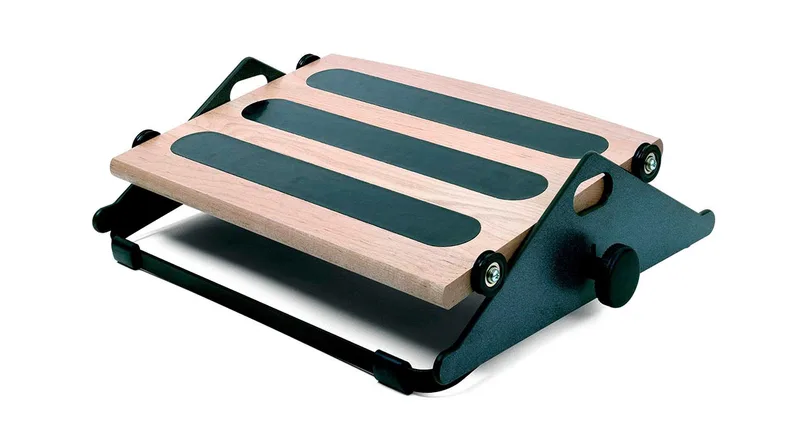
Humanscale FR300 Foot Rocker
Pros
- ✓ Ball-bearing rollers create smooth, gentle rocking motion that actively engages leg muscles
- ✓ Adjustable height suits short and standard desks without modification
- ✓ Steel frame and hardwood platform built to last years of daily use
- ✓ Ergonomist-designed — the standard that competitors are measured against
Cons
- ✗ Premium price puts it out of reach for casual users
- ✗ Rocker-only design — no flat mode for users who want stationary support
- ✗ Natural wood surface has limited cushioning
The Humanscale FR300 is what every other office footrest is compared against. It uses ball-bearing rollers underneath a natural hardwood platform to create a smooth, pendulum-like rocking motion — the kind that keeps your legs engaged without being distracting.
Height adjusts from 3.75 to 6.75 inches using a simple locking mechanism, which covers the range for most standard desks and chairs. The steel frame doesn’t flex or creak even under daily use. The natural wood finish holds up to years of foot traffic.
What makes this different from a simple foam block? Active movement. The rocker gently shifts your weight as you work, improving blood circulation in the legs and reducing the static load on your lumbar spine. It’s not dramatic — you won’t notice you’re moving — but the cumulative effect over an eight-hour day is meaningful.
Best for: Anyone spending most of their workday seated and willing to invest in a footrest that will last for years.
Buy the Humanscale FR300 — $119
2. ErgoFoam 2in1 Adjustable Footrest — Best Value
ErgoFoam 2in1 Adjustable Footrest
Pros
- ✓ Two use modes — flat for elevation, tilted for active calf stretch
- ✓ Chiropractor-endorsed design optimizes lumbar and knee angles
- ✓ Compression-resistant foam holds shape under daily use
- ✓ Removable mesh cover is machine washable
Cons
- ✗ Foam can compress slightly over months of heavy use
- ✗ No active rocking motion compared to mechanical options
- ✗ Limited height adjustability beyond the two modes
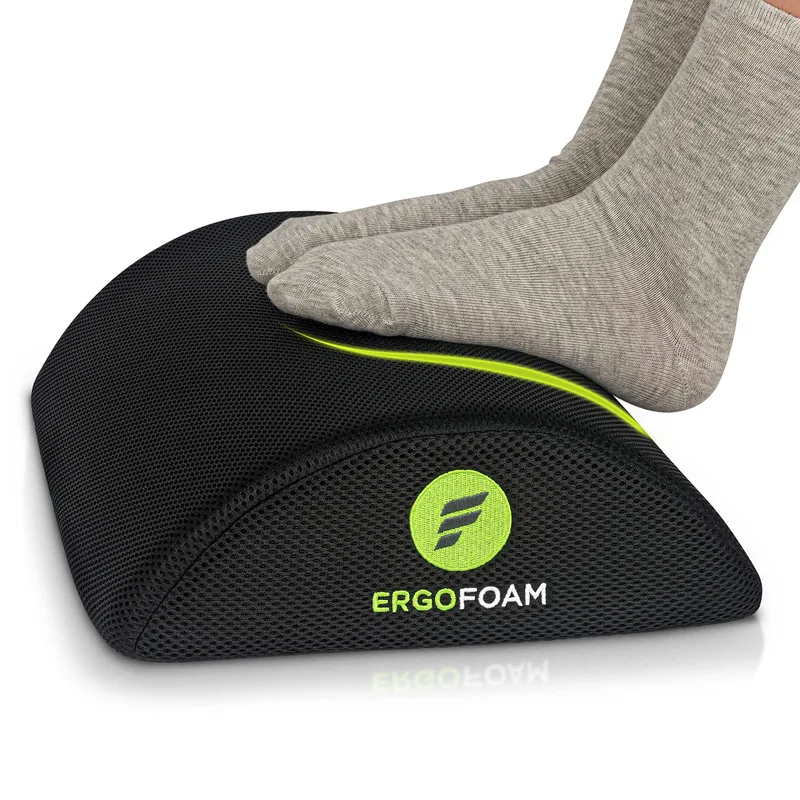
The ErgoFoam 2in1 is the footrest I’d recommend to most people. At $45, it’s less than half the price of the Humanscale but delivers two genuinely useful ergonomic configurations that you can switch between throughout the day.
Flat mode raises your feet to a consistent elevation, taking pressure off the back of your thighs. Tilted mode angles the platform forward, which creates a light calf stretch and keeps ankle joints more active. Neither mode has rolling parts, so there’s no noise and no maintenance.
The high-density compression-resistant foam holds its shape well — this isn’t the kind of cheap foam that flattens out after a month. The mesh cover is breathable and pulls off for washing. It’s endorsed by chiropractors, and the geometry reflects that: the angled position specifically targets the leg angle that reduces lumbar load in seated posture.
Best for: Office workers who want a practical, chiropractor-backed option without spending over $50.
3. Kensington SoleMate Plus with SmartFit System
Kensington SoleMate Plus with SmartFit System
Pros
- ✓ Six tilt positions let you dial in the exact angle for your chair and desk combo
- ✓ Wide 21.9-inch platform comfortably fits both feet
- ✓ SmartFit color system makes ergonomic setup fast and intuitive
- ✓ Non-slip base stays put on hardwood and carpet
Cons
- ✗ Plastic build feels less premium than wood or foam alternatives
- ✗ Height range tops out at 5 inches — short desks may need more
- ✗ No cushioning on the platform surface
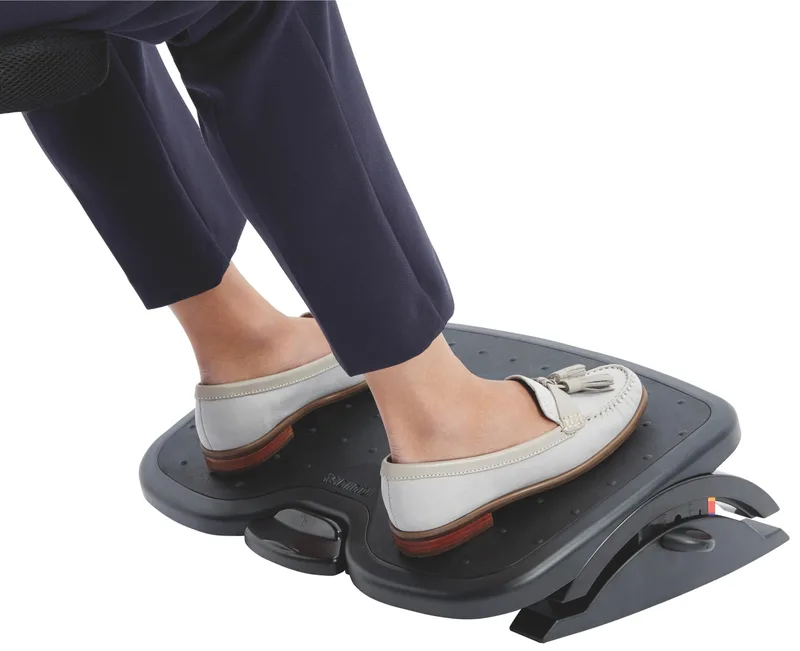
If you’ve struggled to find the right footrest position — tried one angle, hated it, abandoned the footrest entirely — the Kensington SoleMate Plus is worth a look. It has six tilt positions up to 30 degrees, plus height adjustment from 3.5 to 5 inches, and uses Kensington’s SmartFit color-coding system to guide you toward the correct ergonomic setup for your body.
The platform is wide at 21.9 inches — wider than most competing footrests — which means there’s room to shift your feet around, stretch, or cross your ankles without falling off the edge. The non-slip base stays anchored on both carpet and hardwood.
The main trade-off is material. The SoleMate Plus is all plastic. It doesn’t have cushioning, and it doesn’t have the warm feel of a wood or foam product. For some offices that’s fine. For home offices where you want something that looks and feels good, it can feel a little clinical.
Best for: Corporate office environments, people who share desks, or anyone who’s never been able to find a comfortable footrest angle.
Buy the Kensington SoleMate Plus — $54
4. ComfiLife Adjustable Memory Foam Foot Rest
ComfiLife Adjustable Memory Foam Foot Rest
Pros
- ✓ Memory foam molds to foot shape for pressure-point relief
- ✓ Washable velvet cover keeps it hygienic over time
- ✓ Two height options work for most standard chairs
- ✓ Lightweight and easy to reposition under the desk
Cons
- ✗ Memory foam can retain heat during long sessions
- ✗ No active rocking or mechanical movement
- ✗ Cover can slip slightly without being zipped down
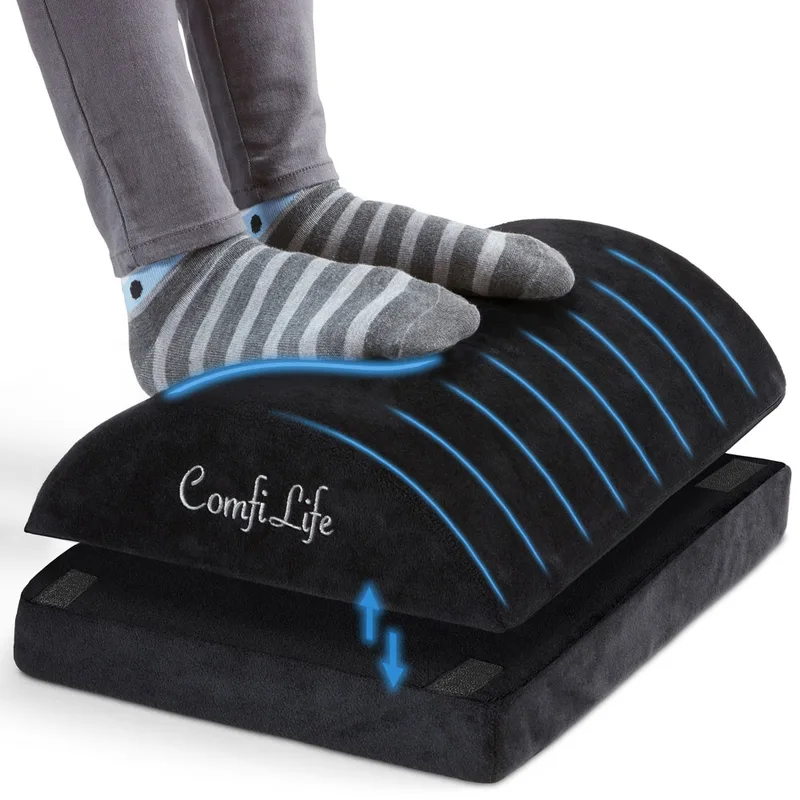
The ComfiLife is the footrest for people whose main complaint is discomfort, not circulation. It’s thick memory foam covered in removable velvet, and it molds gently to the shape of your feet and ankles when you rest them on it. If you have knee pain, joint sensitivity, or circulation issues, the cushioned surface makes a meaningful difference compared to a hard plastic platform.
Two height settings cover most standard seating situations. The velvet cover zips off and goes in the wash, which matters more than it sounds if you’re using this daily. The whole thing is lightweight enough to kick under the desk when you want more legroom.
It’s not a mechanical footrest — there’s no rocking or tilting — but for users who just need comfortable elevation and some joint relief, it does exactly what it promises.
Best for: Users with joint pain, circulation sensitivity, or anyone who sits in chairs with deeper seat depths that leave feet elevated.
Buy the ComfiLife Memory Foam Foot Rest — $43
5. Everlasting Comfort Foot Rest — Best Budget
Everlasting Comfort Foot Rest
Pros
- ✓ Memory foam at a budget price point — hard to beat at $29
- ✓ Slight rocking motion engages legs better than a static cushion
- ✓ Non-slip base stays in position without sliding around
- ✓ Washable cover keeps it fresh over time
Cons
- ✗ Thinner profile than premium foam alternatives
- ✗ Single height — no adjustability
- ✗ Rocking motion is subtle, not a real ergonomic rocker
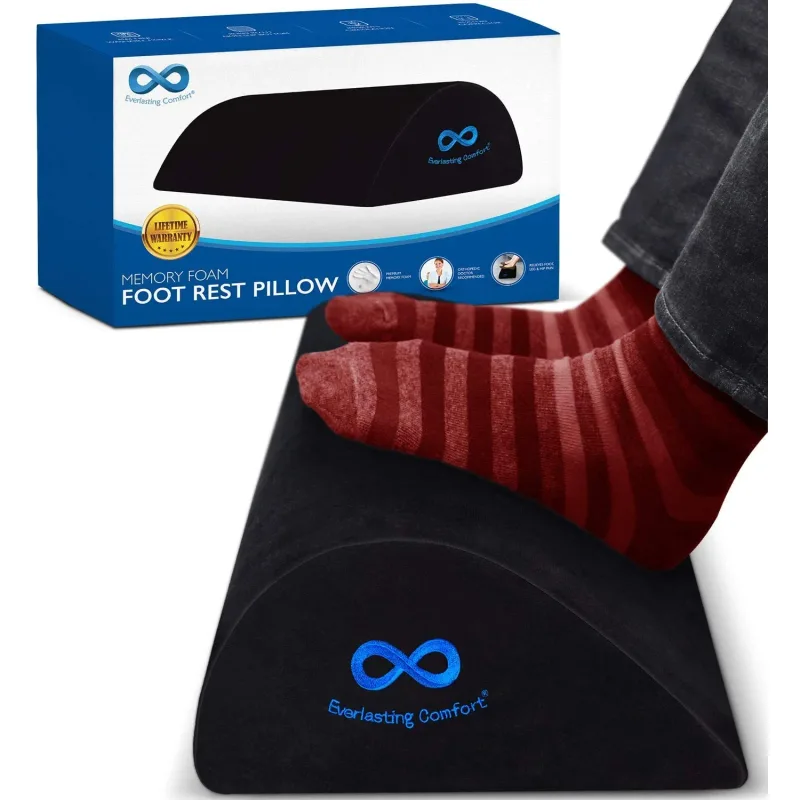
At $29, the Everlasting Comfort memory foam footrest is the first recommendation for anyone who’s never owned a footrest and wants to try one without committing to a premium product. It’s a simple memory foam block with a non-slip base and a subtle rocking capability — not the ball-bearing kind, just a gentle pivot built into the foam structure.
The foam is softer than the ErgoFoam’s compression-resistant material, which means it’s more comfortable in short sessions but will feel less supportive during longer ones. The rocking motion is subtle enough that it won’t distract you, but it does keep your feet from sitting completely static all day.
For $29, this is a sensible upgrade from nothing. If you end up using it every day and wanting more adjustability or structure, step up to the ErgoFoam or Kensington.
Best for: First-time footrest buyers, home offices on a budget, or workers who want memory foam comfort without spending over $30.
Buy the Everlasting Comfort Foot Rest — $29
6. Fellowes Standard Foot Rest
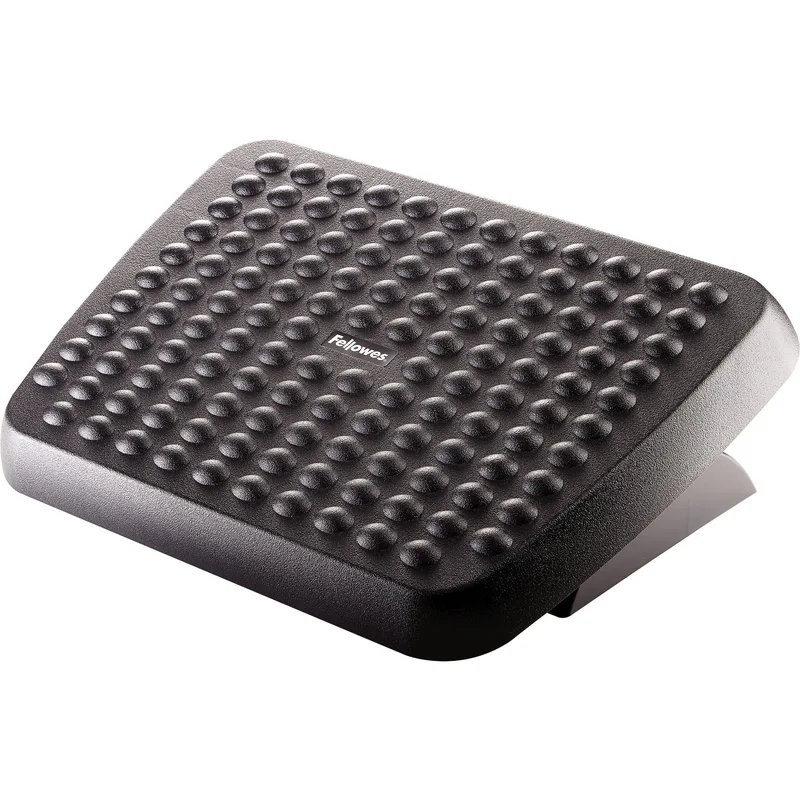
Fellowes Standard Foot Rest
Pros
- ✓ Free-floating platform encourages natural leg movement
- ✓ Textured surface provides grip without slipping
- ✓ Extremely durable — this design has been refined for decades
- ✓ Works in any office environment without looking out of place
Cons
- ✗ No foam or cushioning — purely hard plastic
- ✗ Only two height positions with minimal range
- ✗ Can slide on slick flooring without a mat underneath
The Fellowes 48121 has been a staple office footrest for a long time, and its longevity is earned. It’s a no-frills two-position hard plastic platform with a free-floating design that lets it pivot slightly as you shift your weight — similar in concept to a rocking footrest but simpler and cheaper.
There’s no cushioning here. That’s a deliberate choice: the textured surface provides grip without the compression of foam, and the free-floating platform keeps some ankle movement active throughout the day. It’s also easier to clean than fabric or foam products.
At $29, it lands at the same price as the Everlasting Comfort. Choose this one if you want something stable, durable, and easy to maintain. Choose Everlasting Comfort if you want padding.
Best for: Traditional office workers who want a reliable, no-maintenance footrest with a conventional feel.
Buy the Fellowes Standard Foot Rest — $29
Buying Guide: What to Look for in an Office Footrest
Height Adjustment Range
The goal of a footrest is to position your thighs parallel to the floor (or very close to it) while your feet rest comfortably. If you’re 5’4” or shorter, most standard desks are too high for proper positioning without a footrest. Look for at least a 4–5 inch height range, and confirm it matches the gap between your floor and the bottom of your feet when seated.
Static vs. Active Movement
Static footrests (foam blocks, fixed platforms) give your feet a place to rest. Active footrests (rockers, free-floating platforms) keep your feet and legs moving subtly throughout the day. Both are better than nothing. Active designs are better if circulation, fatigue, or fidgeting is your main concern. Static designs are better if stability and cushioning are your priorities.
Surface Material
- Hard plastic: Durable, easy to clean, no cushioning. Good for traditional offices.
- Memory foam: Soft and pressure-relieving. Best for joint sensitivity. Compresses over time.
- Wood: Durable, natural feel, warmer than plastic. Good with rocker mechanisms.
Width and Platform Size
Most footrests are 16–22 inches wide. If you have large feet or like to shift positions, go wider. The Kensington SoleMate Plus at 21.9 inches is one of the widest in this roundup.
Tilt and Angle Options
Tilt helps keep ankle joints at a neutral angle. Look for at least a 15–20 degree range for practical adjustability. The Kensington’s 30-degree range is generous. Most foam footrests don’t offer tilt — they rely on their fixed angle to approximate a good position.
Budget Expectations
- Under $30: Reliable options exist (Fellowes, Everlasting Comfort). Expect single-position or limited adjustability.
- $40–$60: The sweet spot. ErgoFoam and Kensington both live here with real ergonomic value.
- $100+: Premium mechanical options like the Humanscale FR300. Justified for full-time desk workers.
What to Pair with a Footrest
A footrest is one piece of a complete ergonomic setup. If you’re tackling back or hip pain more seriously, consider adding:
- Lumbar support pillow: Fills the lumbar gap that even good chairs sometimes leave. Our lumbar support guide covers the best options.
- Ergonomic seat cushion: Reduces coccyx and tailbone pressure for people who sit on hard seats. Useful alongside a footrest if hip discomfort is your main issue.
- Keyboard wrist rest: Ergonomics works best as a system. If you’re fixing your leg position, also consider whether your wrists are properly supported at the keyboard.
Footrest vs. Anti-Fatigue Mat: Which Do You Need?
These aren’t the same thing. A footrest goes under your feet while you sit. An anti-fatigue mat goes under your feet while you stand at a standing desk. If you alternate between sitting and standing, you may want both.
If you’re using a standing desk full-time and want something for your feet while standing, check out best footrests for standing desks — a different product category designed to attach to or sit against desk frames.
FAQ
Do office footrests actually help with back pain?
Yes, when used correctly. Back pain from sitting often stems from improper leg positioning — when your feet don’t reach the floor, your pelvis tilts and your lumbar spine loses its natural curve. A footrest that positions your thighs parallel to the floor restores the proper pelvic angle, which takes pressure off the lower back. Users who combine a footrest with a properly adjusted ergonomic chair and monitor see the most benefit.
What height should a footrest be?
The right height is whatever brings your thighs to roughly parallel with the floor when your feet rest on the footrest. Sit in your chair with your hips at a 90–100 degree angle, then measure the distance from the floor to the bottom of your feet. That’s your target footrest height. Most people need 3–6 inches, depending on chair height and desk clearance.
Can I use a footrest with a standing desk?
A traditional under-desk footrest is designed for seated use. If you have a standing desk and want to use it in seated mode, a footrest works fine in that configuration. But if you’re looking for foot relief while standing, you need a different product — either an anti-fatigue mat or a standing-desk-specific foot bar.
Are rocking footrests better than static ones?
It depends on your goal. Rocking footrests (like the Humanscale FR300) keep your legs moving subtly throughout the day, which improves circulation and reduces muscle fatigue over long sessions. Static footrests (like foam options) focus on cushioning and elevation. For all-day desk workers, a gentle rocking motion is often worth the extra cost. For shorter sessions or users with stability concerns, static is fine.
Will a footrest work under a standing desk in sitting mode?
Yes — if your standing desk has enough under-desk clearance at its lowest sitting height (most do), a standard footrest will fit underneath and function exactly as intended.
How do I know if I need a footrest?
Sit in your chair with your hips back, feet flat. If your feet don’t touch the floor, or if only your toes touch, you need a footrest. Also worth trying: if you notice you’re crossing your legs frequently, perching on the front of your seat, or feeling fatigue in your lower back or thighs by midday — those are all signs your leg positioning is off.
Conclusion
The best footrest for most office workers is the ErgoFoam 2in1 at $45. Two ergonomic modes, chiropractor-backed design, and compression-resistant foam that holds up over time. Hard to beat for the price.
If you want the best ergonomic footrest money can buy — and you’re sitting 8+ hours a day — the Humanscale FR300 at $119 is worth the investment. The ball-bearing rocker is legitimately different from foam options, and the build quality means you won’t be replacing it anytime soon.
On a budget? The Everlasting Comfort at $29 is a solid starting point. It’s not the most adjustable footrest here, but it’s infinitely better than sitting with your feet dangling all day.
And if you’re still not sure whether your chair setup is the root problem, a well-fitted ergonomic chair may be the better place to start.