If you sit at a desk for six, eight, or ten hours a day, the mesh vs. foam debate is anything but academic. Foam cushions trap heat. Mesh doesn’t. That difference drives millions of people toward mesh chairs every year — and in 2026, with hybrid workers spending more deliberate time at home desks, breathable all-day seating matters more than ever.
The problem is that “mesh chair” covers an enormous range. You’ve got the Herman Miller Aeron ($1,521) at one end and no-name imports that sag in six months at the other. This guide cuts through the noise.
Short on time? The Herman Miller Aeron is the best mesh chair for most people sitting 8+ hours daily. For a genuine mesh chair without crossing four figures, the Branch Ergonomic Chair at $299 delivers real ergonomics at a fraction of the cost. For broader picks including non-mesh options, see our best ergonomic chairs under $500.
Why Mesh Over Foam?
Foam seats trap heat. By 2 PM you’re sitting in your own warmth. Mesh breathes. That’s it — that’s the whole pitch.
The tradeoff: mesh has less cushion. Sit bones feel the frame more. High-end mesh chairs solve this with tensioned suspension systems engineered to distribute weight across the mesh panel rather than compressing it to the frame. Budget options stretch fabric over plastic and call it ergonomic.
There’s also the durability angle. Foam compresses over time — a foam seat that felt great in month one feels flat by year two. Quality mesh holds its tension for a decade or more. You’re paying more upfront for a chair that doesn’t degrade.
The Six Mesh Chairs Worth Buying
1. Herman Miller Aeron — The Benchmark Everyone Compares To
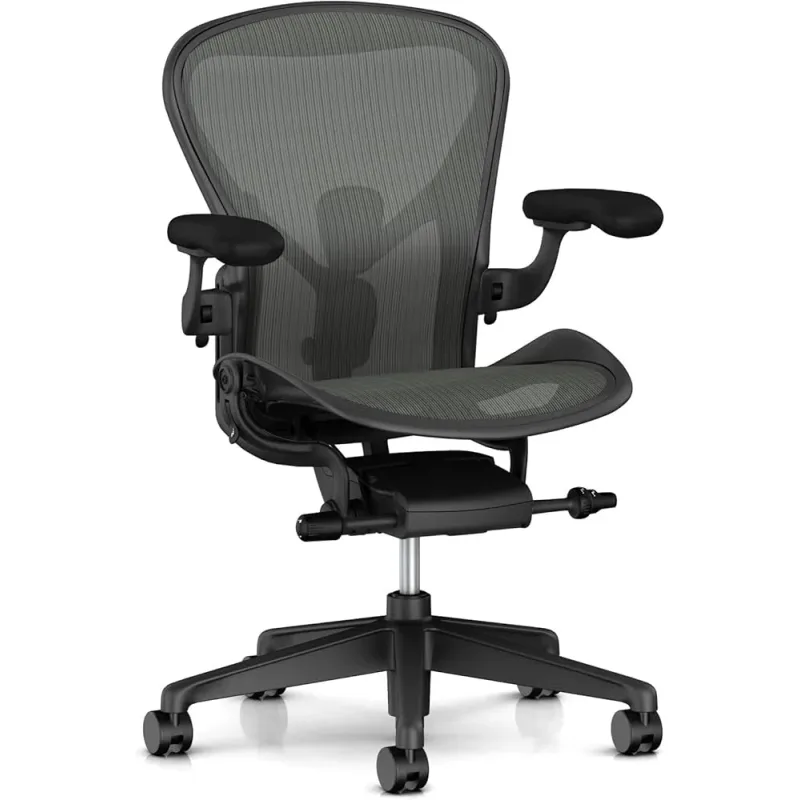
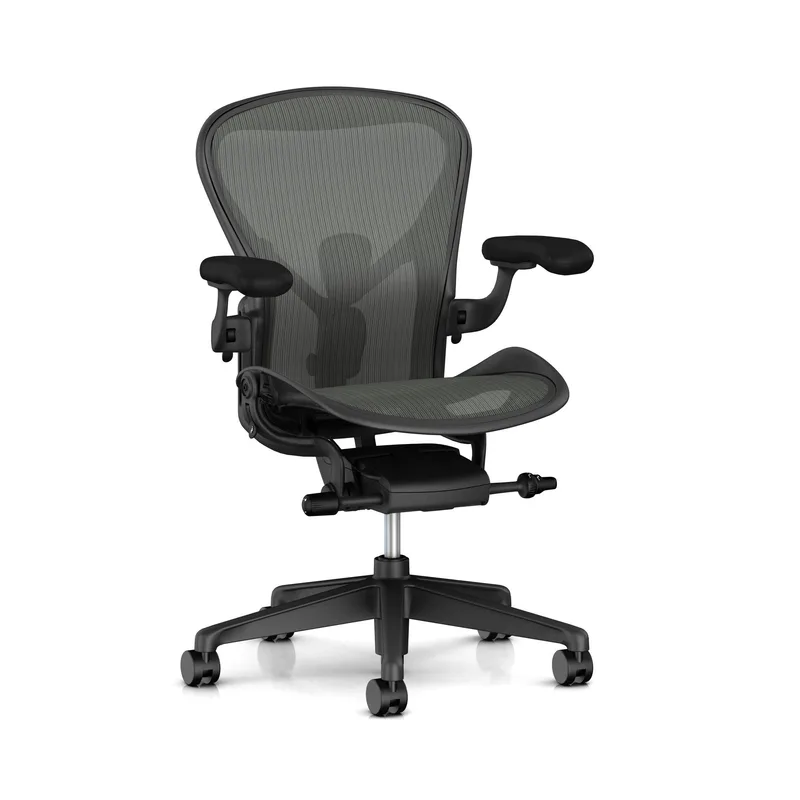
The Aeron has been the benchmark for mesh office seating since 1994. Most office chairs get discontinued after five years. The Aeron is still the standard.
The 8Z Pellicle mesh uses eight tension zones — tighter where structure is needed, more pliable where flex improves comfort. The mesh in the seat pan is slightly softer near the edges to prevent the frame from digging into the back of your thighs. According to Herman Miller, this zoned approach reduces peak pressure points by distributing weight more evenly than a uniform mesh.
PostureFit SL (the “SL” variant, not the older PostureFit) has two adjustment pads: one for the sacrum and one for the lumbar. Most chairs support the lumbar only. The dual-point system is why ergonomists consistently recommend the Aeron for lower back issues — supporting the sacrum creates a foundation that allows the lumbar to stack naturally above it.
Sizing is critical. Size A fits users roughly under 5’4” and under 130 lbs. Size B covers most people from 5’4”–6’, up to 300 lbs. Size C is for users 6’+ and up to 350 lbs. Getting the wrong size makes the Aeron uncomfortable. Herman Miller’s sizing guide is worth using before buying.
At $1,521, the investment case rests on longevity. Owner reports consistently show Aerons performing well after 15–20 years of daily use. The 12-year warranty covers frame, foam, mesh, cylinders, and mechanisms. That works out to roughly $7–$8/month over the warranty period — less than most streaming services.
Best for: Anyone sitting 8+ hours daily, hot-climate workers, and buyers who want one chair that doesn’t need replacing.
Who should skip it: Users under 5’2” or over 6’3” where sizing gets complicated, and people who strongly prefer a cushioned seat over a suspended mesh feel.
→ For a deeper look, see our full Herman Miller Aeron review.
2. Steelcase Leap V2 — Best for Marathon Sessions
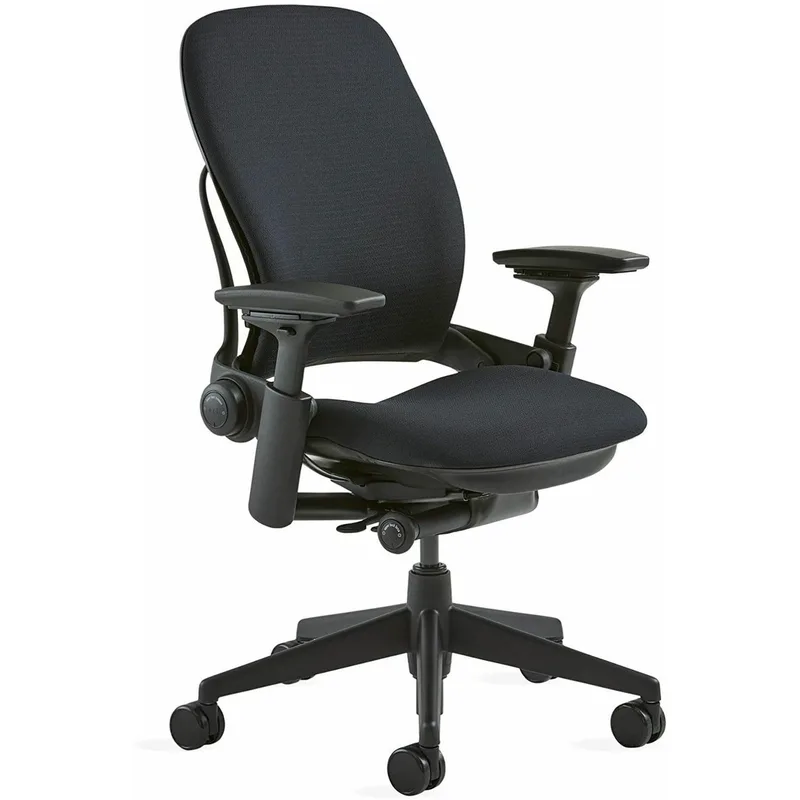
The Leap V2 isn’t a full mesh chair — the seat is fabric over foam — but the back is exceptional and the overall ergonomics are strong enough to include it in any serious comparison. The seat has been noted as a con and it is: if breathability is your only priority, the Aeron wins. But if back support is the priority, the Leap makes a strong argument.
LiveBack is Steelcase’s system where the backrest changes shape as you recline. Lean back and the lower section curves more aggressively while the upper section flattens. Lean forward and it reverses. Owner reviews consistently call out this feature as the reason they prefer the Leap to the Aeron for extended sessions.
The lumbar firmness dial is unique. Not just lumbar position — lumbar firmness. You can increase or decrease how hard the pad presses into your lower back. No other mainstream ergonomic chair offers this.
The arms are the other standout. 4D adjustment: height, width, depth, and pivot angle. When armrests can position themselves exactly where your shoulders relax, neck tension decreases noticeably over the course of a workday. Bad armrest positioning is an underacknowledged cause of upper-body tightness.
At 54 lbs, the Leap is heavy. The fabric seat runs warmer than mesh alternatives. If you work in a hot climate or a poorly air-conditioned room, the Aeron’s full mesh wins on temperature. For back-pain-focused ergonomics, the Leap wins.
Best for: Anyone with chronic lower back issues, programmers and writers on 10+ hour sessions, and anyone who fidgets — the LiveBack tracks movement rather than fighting it.
3. Herman Miller Sayl — Best Looking Chair in This Roundup
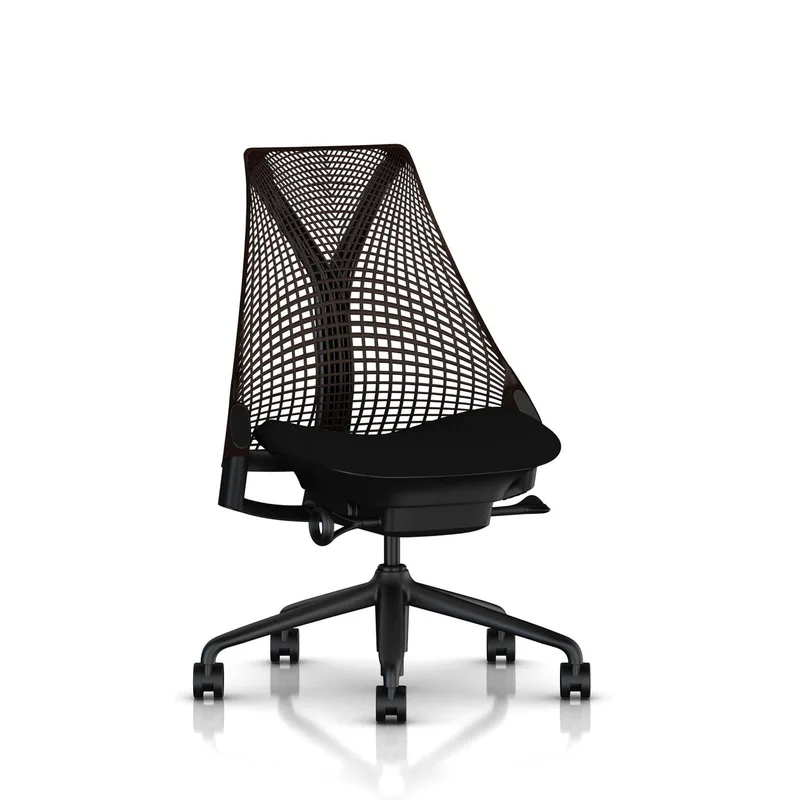
Yves Béhar designed the Sayl. It looks like a chair from a sci-fi set. The Y-shaped tower isn’t decoration — it’s a suspension system that distributes flex across the ArcSpan mesh without internal support structures, creating an unobstructed single-piece mesh back.
At $835, it’s the most accessible Herman Miller mesh chair. The catch: less adjustability. The lumbar support is fixed (a separately sold pad can add it). Armrest height is fixed on the base model. The ArcSpan mesh is good but less sophisticated than the Aeron’s 8Z Pellicle — it distributes tension evenly rather than varying it across zones.
For shorter sessions or users who prioritize how their home office looks, the Sayl delivers Herman Miller build quality and the 12-year warranty without the Aeron’s full complexity. For all-day high-demand ergonomics, spend more.
According to user feedback, the Sayl works well for users under about 190 lbs. Heavier users report the back panel provides less resistance than they’d prefer.
Best for: Design-conscious buyers, lighter users who want Herman Miller quality without Aeron pricing, and office environments where aesthetics matter.
Who should skip it: Anyone over 200 lbs, or anyone with existing lumbar issues who needs targeted, adjustable lower back support.
4. Steelcase Think — Clean Ergonomics Without Complexity
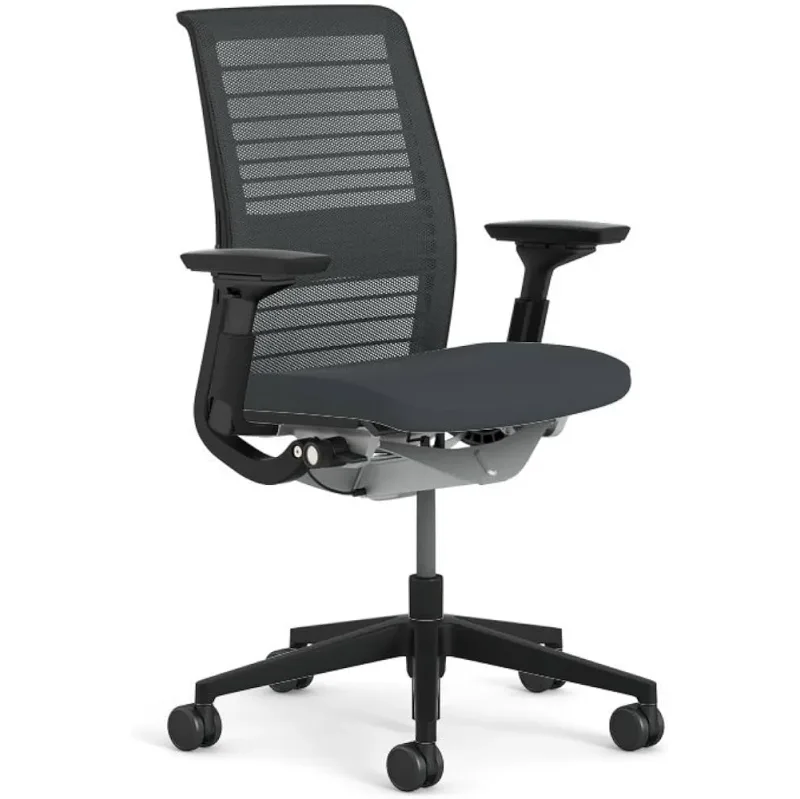
The Think sits below the Leap in Steelcase’s lineup. Same 12-year warranty, same build confidence, simpler controls, and a true mesh back (3D knit, not the Leap’s plastic shell).
The back uses weight-activated flex rods along its edges. Lean left and the left side gives. Lean right and it follows. No lever required — the chair adapts based on how you’re sitting. Owner reports consistently note that users adapting from simpler chairs find the Think easier to set up than the Leap or Aeron.
At 37 lbs, the Think is significantly lighter than the Leap, which matters if you move your chair between rooms frequently.
The built-in lumbar is the main caveat. Unlike the Aeron’s PostureFit SL or the Branch’s height-adjustable pad, the Think’s lumbar is built into the flex rods and cannot be independently repositioned up or down. It works for the average body — but if you’re shorter or taller than average, it may not hit the right spot.
Best for: Anyone who wants straightforward, low-fuss ergonomics at Steelcase build quality. Offices with multiple users sharing a chair (fewer settings to re-adjust).
5. Branch Ergonomic Chair — Best Value Under $500
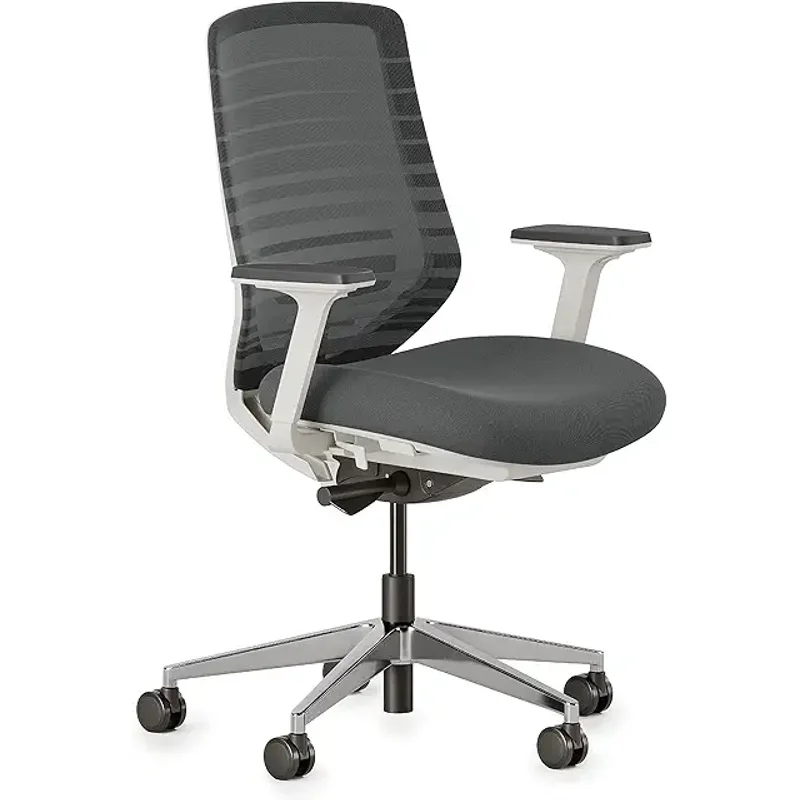
Branch sells direct-to-consumer at $299 — no showrooms, no dealers, no markup. For that price, the feature list is genuinely strong: Italian-made mesh back, height-adjustable lumbar pad, tilt tension control, and adjustable-height armrests.
The mesh quality is noticeably better than what $299 typically buys. The frame is solid steel. Assembly is about 10 minutes with included tools. Branch’s 30-day return policy with free returns reduces the purchase risk.
Branch now accepts HSA/FSA payments, which is useful for buyers whose health plans cover ergonomic equipment.
Where it falls short: the seat cushion compresses noticeably after a few months of daily use. The 7-year warranty is half of what Herman Miller and Steelcase offer. For users planning to sit 10+ hours daily for years, the cushion durability becomes a real concern.
But at $299 for genuine ergonomic features — real lumbar, real mesh, real adjustability — the Branch is the best value play in the mesh chair market right now.
Best for: First-time ergonomic chair buyers, anyone upgrading from a $150 Amazon chair, and setups where budget is the primary constraint.
6. HON Ignition 2.0 — Contract-Grade Budget Pick
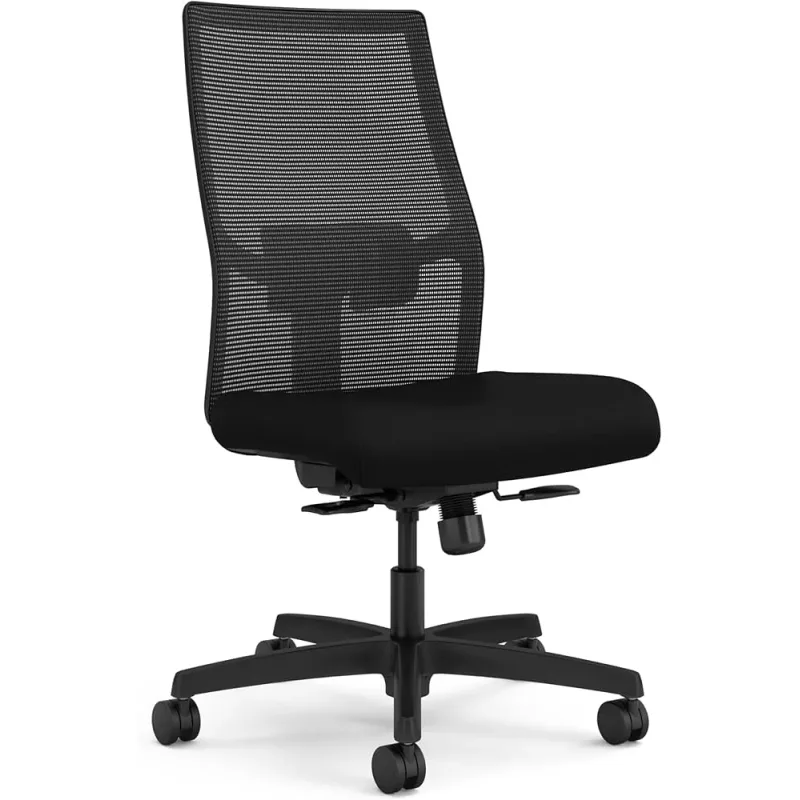
HON makes contract furniture for corporate offices, hospitals, and government buildings. The Ignition 2.0 reflects that lineage: the build is surprisingly solid for the price, and the lifetime frame warranty is the strongest structural coverage in this roundup.
The Ilira-stretch mesh back is breathable and taut, though thinner than premium alternatives. Adjustable lumbar, standard tilt mechanism, and reasonable seat height range. The mesh seat option costs more but is worth it if breathability is a priority.
At around $450 for the mesh-back configuration, the Ignition 2.0 offers legitimate ergonomic features without the premium brand markup. It looks like a corporate office chair because that’s what it is — if aesthetics matter for your home office setup, that’s a fair drawback.
The base model armrests don’t adjust in height, which is a meaningful omission at any price above $200. The mesh also shows more loosening over time than premium alternatives.
Best for: Budget-conscious buyers furnishing multiple workstations, and users under 5’8” where the 20-inch seat height cap works well.
Comparison Table
| Chair | Price | Seat | Rating | Weight Cap | Warranty |
|---|---|---|---|---|---|
| Herman Miller Aeron | $1649.99 as of Oct 18, 2026 | 8Z Pellicle mesh | 9.4 | 350 lbs | 12 years |
| Steelcase Leap V2 | $615.00-$1499.00 as of Oct 18, 2026 | Fabric/foam | 9.2 | 400 lbs | 12 years |
| Herman Miller Sayl | Unavailable | ArcSpan mesh | 8.6 | 350 lbs | 12 years |
| Steelcase Think | $1124.11 as of Oct 18, 2026 | 3D knit mesh | 8.4 | 400 lbs | 12 years |
| Branch Ergonomic Chair | Unavailable | Mesh back, foam seat | 8.1 | 300 lbs | 7 years |
| HON Ignition 2.0 | $416.83-$481.00 as of Oct 18, 2026 | Ilira-stretch mesh | 7.8 | 300 lbs | Lifetime frame |
Buying Guide: What Actually Matters in a Mesh Chair
Mesh quality — not all mesh is equal. Cheap mesh is woven polyester stretched across a plastic frame. Premium mesh (like the Aeron’s 8Z Pellicle) uses engineered elastomers with variable tension zones. The difference is most apparent after six months of daily use — cheap mesh sags, quality mesh holds. Press on the mesh firmly with your thumb. If it bottoms out easily against the frame, it’s too thin.
Lumbar: adjustable vs. fixed vs. form-sensing. Adjustable lumbar pads (Branch, Duramont) move up and down to hit your specific lumbar height. Fixed lumbar built into the back structure (Steelcase Think) works for average body types but can’t be repositioned. Form-sensing systems like the Aeron’s PostureFit SL support multiple spinal points simultaneously. For users with existing back pain, adjustability matters more than anything else.
Seat depth adjustment. Underrated feature. If the seat pan is too long, the front edge cuts behind your knees and restricts circulation. Too short and your thighs are unsupported. The Aeron and Leap have sliding seat pans. The Branch and HON don’t.
Armrest adjustability. 2D arms (height and pivot) are the minimum. 4D arms (add width and depth) let you place your arms exactly where your shoulders relax without raising. The Leap’s 4D arms are the best available at any mainstream price. Poor armrest positioning causes more shoulder and neck tightness than most users realize.
Warranty as a durability signal. The warranty length tells you how long the manufacturer is willing to bet the chair will last. Herman Miller and Steelcase: 12 years. Branch: 7 years. HON: lifetime frame but shorter on components. Spend $800+ on a chair and don’t accept less than 10 years of coverage.
Weight capacity with margin. A chair rated for 300 lbs is designed for users comfortably under 300 lbs. If you’re near the stated limit, the mesh will stretch faster and the mechanism will wear out sooner. The Steelcase chairs (400 lbs) handle heavier users with more headroom than the 300 lb options.
FAQ
How long do mesh office chairs last?
Quality mesh from Herman Miller, Steelcase, or Humanscale is rated to resist sagging and structural failure for 10–20 years under normal use. The mesh itself rarely fails first — the gas cylinder and tilt mechanism typically go before the mesh. Both are replaceable parts. Budget mesh chairs typically show noticeable sagging or stretch within 3–5 years. The warranty length is the clearest indicator of expected lifespan.
Is a mesh chair better for your back than a foam chair?
Not automatically. Back support comes from the lumbar mechanism, not the seat material. A mesh chair with well-designed adjustable lumbar (like the Aeron or Leap) outperforms a foam chair with no lumbar support. But a foam chair with well-engineered lumbar support beats a budget mesh chair every time. Mesh is primarily a thermal advantage — it runs cooler. For back health, prioritize lumbar adjustability, not material.
Can you add a headrest to a mesh chair?
It depends on the model. The Aeron has an official Herman Miller headrest attachment available separately. The Leap V2 doesn’t have a factory headrest option, but third-party options (the Atlas headrest is the most reviewed) fit it. The Sayl, Think, Branch, and HON don’t support headrests without modification. If you recline frequently or have neck issues, factor this in before buying.
Are refurbished mesh chairs worth buying?
Yes, if you buy from a reputable reseller. Companies that specialize in refurbished contract furniture rebuild Aerons and Leaps with new gas cylinders, armrest pads, and mechanisms, then back them with multi-year warranties. Prices typically run 40–60% below new retail. Avoid chairs without a warranty or with no documented refurbishment. Facebook Marketplace and Craigslist sales of used Aerons are a gamble — the parts may be original and failing.
How do I clean a mesh office chair?
Vacuum the mesh monthly with an upholstery attachment to clear dust and debris. For stains, a damp cloth with mild dish soap handles most issues. Avoid harsh chemicals, bleach, or anything solvent-based — they degrade the mesh fibers over time. The Aeron’s Pellicle mesh is particularly stain-resistant and doesn’t absorb liquids easily. Let mesh dry fully before sitting.
Do mesh chairs work for heavier users?
Check the weight capacity and build quality together. The Steelcase Leap V2 and Think support 400 lbs with a commercial-grade mechanism. The Aeron and Sayl support 350 lbs. The Branch and HON max at 300 lbs. For users near or above 250 lbs, the Steelcase options provide more structural headroom. According to owner reports, the Leap V2’s fabric seat also distributes pressure more evenly than a full mesh seat at higher weights.
Conclusion
For most people sitting at a desk all day, the Herman Miller Aeron remains the best mesh office chair you can buy in 2026. The 8Z Pellicle mesh, PostureFit SL lumbar, and 12-year warranty justify the $1,521 price tag when it’s your primary work chair over the next decade.
If back support rather than breathability is the priority, the Steelcase Leap V2 at $1,399 is the stronger choice. The LiveBack panel and lumbar firmness dial are unmatched for users with existing lower back issues.
The best value play is the Branch Ergonomic Chair at $299. Real mesh, real lumbar adjustment, solid build — the right answer for anyone who can’t justify spending four figures on a chair.
→ For more chair options, see our complete guide to ergonomic chairs for lower back pain or our best ergonomic chairs for programmers picks.