Most office chair reviews rank chairs against each other and ignore the variable that matters most: your actual body. A chair that’s a 9.5 for a 5’10” average frame can be genuinely uncomfortable for someone 6’4”, someone under 5’2”, or someone with a broad, athletic upper body. Seat depth, backrest width, minimum seat height, and armrest range all change what “ergonomic” means for you specifically.
This guide skips the generic “best chairs of 2026” format and instead matches real chairs to six body types: tall, short, petite, plus-size, athletic build, and narrow shoulders. If you already know your category, jump straight to that section — each one has a specific pick with the measurements that actually matter, not just a star rating.
Quick pick: If you’re not sure which category fits, start by measuring your seated height off the floor to your knee crease. That single number eliminates more bad-fit chairs than any spec sheet comparison.
If You’re Tall (6’ and Up)
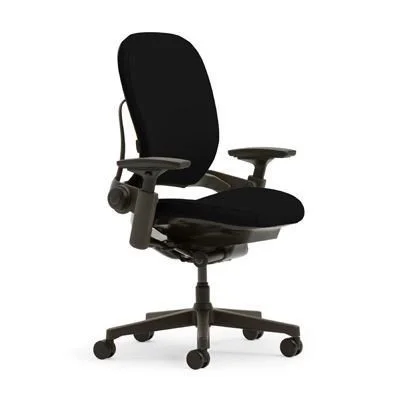
Steelcase Leap Plus
Pros
- ✓ 22.5" max seat height accommodates users up to 6'6"
- ✓ 500 lb weight capacity — highest of any mainstream ergonomic chair
- ✓ 4-inch seat depth adjustment range handles long femurs
- ✓ Live Back technology flexes with every posture shift instead of locking into one recline angle
Cons
- ✗ No headrest included, even at this price
- ✗ Heavy at around 70 lbs — harder to move between rooms
- ✗ Premium price over $1,500 puts it out of reach for casual home offices
The two numbers that matter for tall users are maximum seat height and backrest height. A chair that only goes to 20” leaves 6’2”+ users sitting with their knees higher than their hips, which rotates the pelvis backward and flattens the lower back curve you’re trying to protect.
The Steelcase Leap Plus tops out at 22.5”, which covers users up to roughly 6’6” without resorting to a drafting-height stool. Its 25.5” backrest is also tall enough to support the shoulder blades of a long torso, not just the lower back. The seat depth adjusts across a 4-inch range, which matters separately from height — tall users often have proportionally long femurs and need that extra depth to avoid the front edge of the seat cutting into the back of the knee.
For a deeper comparison across six chairs built for tall frames, see our full guide to ergonomic chairs for tall people.
If You’re Short (Under 5’4”)
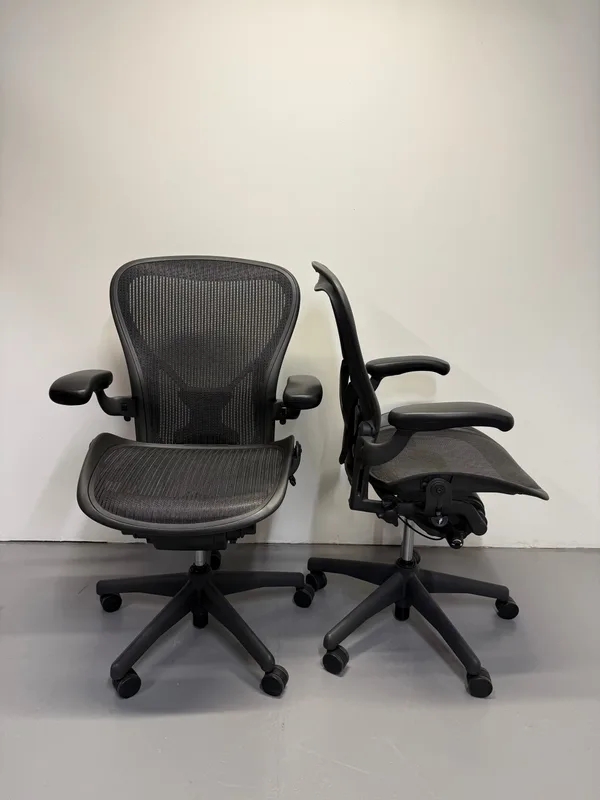
Herman Miller Aeron Chair Size A
Pros
- ✓ Lowest minimum seat height of any premium chair at 14.75" — genuinely fits short users without a footrest
- ✓ Size A frame geometry is scaled down throughout, not just height-adjusted
- ✓ PostureFit SL lumbar support proportioned for smaller spines
- ✓ 12-year warranty backed by a 30-year design track record
Cons
- ✗ Starting at $1,395 — the most expensive pick in this guide
- ✗ Must specifically order Size A — dealers sometimes default to Size B for short buyers
- ✗ Weight range recommendation is 90–160 lbs per Herman Miller's own sizing guidelines
Minimum seat height is the spec that makes or breaks a chair for shorter users. Most office chairs bottom out around 17”–18”, which leaves feet dangling for anyone under about 5’5”. Once feet aren’t flat on the floor, the whole ergonomic chain — hip angle, lower back support, circulation — starts to break down.
The Herman Miller Aeron Size A has the lowest minimum seat height in this guide at 14.75”, and unlike chairs that just shorten the gas cylinder, the entire frame — seat pan depth, backrest curve, armrest reach — is scaled down for smaller bodies. It’s a genuine investment at $1,395. If that’s out of budget, the SIDIZ T50 below (built for narrow shoulders) also has a 15” minimum seat height and costs a third as much.
More options, including budget picks starting under $400, are in our best ergonomic chairs for short people roundup.
If You’re Petite (Small Frame, Not Just Short)
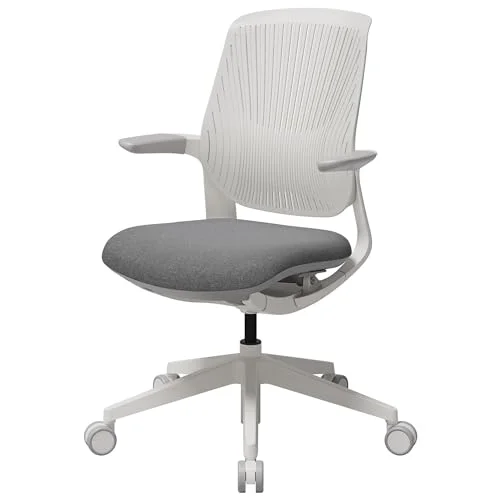
SIDIZ T25 Petite Ergonomic Chair
Pros
- ✓ Specifically proportioned for petite frames — smaller seat pan, lower minimum height
- ✓ Weight-sensing tilt mechanism adjusts automatically for lighter body weights
- ✓ GREENGUARD certified — no chemical off-gassing in a small home office
- ✓ 30-day free trial direct from SIDIZ
Cons
- ✗ Fixed armrests on the base model — 3-way adjustable arms cost about $30 more
- ✗ White plastic base aesthetic isn't for everyone
- ✗ 275 lb weight limit is lower than most full-size office chairs
Petite is a different category from “short” — it’s about overall frame size, not just height. A petite user at 5’2” with a narrow build needs a smaller seat pan, lighter tilt tension, and thinner armrest padding than a short-but-broader user of the same height. Standard chairs, even ones with a low minimum seat height, often still feel oversized.
The SIDIZ T25 is purpose-built for this: the seat pan itself is smaller, not just height-adjusted, and the weight-activated tilt mechanism calibrates resistance automatically for lighter body weights instead of requiring you to guess at a manual tension dial. At $349 it’s also the most affordable pick in this guide.
For a complete petite-friendly desk setup — not just the chair — see our home office ergonomics guide for petite workers.
If You’re Plus-Size
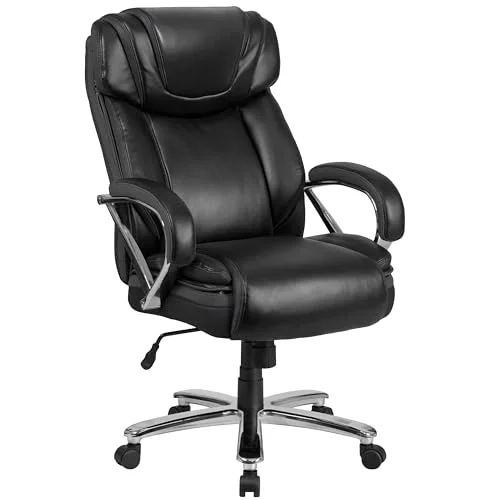
Flash Furniture HERCULES 500 lb Wide Seat
Pros
- ✓ 500 lb rated capacity with a genuinely wide 24-inch seat — roomy for larger frames
- ✓ 23-inch backrest accommodates broader backs without side pressure
- ✓ LeatherSoft vinyl wipes clean in seconds — practical for long workdays
- ✓ Full high back with headrest supports the neck and upper back through extended sessions
Cons
- ✗ Fixed arms offer no width or depth adjustment
- ✗ Built-in lumbar support has no adjustment knob for personalization
- ✗ LeatherSoft retains heat during warm months compared to mesh alternatives
The two numbers to check first are weight capacity and seat width — and they’re not the same thing. A chair rated for 300 lbs can still have a narrow 18” seat pan that feels cramped well before you approach that weight limit. Look for both a capacity rating that gives real headroom above your weight and a seat width that’s actually measured, not just implied by the capacity number.
The Flash Furniture HERCULES 500 lb Wide Seat gets both right: a 24” seat width and 23” backrest alongside the 500 lb capacity, at $427 — a fraction of what premium big-and-tall chairs from Steelcase or Herman Miller cost. The tradeoff is fixed, non-adjustable armrests and a lumbar bump with no personalization, so it’s a better fit if you don’t need heavy customization than if you do.
For six more options across price points, see our ergonomic chairs for plus-size users guide.
If You Have an Athletic Build
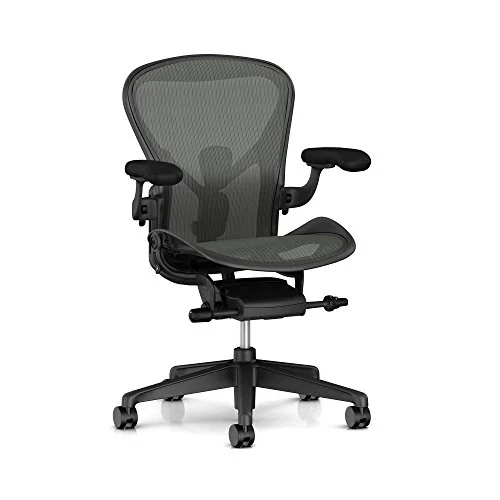
Herman Miller Aeron Chair Size C
Pros
- ✓ Armrests adjust on four axes — height, pivot, width, and depth — widening to nearly 20" apart for broad-shouldered users
- ✓ 8Z Pellicle mesh distributes weight evenly across a muscular frame without hotspots
- ✓ PostureFit SL supports both sacrum and lumbar simultaneously through heavier training loads
- ✓ Size C sized specifically for larger, more athletic 5'10"–6'7" frames
Cons
- ✗ 350 lb weight limit lower than the Steelcase Leap Plus
- ✗ No headrest option at any price
- ✗ Expensive for a chair with a fixed (non-reclining-lock) tilt tension design
Athletic build is its own fit problem — broad shoulders and a muscular upper back on a frame that isn’t necessarily tall or heavy enough to need a “big and tall” chair. The failure mode here isn’t weight capacity, it’s backrest and armrest width: a standard chair’s armrests sit too close together and the backrest edges dig into the shoulder blades during rotation.
The Herman Miller Aeron Size C handles this better than most chairs because its armrests adjust on four separate axes — height, pivot, width, and depth — and can widen to nearly 20 inches apart. Combined with the 8Z Pellicle mesh, which flexes around muscle mass instead of compressing it into a flat foam seat, it’s one of the few chairs that doesn’t force a broad upper body into a narrow frame.
If You Have Narrow Shoulders
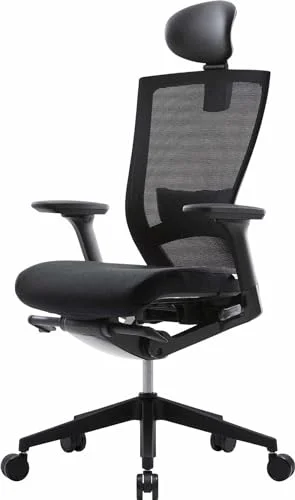
SIDIZ T50 Ergonomic Office Chair
Pros
- ✓ Compact backrest profile sits closer than most chairs, so narrow shoulders don't float inside an oversized back
- ✓ 3D armrests move inward as well as outward, unlike chairs that only widen
- ✓ Forward tilt lets narrower-framed users lean into work without hunching
- ✓ 10+ adjustment points including 2-way lumbar
Cons
- ✗ 275 lb weight capacity is lower than Steelcase or Herman Miller
- ✗ 2-year warranty is short compared to premium alternatives
- ✗ Compact backrest can feel restrictive if your shoulders are actually average-to-broad
This is the flip side of the athletic-build problem, and it’s underserved by most “ergonomic” marketing, which assumes wider is always better. A backrest that’s too wide leaves narrow-shouldered users without lateral support — your shoulder blades never actually touch the chair, so the lumbar curve does all the work and fatigues faster.
The SIDIZ T50 has a noticeably more compact backrest profile than the wide-frame chairs built for tall or athletic users, and its 3D armrests move inward as well as outward — most adjustable armrests only widen. At $419, it’s also one of the more affordable chairs in this guide with genuine 3D arm adjustment.
Universal Fixes That Work Across Body Types
Not every fit problem needs a new chair. Two cheap add-ons solve a large share of body-type mismatches regardless of which category you fall into:
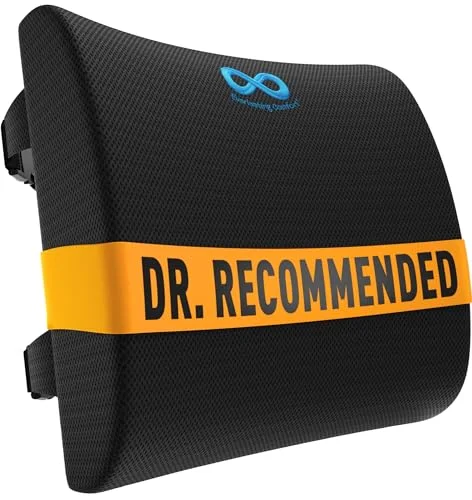
Everlasting Comfort Lumbar Support Pillow
Pros
- ✓ Works on any chair immediately — no setup time or tools required
- ✓ Dual straps lock it firmly in place so it doesn't slide during the day
- ✓ Breathable mesh cover keeps your back cooler than non-ventilated foam pillows
- ✓ Lifetime replacement guarantee is exceptional for a sub-$40 product
Cons
- ✗ Only addresses lumbar — doesn't fix seat depth, armrest width, or backrest width problems
- ✗ Firmness takes a few days of break-in before it feels comfortable
- ✗ Won't compensate for a chair with a structurally poor seat pan
If your chair is close but the lower back support isn’t quite right, the Everlasting Comfort Lumbar Support Pillow straps onto almost any chair in under a minute and costs a fraction of a chair upgrade. It won’t fix seat depth or armrest width, but for lumbar-only complaints it’s the cheapest real fix available. We compare when a cushion is enough versus when you actually need a new chair in our lumbar cushion vs. ergonomic chair guide.
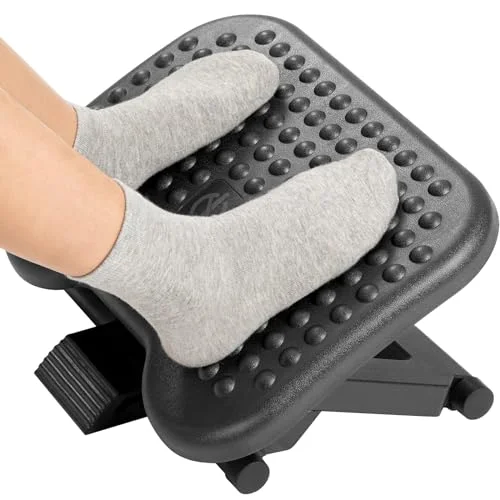
HUANUO Adjustable Desk Footrest
Pros
- ✓ Three height settings cover most gaps between chair height and floor reach
- ✓ Free-rocking motion keeps legs moving — reduces fatigue on long days
- ✓ Massage-texture surface is genuinely comfortable for barefoot use
- ✓ Best price-to-feature ratio in this category
Cons
- ✗ All-plastic construction feels less premium over time
- ✗ Roller mechanism can slide on smooth floors if not anchored
- ✗ Height steps are fixed — no continuous adjustment
If you’re short or petite and your feet don’t reach the floor once the chair is at the right height for your back, the HUANUO Adjustable Desk Footrest closes that gap for $35 across three fixed heights, with a rocking base that keeps your legs moving instead of static.
How to Measure Yourself Before You Buy
Skip the guesswork. Four measurements tell you almost everything you need:
Seated height, floor to knee crease. This tells you your minimum required seat height. If it’s under 17”, most standard chairs won’t go low enough — look at the short/petite picks above.
Hip width, seated. Compare against the chair’s seat width spec, not the overall chair width, which includes armrests and padding that don’t support you.
Shoulder width (bideltoid), standing. Add 2–3 inches for the backrest width you actually want. Narrower than that and a wide chair leaves your back unsupported; wider than that and a narrow chair will pinch.
Femur length, seated. Measure from the back of your knee to where your lower back meets the seat. This determines whether you need extra seat-depth adjustment range, independent of your height.
Frequently Asked Questions
What’s the single most important spec for body-type fit?
For most people it’s minimum or maximum seat height, since that’s the one spec that makes a chair completely unusable rather than just less comfortable. If your feet can’t reach the floor or your knees are jammed above your hips, no amount of lumbar adjustment fixes it.
Can I just adjust a standard chair instead of buying a body-specific one?
Sometimes. Seat height, armrest height, and lumbar position are adjustable on most ergonomic chairs. What you usually can’t adjust is the size of the seat pan itself, the backrest width, or the frame geometry — those are fixed at manufacture, which is why Herman Miller sells the Aeron in three separate frame sizes instead of one adjustable size.
I’m tall but have narrow shoulders — which category do I follow?
Prioritize whichever mismatch causes actual discomfort. If your knees are cramped, follow the tall guidance on seat height and depth first. If your back floats away from the backrest, prioritize the narrow-shoulders backrest width guidance, and look for a tall chair that also lists a narrower backrest option.
Do plus-size chairs need a different lumbar system than standard chairs?
Not fundamentally, but the lumbar curve needs to sit at the correct height relative to a wider torso, and fixed lumbar bumps (like on the Flash Furniture HERCULES) are less forgiving than adjustable ones. If lumbar position matters more to you than price, look for a plus-size-rated chair with an adjustable lumbar dial rather than a molded bump.
Is it worth paying $1,000+ for a body-specific chair over a $400 universal one?
Only if the cheaper chair actually fails one of your four core measurements above. A $400 chair that fits your seat height, depth, and shoulder width is a better purchase than a $1,500 chair that doesn’t fit any of them. Price correlates with adjustability and materials, not with fit — fit comes from choosing the right size or spec, not the highest price.
How often should I re-measure if my chair no longer feels right?
Body-type fit doesn’t change often, but weight, posture habits, and even footwear (heels vs. flats change effective leg length) can shift your ideal seat height by an inch or more. If a chair that used to feel right stops feeling right, re-check seat height and depth before assuming the chair broke.
Bottom Line
Chair “ergonomics” is really a fit problem disguised as a features problem. The Steelcase Leap Plus and Herman Miller Aeron Size C are excellent chairs, but they’re excellent specifically for tall and athletic frames — buy either one as a short or petite user and you’ll fight the chair every day. Start with your own measurements, match them to the category above, and treat the $35–$40 add-ons as a legitimate first step before assuming you need a new chair at all.