The Honest 2026 Take on Blue Light Glasses
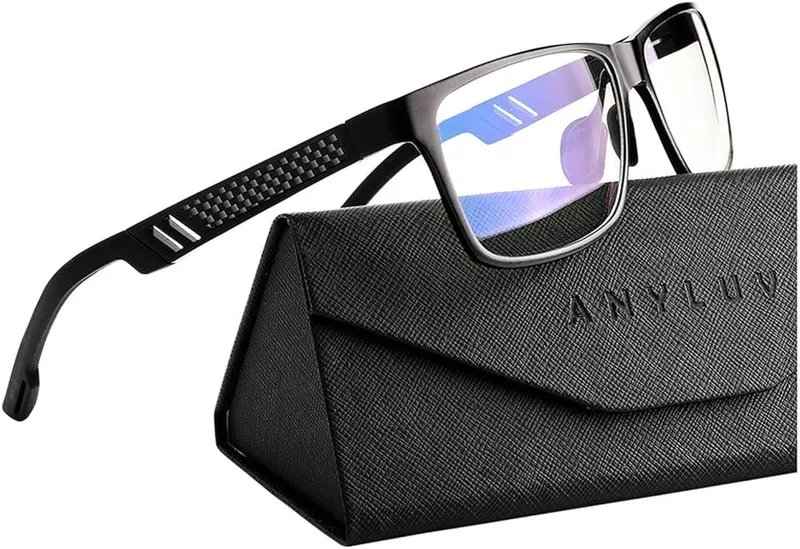
ANYLUV Blue Light Blocking Glasses
Pros
- ✓ Aluminum-magnesium frame feels genuinely premium — not the cheap plastic typical at this price
- ✓ Lightweight metal construction stays comfortable for all-day wear at a desk
- ✓ 45% blocking provides meaningful eye strain reduction without heavy color shift
- ✓ Very low color distortion — you can still read game UI colors accurately
Cons
- ✗ 45% blue light blocking is lower than mid-range options — not ideal for extreme light sensitivity
- ✗ No dedicated anti-reflective coating on the lens
- ✗ No case or cleaning cloth included
In 2026, the science debate around blue light glasses has gone mainstream. Eye care organizations — including the American Academy of Ophthalmology — have consistently noted that the blue light emitted by consumer monitors is a small fraction of what you absorb from sunlight, and that digital eye strain is driven more by reduced blinking, dry air, fixed focus distance, and glare than by blue light itself.
That nuance matters when you’re shopping. The best blue light glasses for gamers aren’t necessarily the ones with the highest blocking percentage — they’re the ones that reduce glare, soften screen harshness, and make 4-8 hour gaming sessions less punishing on your eyes. GUNNAR built a business on this, and they got it right. The amber tint improves screen contrast in dark rooms, the anti-reflective coating cuts overhead glare, and the slight magnification (+0.2 diopter) reduces how hard your eyes work to focus on a screen.
Quick pick: The GUNNAR Intercept is the best gaming glasses you can buy right now. If $70 is too much, the ANYLUV aluminum-magnesium glasses at $17 punch well above their price.
1. GUNNAR Intercept — Editor’s Pick
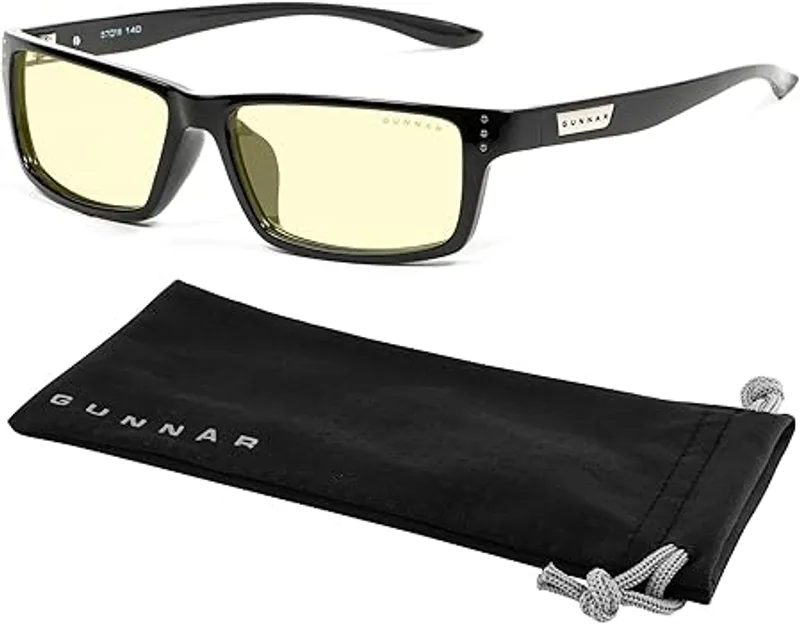
GUNNAR Intercept
Pros
- ✓ Doctor-recommended GUNNAR lens technology delivers genuine glare reduction and contrast enhancement
- ✓ Premium TR90 nylon frame flexes without snapping — built for regular use
- ✓ 65% blue light blocking with amber tint improves contrast in dark gaming environments
- ✓ 100% UV protection included as standard across all variants
Cons
- ✗ Amber tint distorts color accuracy — noticeable in color-sensitive competitive games
- ✗ $69.99 is a steep ask for non-prescription glasses
- ✗ Medium/large fit only — may not suit narrow or smaller faces
The Intercept is GUNNAR’s flagship, and the pair worth actually spending money on. The amber tint isn’t just a yellow filter — it’s calibrated to reduce the harshest frequencies of screen glare while improving contrast in darker gaming environments. Games with dark atmosphere (Elden Ring, Cyberpunk, any horror title) look sharper and more comfortable, not washed out.
The GSHIELD anti-reflective coating is the key differentiator here. Overhead office and desk lighting reflecting off your lenses is a significant and underappreciated cause of eye fatigue, and most budget glasses skip AR coating entirely. The Intercept’s coating genuinely reduces those reflections.
The downside is color accuracy. If you play competitive titles where team-color or ability-color distinctions matter, the amber tint can throw you off. The clear lens variant exists if you want the frame without the tint, though it blocks less blue light. Some people never get comfortable with the amber — that’s a real consideration before spending $70.
Best for: Marathon PC gaming sessions in dark or mixed-lighting rooms, streamers under bright studio lights, anyone who gets frequent headaches or dry eyes after 3+ hours on screen.
2. GUNNAR Riot — Best for Wide Heads
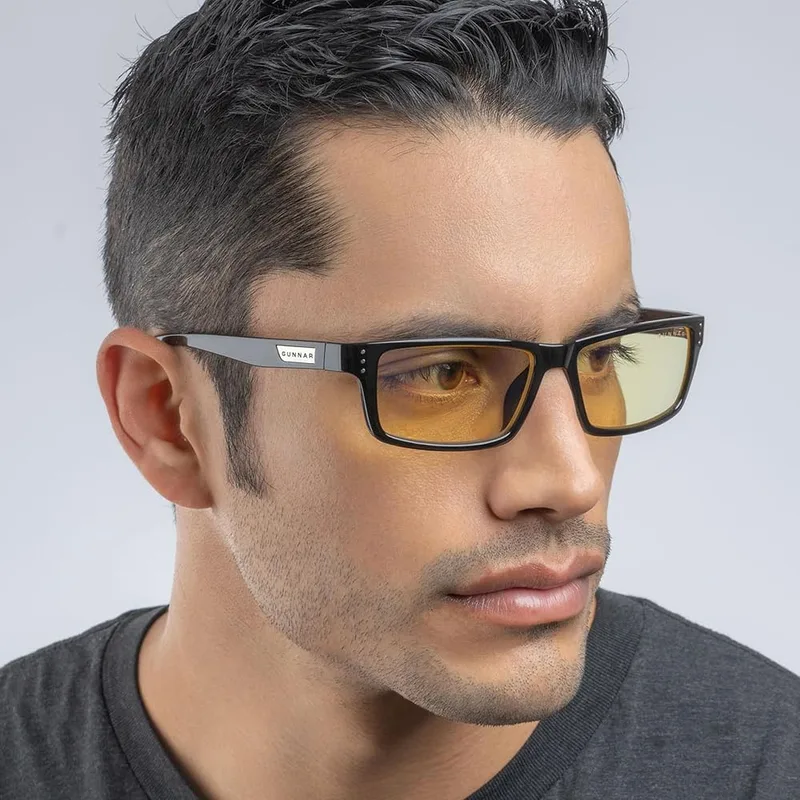
GUNNAR Riot
Pros
- ✓ 142mm frame width makes it the most comfortable GUNNAR option for people with larger heads
- ✓ 7g lighter than the Intercept — a real difference across a 6-hour session
- ✓ Same 65% blue light blocking performance as the Intercept at $20 less
- ✓ 3-barrel steel hinges are significantly more durable than typical flex hinges
Cons
- ✗ Amber tint distorts colors — same tradeoff as all amber-tinted gaming glasses
- ✗ No case included at base price
- ✗ Less polished aesthetic compared to the Intercept
The Riot is the Intercept’s wider-fitting sibling. At 142mm frame width versus 137mm on the Intercept, it’s meaningfully more comfortable for people who find standard gaming glasses pressing into their temples within an hour.
It’s also 7 grams lighter. That sounds trivial but matters after five or six hours — at some point you realize you’ve forgotten you’re wearing them. The 3-barrel steel hinges are a legitimate durability upgrade over the flex-hinge clips on cheaper frames and should hold up well over years of daily use.
Same core 65% blocking performance as the Intercept at $20 less. If you don’t need the Intercept’s tighter fit profile and GSHIELD coating, the Riot is the better value in GUNNAR’s lineup.
Best for: Gamers with wider heads who find standard frames uncomfortable, buyers who want GUNNAR performance without the Intercept’s price, anyone who prefers a slightly lighter frame.
3. J+S Vision Blue Light Shield — Best Budget Mid-Range
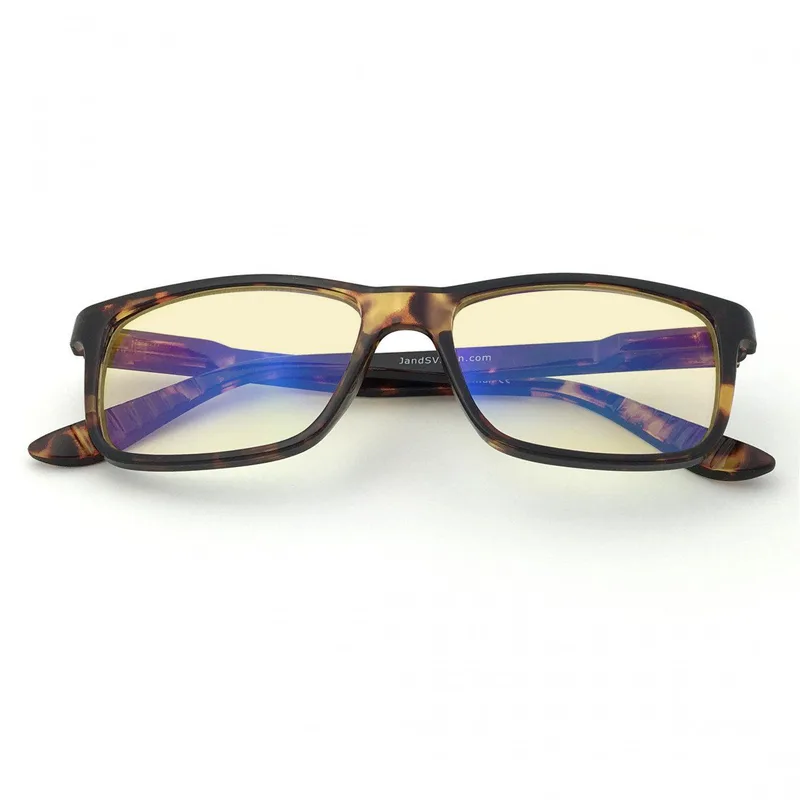
J+S Vision Blue Light Shield
Pros
- ✓ 52% blue light blocking via LCD lens provides solid protection without extreme color shift
- ✓ 100% UV400 protection covers more than just the blue light spectrum
- ✓ Comes with a hard case AND microfiber cloth — better value packaging than pricier competitors
- ✓ Sturdy build that doesn't feel flimsy at the price point
Cons
- ✗ Noticeably less glare reduction than GUNNAR's patented lens and AR coating
- ✗ 52% blocking is a step down from GUNNAR's 65%
- ✗ Functional but unremarkable frame design
The J+S Vision Blue Light Shield is the strongest non-GUNNAR option on this list. At $28, you get 52% blue light blocking via the LCD lens, 100% UV400 protection, and — notably — a proper hard case and microfiber cleaning cloth included. Most glasses at this price come in a flimsy pouch if anything at all.
The LCD lens technology is specifically engineered to target high-energy blue light in the 400–430nm range while maintaining better color accuracy than amber-tinted alternatives. The result is real protection without the jarring color shift that makes competitive play harder.
Build quality is solid for the price. The matte black TR90 frame won’t snap, and the fit is comfortable enough for a full work-plus-gaming day. Not GUNNAR-level polish, but a defensible $28 spend if you want real blocking without amber tint.
Best for: Gamers on a budget who still want quantified blue light blocking, desk workers who need glasses for both computer work and gaming, anyone bothered by color distortion from tinted lenses.
4. ANYLUV Blue Light Blocking Glasses — Best Value
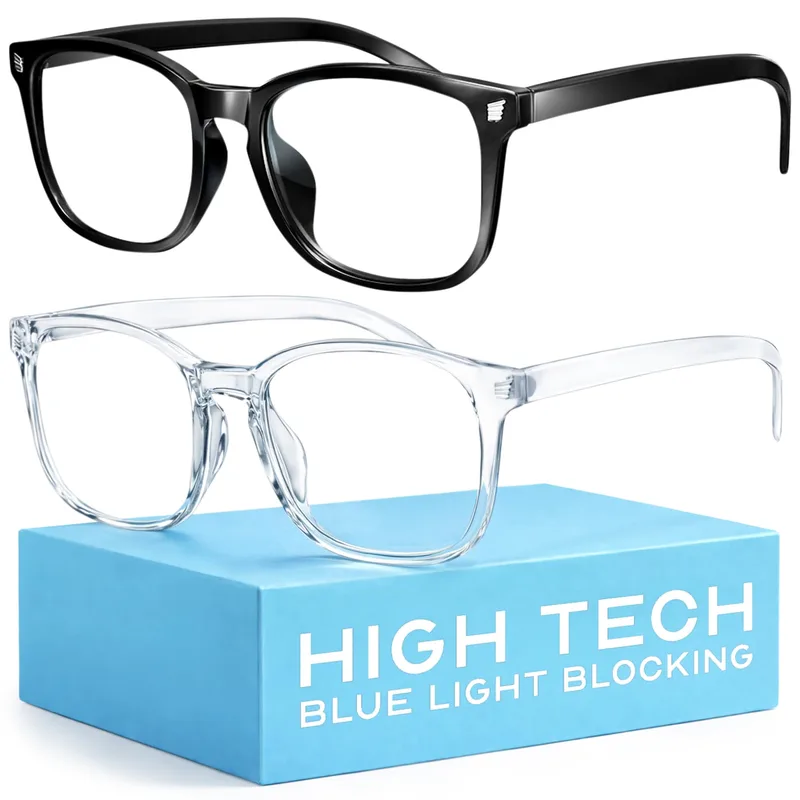
Livho High Tech Blue Light Glasses
Pros
- ✓ 22.68g is barely noticeable — one of the lightest blue light glasses available
- ✓ Flexible TR90 nylon frame survives drops and bends without snapping
- ✓ Under $16 is the right price to experiment if you've never tried blue light glasses before
- ✓ Clear lenses maintain full color accuracy — no tint disadvantage for competitive gaming
Cons
- ✗ No published blue light blocking percentage — UV400 spec doesn't tell you how much is filtered
- ✗ Plastic frame feels noticeably cheaper than aluminum options
- ✗ No case or cleaning cloth included
The standout in the budget tier. An aluminum-magnesium frame on a $17 pair of glasses is genuinely surprising — most glasses in this range use injection-molded plastic that flexes and creaks. The ANYLUV metal frame is rigid, lightweight, and looks like it costs considerably more than it does.
The 45% blue light blocking is lower than the mid-range options, but paired with low color distortion lenses, it’s the right balance for gaming. You get eye protection without sacrificing your ability to read game colors accurately. For gamers who aren’t extremely light-sensitive, 45% blocking is enough to make a noticeable difference in eye fatigue after a long session.
Best for: Budget-conscious gamers who want a premium-feeling metal frame, desk workers who wear glasses all day and want something that doesn’t scream “tech accessory,” anyone looking for the best feel-to-price ratio under $20.
5. Livho High Tech Blue Light Glasses — Best Ultra-Budget
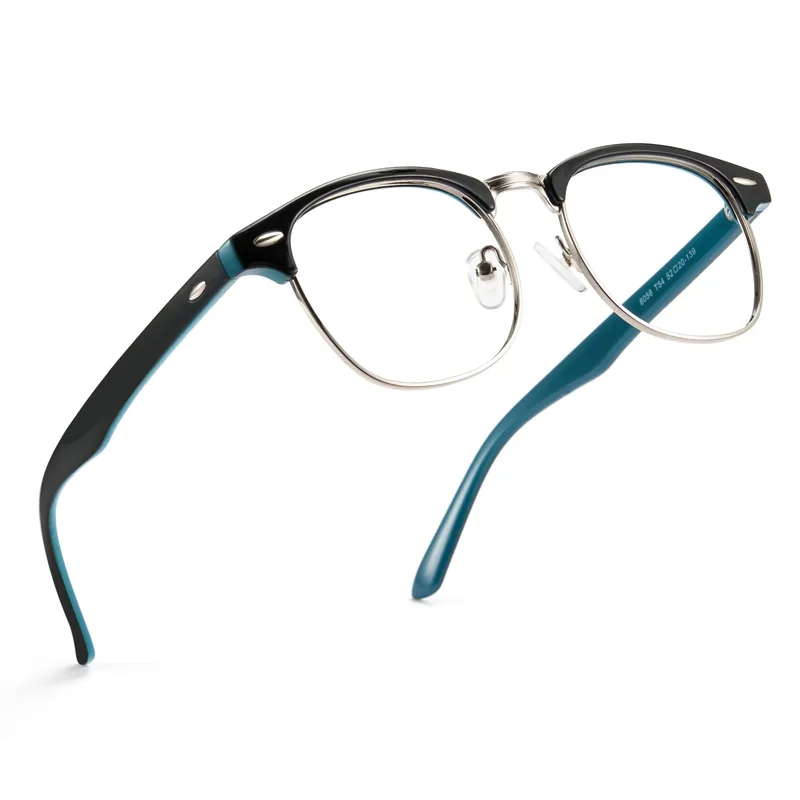
Cyxus Clear Blue Light Filter Glasses
Pros
- ✓ Interchangeable lens system lets you swap between tints or clear lenses depending on your setup
- ✓ 99% UV blocking covers the full harmful UV spectrum
- ✓ Lifetime warranty — Cyxus will replace frames or lenses if anything fails
- ✓ Clear lenses preserve full color fidelity for competitive gaming
Cons
- ✗ Interchangeable lenses can loosen over time — need occasional re-seating
- ✗ Square frame aesthetic is not for everyone
- ✗ Polycarbonate build feels less premium than aluminum alternatives at a similar price
At $15 with over 116,000 Amazon reviews, the Livho is the best-selling blue light glasses for a reason. They’re extraordinarily light at 22.68g — barely perceptible on your face — and the flexible TR90 nylon frame is durable enough to survive being sat on or dropped into a bag.
The trade-off: Livho doesn’t publish a specific blue light blocking percentage. The “HEV-Adsorb substrate technology” description suggests filtering in the high-energy blue range, but there’s no verified blocking number to compare against other options. The lenses are clear, which is correct for gaming color accuracy, but the absence of quantified specs is a gap.
At $15, it’s a low-risk entry point. If the difference feels noticeable after a few sessions, great — you have a direction to upgrade. If not, $15 is not a painful experiment.
Best for: First-time blue light glasses buyers who want to try before spending more, casual gamers who game occasionally rather than daily, anyone who tends to lose or break glasses.
6. Cyxus Clear Blue Light Filter Glasses — Best for Flexibility
The Cyxus distinguishes itself with two features: interchangeable lenses and a lifetime warranty. The lens swap system means you can run clear lenses for afternoon competitive play and switch to a tinted lens for late-night sessions when you’re gaming closer to bedtime and want to minimize melatonin disruption.
The lifetime warranty is genuinely rare at $20. Polycarbonate frame, square fit, 99% UV blocking — nothing exotic here, but the combination of swappable lenses and unlimited replacement coverage gives this a specific value proposition that budget alternatives lack.
Best for: Gamers who play at different times of day with different lighting, people who want one pair of glasses they can adapt rather than buying two separate options.
Comparison Table
| Product | Price | Blue Light Blocking | Tint | Frame | Rating |
|---|---|---|---|---|---|
| GUNNAR Intercept | $69.99 as of Oct 18, 2026 | 65% | Amber | TR90 nylon | 9.2 |
| GUNNAR Riot | $49.99 as of Oct 18, 2026 | 65% | Amber | Nylon | 8.7 |
| ANYLUV Blue Light Blocking | $19.79 as of Oct 18, 2026 | 45% | Clear | Al-Mg metal | 8.5 |
| J+S Vision Blue Light Shield | $24.99 as of Oct 18, 2026 | 52% | Clear/low tint | TR90 | 8.3 |
| Cyxus Clear | $13.49-$14.99 as of Oct 18, 2026 | 380–450nm | Clear | Polycarbonate | 7.9 |
| Livho High Tech | $15.99 as of Oct 18, 2026 | UV400 | Clear | TR90 nylon | 7.8 |
What to Look for in Gaming Glasses
Tinted vs. Clear Lenses
Amber-tinted lenses (GUNNAR-style) increase contrast and reduce glare in dark gaming rooms — which is why streamers and professional esports players tend to prefer them. The tradeoff is color accuracy: the amber shift can make distinguishing UI colors or team indicators harder until you adjust. Some never fully adjust.
Clear lenses with blue light coating give protection without color shift. Better for competitive gaming where color accuracy matters. The downside is that many clear-lens manufacturers don’t publish a verified blocking percentage, making it hard to compare options.
Blue Light Blocking Percentage
Higher isn’t always better in all contexts. 65% amber-tinted (GUNNAR) vs. 45% clear (ANYLUV) serve different purposes. GUNNAR’s amber is better for reducing fatigue in dim setups. ANYLUV’s clear lenses are better when you need accurate colors.
For sleep quality — if you’re gaming 30–60 minutes before bed — higher blocking and amber tint has more measurable impact on melatonin compared to clear lenses with modest blocking.
Frame Fit
Standard frame width is 135–138mm. Wide fit is 140–145mm. If you regularly get pressure headaches from glasses after an hour, look for 140mm+ (GUNNAR Riot fits this range). Gaming sessions run long enough that fit matters more than it does for casual eyewear use.
Anti-Reflective Coating
This is often overlooked. Overhead lighting reflecting off your lens surface causes genuine eye fatigue — separate from blue light entirely. GUNNAR’s GSHIELD AR coating specifically addresses this. Budget glasses skip it almost universally.
FAQ
Do blue light glasses actually help with gaming eye strain?
Yes, but the mechanism is more nuanced than marketed. Gaming glasses reduce glare and improve screen contrast, which reliably reduces eye fatigue during long sessions. The science on pure “blue light damage from screens” is less settled — the American Academy of Ophthalmology notes screens emit far less blue light than sunlight. But the comfort improvement from reduced glare and better contrast is real.
Which GUNNAR glasses are best for gamers?
The Intercept is the top all-around pick. The Riot is better if you have a wider head or want to spend less while keeping the same core lens performance. Both are solid choices — the decision comes down to fit and budget.
Can blue light glasses help with headaches from gaming?
Yes, for headaches caused by screen glare and eye strain. If your headaches have other causes — poor posture, sitting too close to the monitor, neck strain — glasses won’t fix those. Pair blue light glasses with proper gaming posture habits for more complete relief.
Can I wear these over contact lenses?
Yes. All glasses on this list are non-prescription (0 magnification). Contact lens wearers can use them normally as an overlay for eye protection.
Are cheap blue light glasses worth trying?
At $15–17 (Livho, ANYLUV), yes — the risk is low enough to justify an experiment. The ANYLUV is the better first buy because the aluminum-magnesium frame feels substantially better than plastic at the same price point.
What else should I do to reduce gaming eye strain?
The 20-20-20 rule makes a meaningful difference: every 20 minutes, look at something 20 feet away for 20 seconds. Beyond that, screen brightness (don’t crank it to max in a dark room), proper viewing distance (roughly arm’s length), and a good ergonomic setup matter. Check the Best Ergonomic Streaming Setup guide for a full rundown — and make sure your gaming chair supports proper sitting posture so you’re not craning your neck toward the screen.
Conclusion
For most gamers, GUNNAR makes the best blue light glasses available. The Intercept at $69.99 is the top pick for anyone who spends 4+ hours daily in front of a screen. The Riot at $49.99 is the smarter choice if you have a wide head or want to save $20 with no real performance compromise.
If budget matters, the ANYLUV at $17 is the best value on the entire list — the metal frame alone makes it worth picking over cheaper plastic alternatives. For color-accurate gaming with quantified blocking, the J+S Vision at $28 is the mid-range pick.
Top picks by use case:
- Best overall: GUNNAR Intercept — $69.99
- Best for wide heads: GUNNAR Riot — $49.99
- Best value under $20: ANYLUV — $17
- Best for color accuracy: J+S Vision Blue Light Shield — $28