Disclosure: PostureRanked is reader-supported. When you buy through links on our site, we may earn an affiliate commission at no additional cost to you. Our recommendations are based on independent research and testing.
| Product | Price | Rating |
|---|---|---|
| Upright GO 2 Premium Posture Trainer | $79.95 | 9.2 |
| ComfyBrace Posture Corrector Back Brace | $19.97 | 8.6 |
| Steelcase Series 1 | $419 | 9.2 |
Disclosure: PostureRanked is reader-supported. When you buy through links on our site, we may earn an affiliate commission at no extra cost to you. Learn more
Your coworker just dropped good money on a posture-tracking gadget. You’ve been eyeing a proper ergonomic chair for months. Your back still hurts either way. Which actually solves the problem?
In early 2026, a clinical review found that only seven posture-tracking devices on the market carry Level II clinical validation — meaning they’ve been through randomized controlled trials with at least six months of follow-up data. Everything else is selling you a vibration and a hope. Meanwhile, ergonomic chair manufacturers are racing toward smart adaptive systems, with ProtoArc debuting an AI-responsive chair ecosystem at CES 2026 that adjusts to your movement in real time.
The honest answer: posture correctors and ergonomic chairs solve different problems. One trains your body. The other supports it. Whether you need training or support — or both — depends entirely on your situation.
Quick take: If you sit 6+ hours a day with chronic lower back pain, start with a good ergonomic chair like the Steelcase Series 1. If your back is fine but you catch yourself rounding your shoulders by noon, a posture corrector like the Upright GO 2 retrains that habit in weeks. Most people with serious posture problems eventually need both.
What a Posture Corrector Actually Does
A posture corrector — whether a strap, brace, or smart wearable — works by either physically preventing slouching or alerting you when you do it.
Strap and brace types (like the ComfyBrace) pull your shoulders back mechanically. They correct the position but rely on passive resistance. The moment you take the brace off, your muscles go right back to their default slouch. The benefit is conditional — you’re training awareness, not muscle strength.
Smart biofeedback devices (like the Upright GO 2) attach to your upper back and buzz when your posture drops below a set threshold. Rather than holding your spine in place, they retrain your nervous system to recognize and self-correct the problem. Studies on biofeedback devices have shown meaningful posture improvement over 4–8 week training windows — but only if you actually complete the program daily.
What they don’t do: Posture correctors can’t fix structural problems, disc issues, or pain rooted in tight hip flexors from prolonged sitting. If you’re sitting on a bad chair for 9 hours a day, no wearable device is going to overcome the mechanical load your spine is under.
What an Ergonomic Chair Actually Does
An ergonomic chair addresses posture passively through structural support. It keeps your spine in alignment so you don’t have to consciously maintain it.
The key features that matter are lumbar support (filling the curve of your lower back), adjustable seat depth (preventing the front edge from cutting off circulation), and armrests set at the right height (reducing shoulder elevation and neck strain). A properly fitted ergonomic chair reduces the effort your postural muscles expend just to keep you upright — which directly reduces fatigue, soreness, and long-term injury risk.
What it doesn’t do: An ergonomic chair doesn’t retrain bad habits. If you move from a bad chair to a good one, you’ll be more comfortable — but you’ll likely still sit in your habitual position, just with better support under it. And a good chair does nothing for your posture when you’re standing, walking, or commuting.
Head-to-Head Comparison
| Factor | Posture Corrector | Ergonomic Chair |
|---|---|---|
| Cost | Budget to moderate | Moderate to premium |
| Targets | Upper back, shoulders, awareness | Full spine, lumbar, seated position |
| Mechanism | Active training or passive brace | Passive structural support |
| Long-term benefit | Habit retraining (if used correctly) | Sustained comfort while seated |
| Portability | Fully portable, use anywhere | Fixed to your desk setup |
| Setup time | None | Requires proper fitting/adjustment |
| Works when standing? | Yes | No |
| Evidence strength | Mixed — few validated devices | Strong — well-studied category |
| Best for | Posture awareness, light slouch correction | Prolonged sitting, back pain relief |
When a Posture Corrector Is the Right Choice
Buy a posture corrector if:
- You already have a decent chair but catch yourself rounding forward during work. A biofeedback device like the Upright GO 2 breaks the unconscious habit in 2–4 weeks.
- You need a portable solution. Posture correctors work on planes, at cafe tables, or anywhere else you can’t control the seating environment.
- You’re on a tight budget. If a proper ergonomic chair isn’t in the budget right now, a basic brace is better than nothing — just don’t expect it to substitute for proper seating long-term.
- Your posture problem is upper back, not lower back. Strap correctors address thoracic rounding and forward head posture better than lumbar-focused ergonomic chairs.
What a posture corrector won’t fix: an 8-hour workday on a kitchen chair that puts your hips 3 inches below desk height. The brace is a band-aid on a structural problem.
When an Ergonomic Chair Is the Right Choice
Buy an ergonomic chair if:
- You sit 5+ hours a day at the same desk. The ROI on a proper ergonomic chair compounds daily — the cost-per-hour over a 10-year working life is surprisingly low for a quality chair.
- You have lower back pain, hip discomfort, or sciatica symptoms. These are overwhelmingly seating-related problems. A chair with proper lumbar support and seat depth adjustment addresses the root cause.
- You want passive protection — something that works without daily discipline. A properly adjusted ergonomic chair just works, without requiring you to remember to turn it on.
- You’re dealing with tailbone pressure, leg numbness, or hip tightness from sitting. These are mechanical problems a basic strap cannot solve.
See our full breakdown in Best Ergonomic Desk Chairs or our Best Luxury Office Chairs guide if you’re ready to spend on a longer-term investment. For a complete system covering chair, desk, and monitor together, see the Complete Ergonomic Workspace Setup Guide.
The Case for Using Both
The most effective approach is a layered one. An ergonomic chair handles passive structural support during long work sessions. A posture corrector handles awareness training — retraining the neural habits that cause slouching in the first place.
Research increasingly supports this combined approach: ergonomic chairs reduce the mechanical load on the spine, while biofeedback devices train the proprioceptive awareness that lets you maintain good posture even when you’re away from your chair. Using one without the other addresses only half the problem.
A practical starting point: use a posture corrector for 20–30 minutes daily while sitting in whatever chair you have. Simultaneously, start budgeting for a proper ergonomic chair. Within 6 months, you’ll have better postural habits and better seating infrastructure — which compounds into meaningful long-term spinal health.
If you’re just beginning this journey, our Best Posture Correctors roundup covers seven validated devices across all price points, from budget braces to smart trackers. Gamers dealing with posture issues specific to long sessions can also benefit from our Gaming Posture Guide for a setup and break protocol tailored to long gaming sessions.
Our Top Picks
Upright GO 2 Premium — Best Posture Corrector for Desk Workers
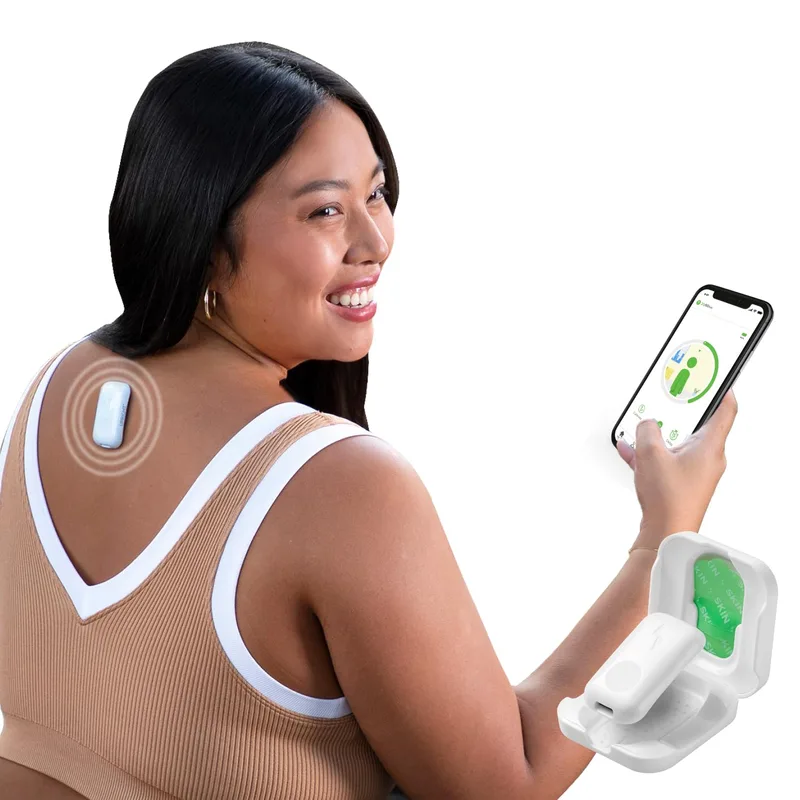
The Upright GO 2 is the posture corrector we’d actually recommend for office workers who want measurable results. It attaches to your upper back (strapless — adhesive or optional necklace mount), connects to a smartphone app, and buzzes whenever you drop below your posture threshold. The 14-day training program is structured to gradually lengthen your posture sessions over time.
It costs more than a basic brace — but it’s the only device in this price range with real behavioral retraining built in rather than passive mechanical restriction. Buy on Amazon
ComfyBrace — Best Budget Posture Corrector
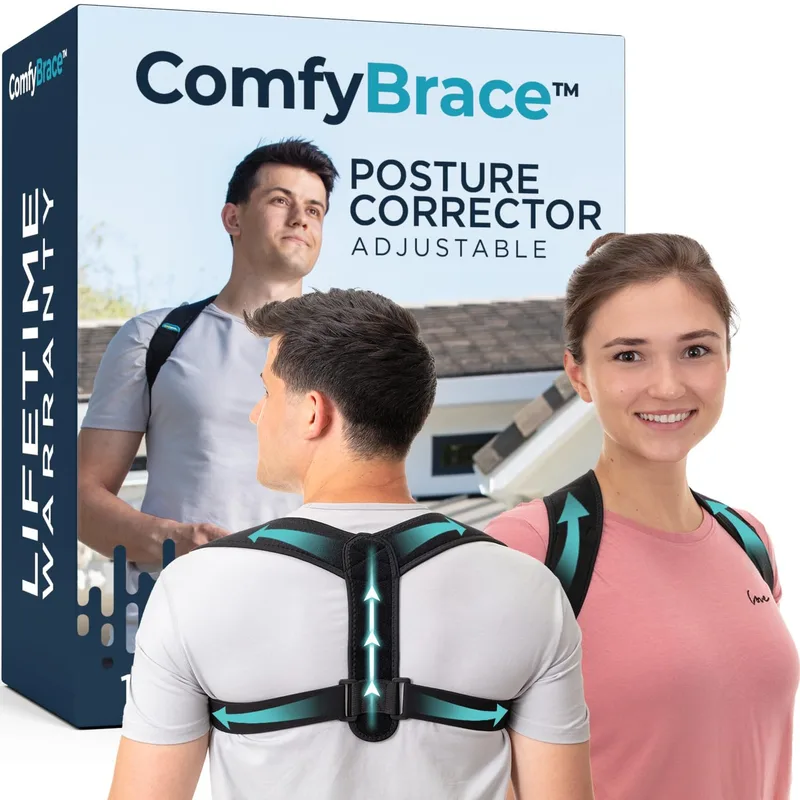
If you want a low-commitment starting point, the ComfyBrace is genuinely affordable and has 43,000+ Amazon reviews backing it up. It pulls your shoulders back with padded straps, fits chest sizes 30”–43”, and is machine washable. Wear it for 30 minutes a day while working — it creates the physical feedback of correct alignment without requiring any tech.
The limitation: it’s passive correction only. You’ll feel good while wearing it. But without the behavioral retraining that a smart device provides, the improvement doesn’t stick as quickly. Buy on Amazon
Steelcase Series 1 — Best Mid-Range Ergonomic Chair
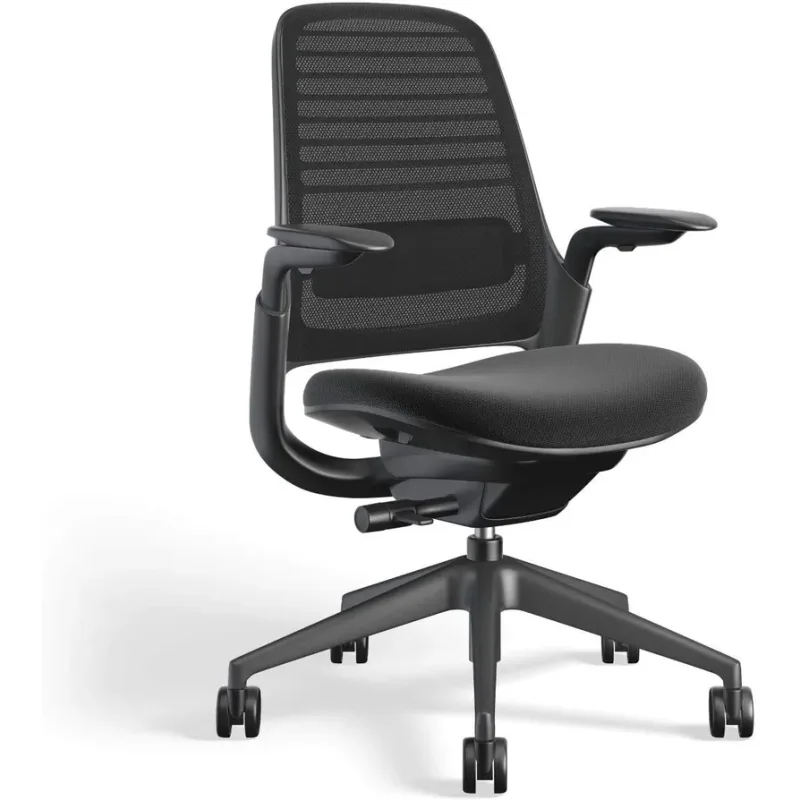
The Steelcase Series 1 is the desk chair we’d recommend to most people who sit all day. It has a lifetime warranty (genuinely rare in this price tier), 400 lb weight capacity, weight-activated recline that just works without fiddling, and commercial-grade build quality that runs circles around consumer-market competitors.
The lumbar adjustment is limited compared to chairs twice the price — but for the vast majority of users, the Series 1 provides the structural support needed to eliminate seated pain without requiring an Aeron-tier budget. Buy on Amazon
For the full Herman Miller vs Steelcase comparison, see our Aeron vs Leap deep-dive.
Buying Guide: What Actually Matters
For posture correctors:
- Smart biofeedback > passive straps for lasting results
- Look for devices with a training program, not just vibration alerts
- Wear time matters: 20–30 minutes daily is more effective than all-day use
- Washability is important for daily wear — check before buying
For ergonomic chairs:
- Lumbar adjustment range matters more than lumbar position
- Seat depth adjustment is the most overlooked spec — prevents leg numbness
- 4-way adjustable armrests (not just height) reduce shoulder elevation
- Mesh breathes better than foam for 8+ hour sessions; foam is more forgiving for lighter builds
- Warranty length reflects actual quality: lifetime > 10 years > 2 years > 1 year
Budget expectations:
- Posture correctors: inexpensive for mechanical braces (around the price of a dinner out), more for validated smart devices with app connectivity
- Ergonomic chairs: mid-range for commercial-adjacent quality, substantially more for premium options like Herman Miller or Steelcase flagship models
FAQ
Can a posture corrector replace an ergonomic chair?
No. A posture corrector addresses posture habit and upper-body alignment; an ergonomic chair addresses the structural environment your spine lives in for 8 hours a day. A brace worn over 8 hours in a bad chair is treating symptoms, not causes. Start with the chair if budget allows.
Do posture correctors actually work?
The evidence is mixed and device-dependent. As of Q1 2026, fewer than ten posture devices on the market carry Level II clinical validation. Smart biofeedback devices with structured training programs (like the Upright GO 2) show meaningful results in research. Passive braces help with awareness but don’t produce lasting habit change without consistent use.
How long does it take to see results from a posture corrector?
Most structured programs report measurable improvement in 2–4 weeks of consistent daily use. The key is “consistent” — skipping days resets the retraining progress. Smart devices with progress tracking help maintain the discipline.
What’s the minimum I should spend on an ergonomic chair?
For a serious office setup with 6+ hours of daily use, prioritize build quality, adjustability, and warranty length over price alone. The Steelcase Series 1 is the sweet spot for most buyers — commercial-grade quality without the four-figure price tag of flagship models. Refurbished commercial chairs (sold through certified dealers) often offer strong value compared to new budget alternatives.
Is it worth combining a posture corrector with an ergonomic chair?
Yes — they work on different layers. The chair handles passive structural support; the corrector handles behavioral retraining. The combination produces better long-term results than either alone, especially for people with moderate-to-severe posture problems.
Can you wear a posture corrector all day?
Not recommended. Most experts and manufacturers suggest 20–30 minutes per session, gradually increasing to 2–3 sessions per day. Wearing a brace all day can cause muscle dependency — your postural muscles stop working because the device does it for them.
Conclusion
Posture correctors and ergonomic chairs aren’t competing products — they’re complementary tools that target different aspects of the same problem.
If your primary issue is chronic seated pain or lower back problems, start with an ergonomic chair. The Steelcase Series 1 is the best value in its class. For premium options, see our Herman Miller Aeron vs Steelcase Leap comparison.
If your primary issue is a persistent slouch habit that a good chair hasn’t fixed, add the Upright GO 2 to your routine. The investment in behavioral retraining addresses what furniture alone can’t.
On a tight budget? The ComfyBrace is the lowest-friction starting point — imperfect, but better than nothing while you save for a proper chair.
The best posture protocol in 2026: a validated ergonomic chair as the foundation, and a biofeedback corrector to retrain the habits your chair can’t fix.