Disclosure: PostureRanked is reader-supported. When you buy through links on our site, we may earn an affiliate commission at no additional cost to you. Our recommendations are based on independent research and testing.
| Product | Price | Rating |
|---|---|---|
| Herman Miller Embody | — | 9.2 |
| Steelcase Leap V2 | — | 9.6 |
| Steelcase Gesture | — | 9.4 |
| Haworth Fern | — | 8.8 |
| Herman Miller Aeron | — | 9.6 |
PostureRanked is reader-supported. When you buy through links on our site, we may earn an affiliate commission at no additional cost to you.
You’ve narrowed it down to two chairs. The Herman Miller Embody and the Steelcase Leap V2 both cost north of $1,000, both carry 12-year warranties, and both claim to be the best ergonomic chair you can buy. So which one actually deserves that spot on your office floor? If you’re still considering mid-range options, see our best ergonomic chairs under $500 guide first.
Short answer: The Steelcase Leap V2 wins for most people. More adjustable, fits more body types, costs less. But if you run hot, sit 10+ hours a day, or have specific spinal concerns, the Herman Miller Embody might be worth the premium.
Here’s the full breakdown.
Herman Miller Embody
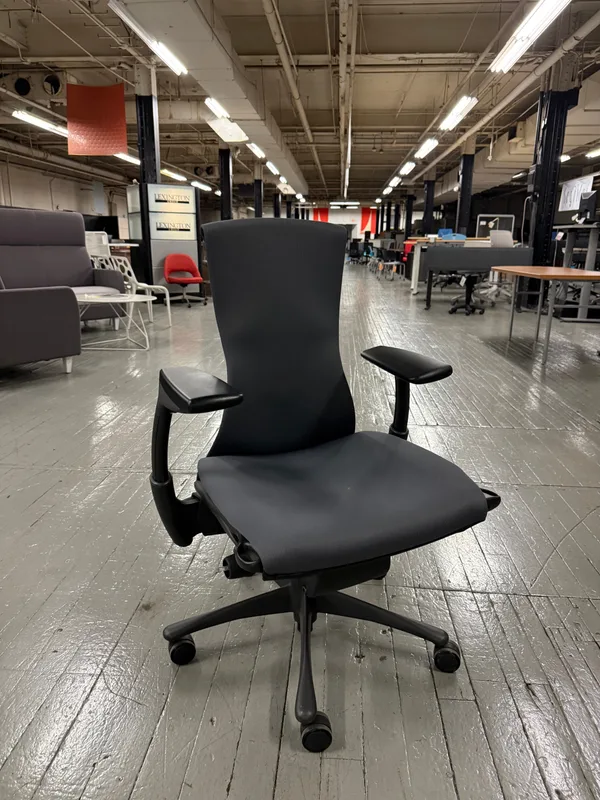
Herman Miller Embody
Pros
- ✓ Pixelated backrest eliminates pressure points and promotes micro-movement
- ✓ Superior airflow keeps you cool during long sessions
- ✓ 12-year full-coverage warranty including 24/7 use
- ✓ BackFit adjustment follows your posture automatically
Cons
- ✗ No adjustable lumbar — the self-adjusting design either works for you or it doesn't
- ✗ 300 lb weight limit is lower than competitors at this price
- ✗ Two-week break-in period before it feels comfortable
The Embody doesn’t look like any other office chair. That’s intentional. Instead of traditional foam padding, Herman Miller built a pixelated support system — a grid of flexible pixels that distribute your weight across the entire backrest. The result is a chair that breathes better than foam and eliminates the hot spots that plague long sessions.
The BackFit adjustment works automatically. As you shift posture, the backrest follows. You don’t dial in lumbar support manually — the chair handles it. This is either brilliant or frustrating, depending on your preference. If you’re the type who likes to fine-tune every setting, the Embody won’t give you that control.
The seat depth adjusts from 15” to 18” across six positions. Arms adjust for height and width but lack the forward/backward travel and pivot you get on the Leap. At 51 lbs, the chair feels substantial without being immovable.
Who should buy this: Anyone sitting 8+ hours daily who overheats in standard chairs. Programmers and writers who shift posture frequently will appreciate how the pixelated back adapts without intervention. If you’ve tried traditional ergonomic chairs and still get lower back pain, the Embody’s different approach might be the answer.
Who should skip this: Heavier users (over 300 lbs), anyone who wants adjustable lumbar firmness, and people who need a headrest. The two-week break-in period is real — don’t judge it in the first few days.
Current pricing: $1,624–$2,045 new depending on configuration. Refurbished units run $900–$1,200 and are an excellent way to save without sacrificing much.
Steelcase Leap V2
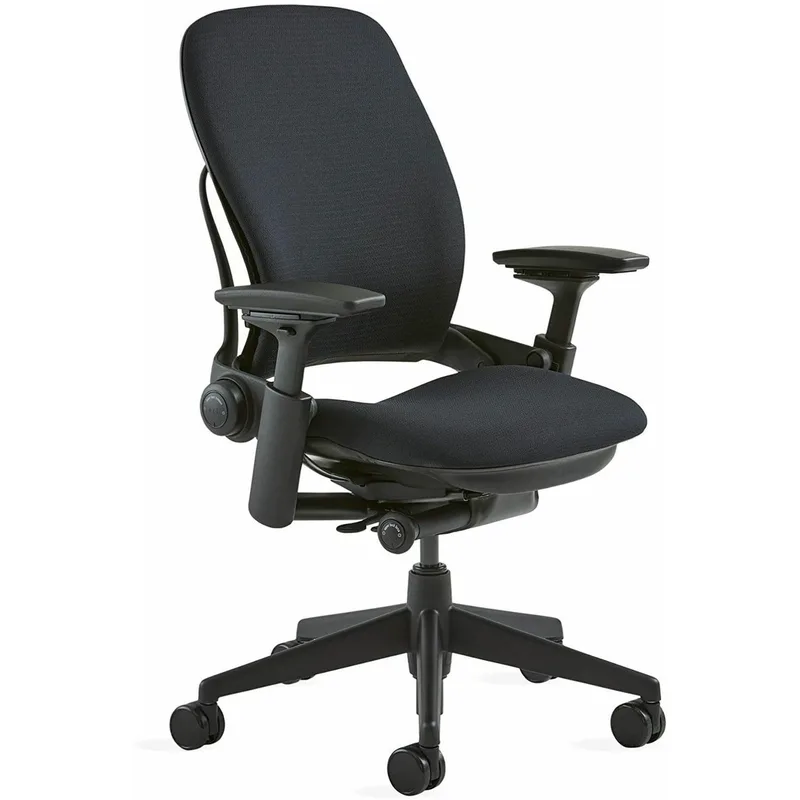
Steelcase Leap V2
Pros
- ✓ Most adjustable premium chair on the market — 4D arms, seat depth, lumbar height and firmness
- ✓ LiveBack technology mirrors your spine through full recline
- ✓ 400 lb capacity accommodates a wider range of body types
- ✓ Proven 20-year track record of durability in commercial environments
Cons
- ✗ Seat cushion runs firm and thin — not plush out of the box
- ✗ Headrest costs $154 extra and doesn't angle-adjust
- ✗ Many adjustment points mean setup takes time to dial in
The Leap V2 takes the opposite approach. Where the Embody innovates, the Leap V2 perfects. Every adjustment you could want is here: 4D armrests, independent seat depth, sliding lumbar support with firmness control, five tilt settings, and a flexible seat edge that reduces pressure on your thighs.
LiveBack technology is the standout feature. The backrest physically changes shape as you recline, following the natural curve of your spine through the full range of motion. It’s not just tilting backward — it’s reshaping to match your spine at every angle.
The chair handles up to 400 lbs and fits users from about 5’0” to 6’4”. That’s a meaningfully wider range than the Embody’s 300-lb limit and 5’2” minimum. Forward tilt capability — absent on the Embody — makes the Leap better for active tasks like drawing or leaning into a monitor.
Who should buy this: Most people. The Leap V2 is the safest premium chair purchase because its adjustability covers nearly every body type and sitting preference. Shared home offices where multiple people use the same chair benefit most — you can dial it in for each person in under a minute.
Who should skip this: The seat cushion is deliberately firm and thin. If you want a plush, sinking-in feel, you won’t find it here. And if temperature is your biggest complaint about your current chair, the Embody handles heat better.
Current pricing: $1,299–$1,399 new from Steelcase. Refurbished units from Crandall or Madison Seating run $650–$800 and hold up remarkably well — these chairs survive 20 years in corporate offices. The Leap holds roughly 50% of retail value after 3–5 years, so if you pay $1,300 and resell in five years for $650, your true annual cost is $130.
Head-to-Head Comparison
| Feature | Herman Miller Embody | Steelcase Leap V2 |
|---|---|---|
| Price (new) | $1,624–$2,045 | $1,299–$1,399 |
| Price (refurbished) | $900–$1,200 | $650–$800 |
| Weight capacity | 300 lbs | 400 lbs |
| Height range | 5’2”–6’4” | 5’0”–6’4” |
| Seat depth | 15”–18” (adjustable) | 15.75”–18.75” (adjustable) |
| Lumbar support | Automatic (BackFit) | Manual height + firmness |
| Armrests | Height + width | Full 4D (height, width, depth, pivot) |
| Forward tilt | No | Yes |
| Headrest option | No | $154 add-on |
| Thermal comfort | Excellent (pixelated airflow) | Average (foam padding) |
| Break-in period | ~2 weeks | Minimal |
| Warranty | 12 years | 12 years (lifetime frame) |
| Chair weight | 51 lbs | 70 lbs |
Worth Considering
If neither chair feels right, three alternatives sit in the same tier:
Steelcase Gesture
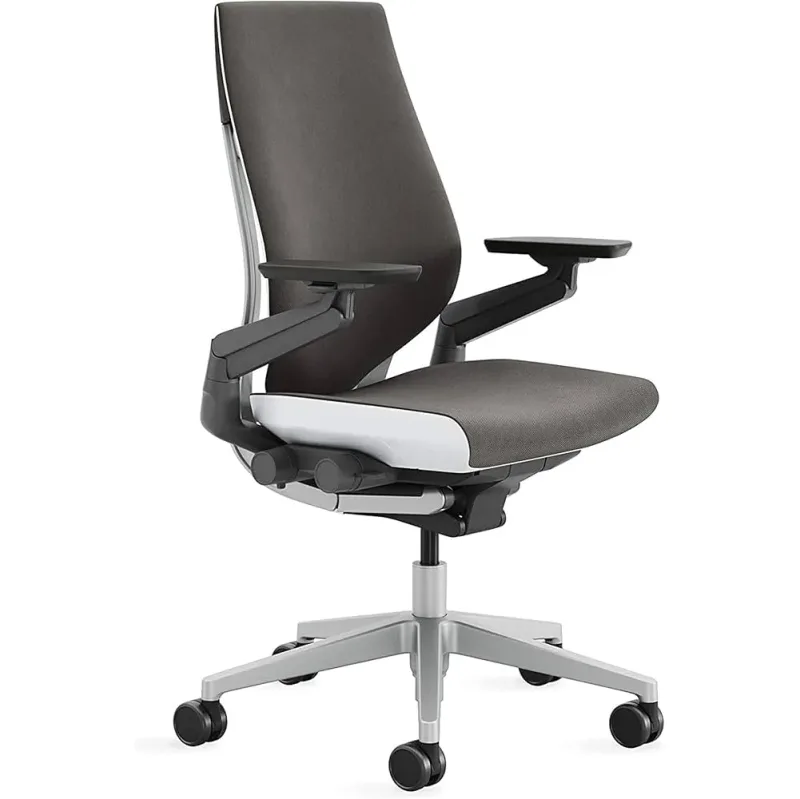
The Gesture matches the Leap V2’s build quality with 360-degree arm adjustability that’s better for tablet and phone use. At roughly $1,159 new, it’s priced between the two main contenders. The tradeoff: less lumbar adjustability than the Leap. Good pick if arm comfort matters more than back support tuning.
Haworth Fern
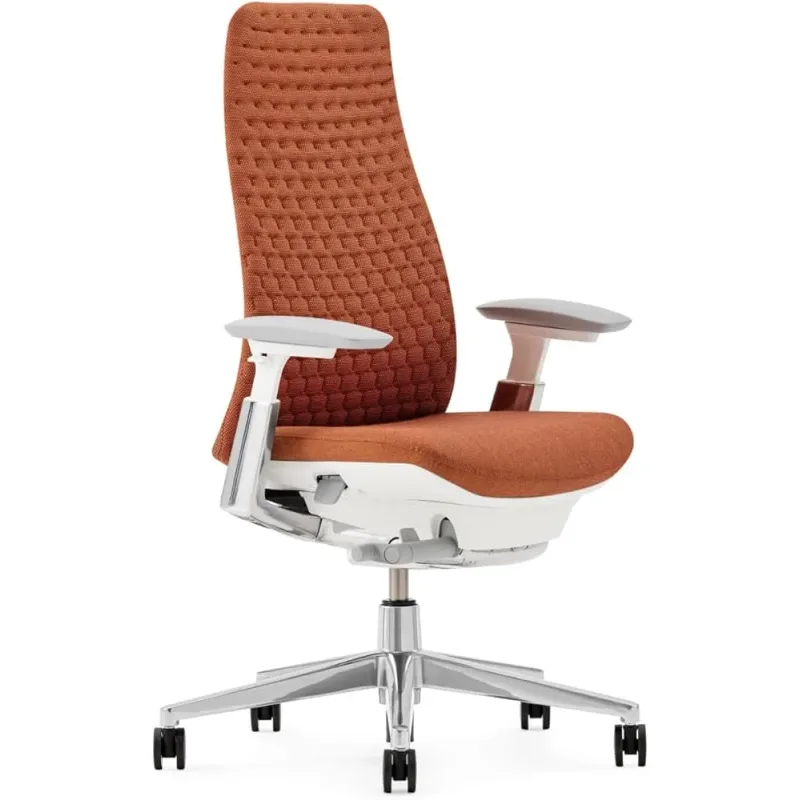
The Fern’s four-layer backrest creates a suspended, floating feel unlike anything from Herman Miller or Steelcase. The digital knit material adds genuine softness. Quality control has been inconsistent across units though — some buyers report uneven tension. Worth trying in a showroom before committing.
Herman Miller Aeron
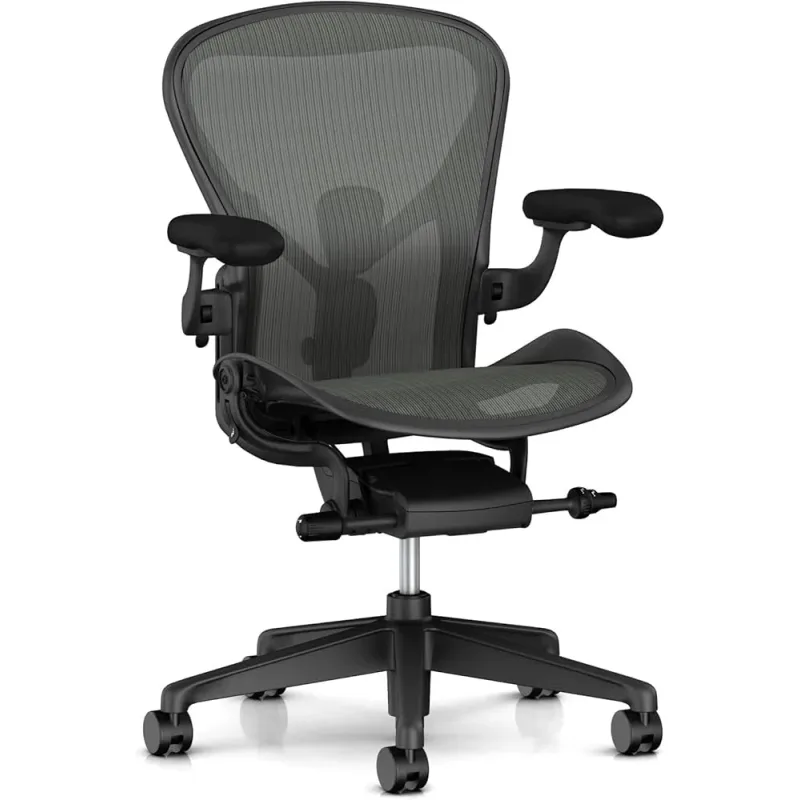
The Aeron pioneered mesh seating in 1994 and the current remastered version remains excellent. Full mesh means better airflow than the Leap V2, and three sizes (A, B, C) provide a precise fit. The downside: no seat depth adjustment on any size, which limits who it works for. Read our full Herman Miller Aeron review for the deep dive. For a cross-category comparison between the Aeron and a premium gaming chair, see our Secretlab Titan vs Herman Miller Aeron showdown.
For more affordable options, see our best ergonomic chairs under $300 guide.
What to Look For in a Premium Ergonomic Chair
Spending $1,000+ on a chair is a big decision. Here’s what actually matters:
Adjustable lumbar support. Your lower back curve is unique. Fixed lumbar designs work for some people and fail others. Manual adjustment like the Leap V2’s gives you control. Automatic adjustment like the Embody’s removes the guesswork but also removes the option to override.
Weight capacity and build. A 400-lb rating vs 300-lb rating isn’t just about heavy users. Higher capacity usually means sturdier construction and better durability over time for everyone.
Seat depth adjustment. The most overlooked spec. If the seat pan is too deep, it presses behind your knees and cuts off circulation. Too shallow, and your thighs lack support. Adjustable seat depth solves both problems.
Warranty terms. At this price, demand at least 12 years. Check whether the warranty covers 24/7 use — some warranties void if the chair is used more than one shift per day.
Try before you buy. Herman Miller and Steelcase both have showrooms and generous return windows. A chair that gets rave reviews online might not work for your specific body. Use the trial period.
Frequently Asked Questions
Is the Herman Miller Embody worth the extra cost over the Leap V2?
For most buyers, no. The Leap V2 offers more adjustability, fits more body types, and costs $300–$600 less. The Embody earns its premium only if you specifically need its thermal management or prefer automatic posture adjustment over manual controls.
How long does the Herman Miller Embody take to break in?
Most users report the Embody feeling genuinely comfortable after 10–14 days of regular use. The pixelated support surface feels strange at first — firm and unfamiliar compared to traditional foam. Give it at least two full weeks before deciding.
Can you use the Steelcase Leap V2 for gaming?
Yes, and it’s arguably better for gaming than most gaming chairs. The adjustable lumbar, 4D arms, and LiveBack technology support the leaned-back posture common in gaming sessions. The main thing it lacks is a built-in headrest — the $154 add-on works but it’s basic.
Should I buy new or refurbished?
Refurbished is genuinely compelling for both chairs. The Leap V2 especially holds up — refurbishment shops regularly recondition units from 2006–2010 that work like new. Expect to pay 40–60% of retail for a refurbished unit with a 2–5 year warranty from the seller. The only risk is cosmetic wear on fabric, which is easily re-upholstered.
Which chair is better for back pain?
It depends on the type of pain. The Leap V2’s adjustable lumbar (height and firmness) lets you target specific pressure points in your lower back. The Embody’s automatic BackFit system takes a whole-spine approach that some back pain sufferers prefer. For targeted lumbar issues, the Leap V2 gives you more control. For pain from sitting too long without moving, the Embody’s micro-movement design has a slight edge. See our complete guide to ergonomic chairs for lower back pain for more options.
How do these chairs compare to the Herman Miller Aeron?
The Aeron splits the difference. Its mesh design breathes better than the Leap V2 but similarly to the Embody. Adjustability falls between the two — more than the Embody, less than the Leap. The Aeron’s biggest limitation is no seat depth adjustment, which the other two both offer.
The Bottom Line
For most people, buy the Steelcase Leap V2. It costs less, adjusts more, fits more body types, and works from day one. The LiveBack technology, 400-lb capacity, and manual lumbar control make it the most practical premium chair you can buy in 2026.
Buy the Herman Miller Embody if you sit 10+ hours daily, overheat in foam chairs, or want a chair that adapts to your posture without manual adjustment. It’s a genuinely different approach to seating — one that many long-session workers swear by after the break-in period.
For a shared workspace, the Leap V2 wins outright. Its quick adjustability means switching between users takes seconds.
On a tighter budget, refurbished Leap V2 units at $650–$800 are the best value in premium ergonomic seating. Period.
Either way, you’re getting a chair built to last 12–15 years. At that scale, even the Embody’s premium works out to roughly $10 more per month than the Leap V2. The real question is which design philosophy matches how you sit.
For developers doing marathon coding sessions, see our best ergonomic chairs for programmers guide — both the Embody and Leap V2 feature prominently there.
Both chairs ship with 12-year warranties. Herman Miller offers a 30-day return window on direct purchases. Steelcase return policies vary by dealer — verify before ordering.