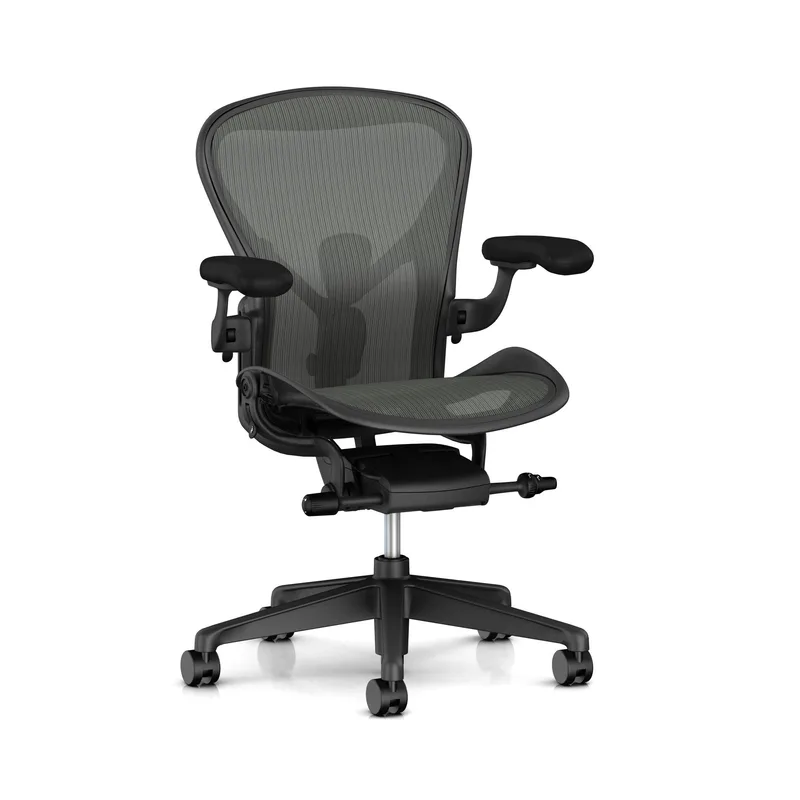
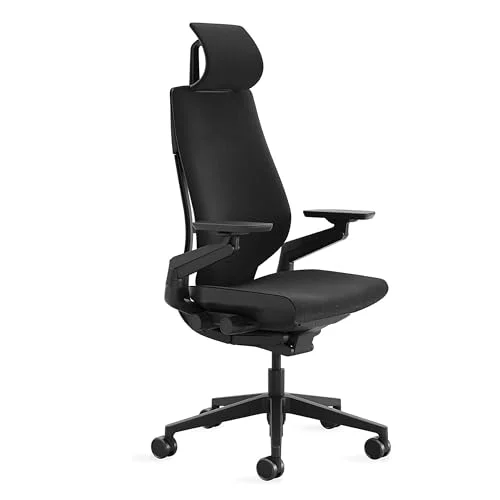
Both the Steelcase Gesture and Haworth Fern sit in the $1,200–$1,500 range — the tier where buyers expect a chair that solves every ergonomic problem. In 2026, these two remain the most-compared alternatives to the Herman Miller lineup for buyers who want something different. The Gesture is built around versatility and long-term durability. The Fern is built around adaptive movement and design-forward comfort. Neither is wrong. But they’re solving different problems.
Short answer: The Gesture wins for multi-device workers, heavier users, and anyone who prioritizes long-term durability. The Fern wins for active sitters who move constantly, care about aesthetics, or want eco-certification.
Read on for the full breakdown.
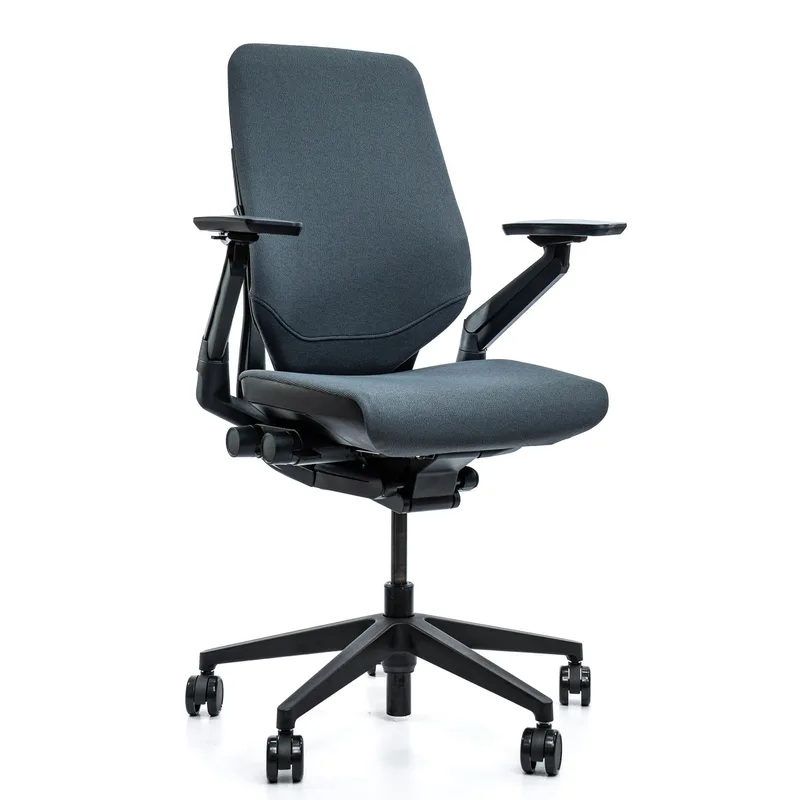
Steelcase Gesture
Steelcase Gesture
Pros
- ✓ 360-degree rotating arms accommodate every device position — tablet, keyboard, phone, notebook
- ✓ LiveBack panel continuously flexes to match your spine during recline
- ✓ 400 lb weight capacity — highest in the premium chair tier
- ✓ Lifetime warranty for single-shift use — best coverage at this price
Cons
- ✗ Foam seat retains more heat than full-mesh designs
- ✗ Core Equalizer lumbar auto-adjusts but can't be locked at a specific height
- ✗ 73 lbs makes it noticeably harder to reposition than lighter alternatives
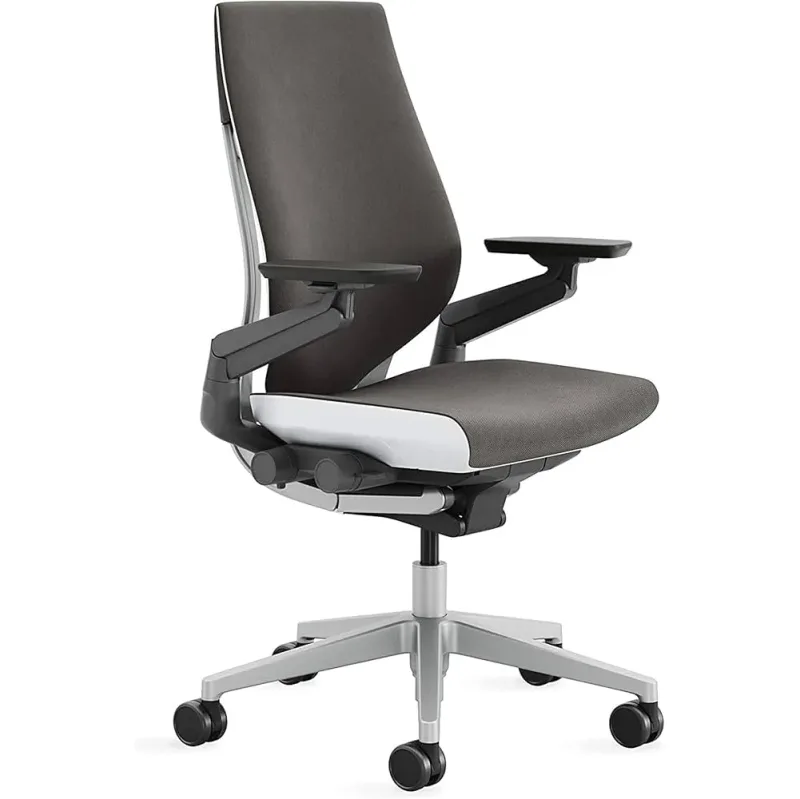
The Gesture’s signature feature is its 360-degree rotating armrests — no other chair in this price range does this. Those arms pivot inward, outward, up, down, and fully around. If you spend half your workday typing and the other half on video calls holding a tablet, it’s a genuine quality-of-life feature rather than a spec sheet bullet point.
The backrest uses Steelcase’s LiveBack technology — a flexible panel that shifts shape as you recline to maintain contact with your spine. Unlike chairs with fixed lumbar pads, the LiveBack system provides continuous contact across the entire back. The Core Equalizer lumbar adjusts automatically as you move between upright and reclined positions.
At 400 lbs weight capacity, the Gesture handles larger users better than almost anything else in this tier. The lifetime warranty for single-shift use (8 hours/day) makes a credible long-term investment case.
Trade-offs: the foam seat runs warmer than a full-mesh design, the chair weighs 73 lbs, and the automatic lumbar system can’t be set at a specific fixed height if you prefer manual control.
At roughly $1,299 on Amazon, it’s priced within $60 of the Fern for the standard fabric configuration.
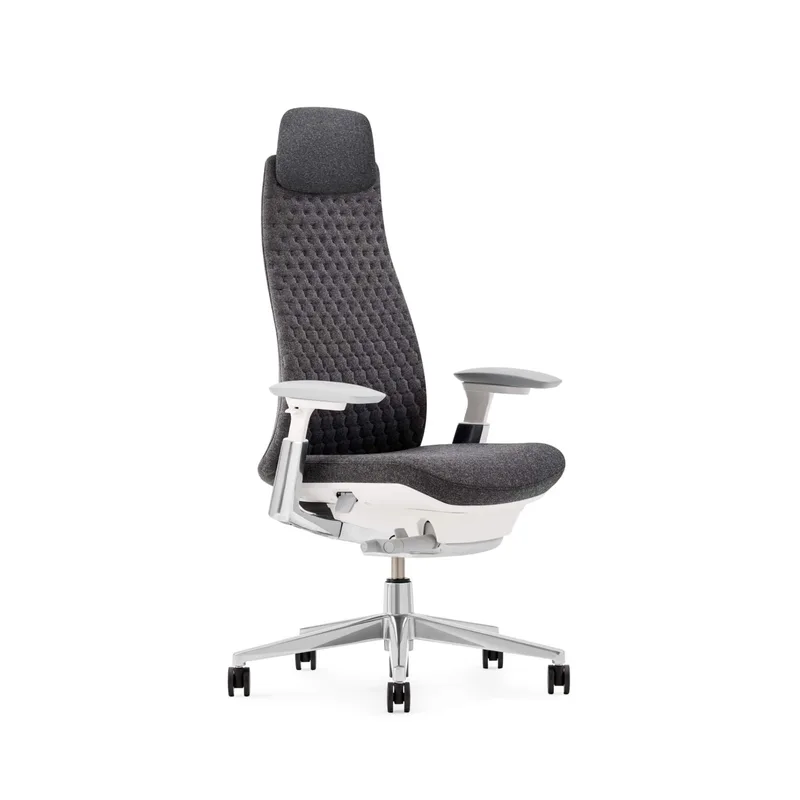
Haworth Fern
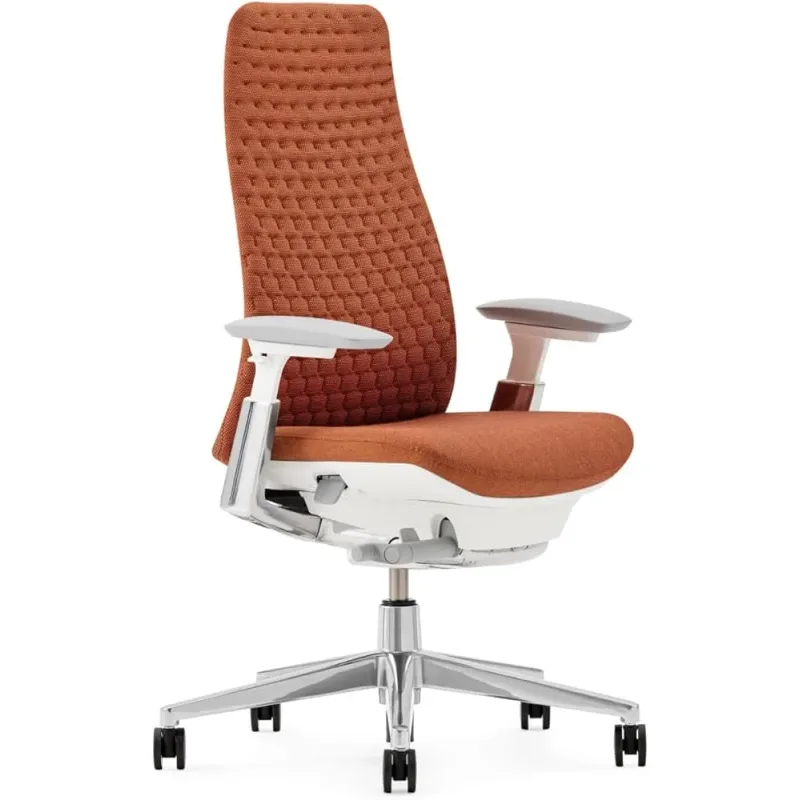
Haworth Fern
Pros
- ✓ Wave Suspension backrest flexes automatically with micro-movements — no manual adjustment required
- ✓ Lighter at 57 lbs — noticeably easier to reposition at a sit-stand desk
- ✓ GREENGUARD Gold certified for chemical emissions, a rare distinction at this price
- ✓ Organic leaf-shaped aesthetic stands apart from every other premium chair
Cons
- ✗ 350 lb weight capacity is 50 lbs lower than the Gesture
- ✗ Armrests can develop wobble and lose locking tension after multi-year daily use
- ✗ 12-year warranty falls short of Gesture's lifetime coverage
The Fern is the most visually distinct premium chair on the market. Its leaf-shaped backrest is immediately recognizable, and that organic design isn’t purely aesthetic — it’s functional. The Wave Suspension System lets the back flex independently across multiple zones in response to your movement, with no manual recline adjustment required.
If you’re an active sitter who leans forward, leans back, turns, and repositions throughout the day, the Fern adjusts silently along with you. There’s no lever to pull or knob to dial in. It just moves.
The Fern is also GREENGUARD Gold certified — screened against over 10,000 chemicals for indoor air quality safety. If you work in a smaller or enclosed home office, this certification is meaningful. At 57 lbs, it’s also considerably lighter than the Gesture, which matters when moving between a desk and anti-fatigue mat or when repositioning throughout a long workday.
The real downsides: $1,242 on Amazon gets you a 350 lb weight capacity (50 lbs less than the Gesture), 4D arms without 360-degree rotation, and a 12-year warranty instead of the Gesture’s lifetime coverage. Owner reports also note armrest wobble developing after 2–3 years of daily use. And structured lumbar support requires the paid add-on — it’s not included at base price.
Head-to-Head Comparison
Armrests
The Gesture wins without argument. Its 360-degree rotating arms are designed for the modern knowledge worker — someone using a keyboard, touchscreen, phone, and notebook in the same session. The arms glide to any position and hold there.
The Fern’s 4D arms (height, width, depth, pivot) are excellent by normal standards. But “normal” is exactly what the Gesture was built to exceed. If arm flexibility matters to your workflow, the Gesture is the clear pick.
Back Support
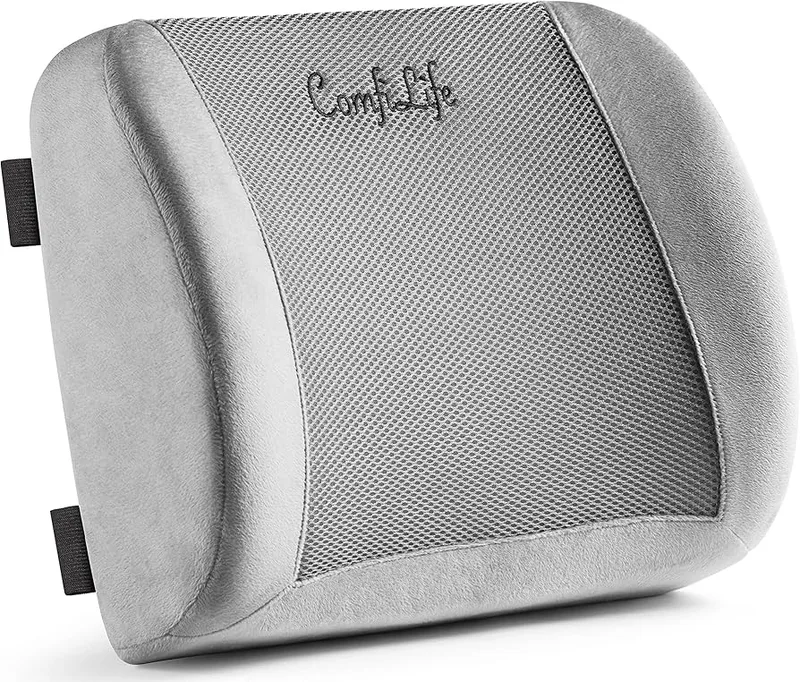
This is a closer call. The Gesture’s LiveBack system provides engineered structure — it tracks your spine with intentional firmness. The Fern’s Wave Suspension is adaptive softness — it yields to your movement rather than guiding it.
Focused desk workers doing single-screen work tend to prefer the Gesture’s structured support. Active sitters who shift postures frequently and prefer a softer back contact tend to prefer the Fern’s Wave Suspension. Both approaches have strong ergonomic support; they just feel different.
Seat Comfort
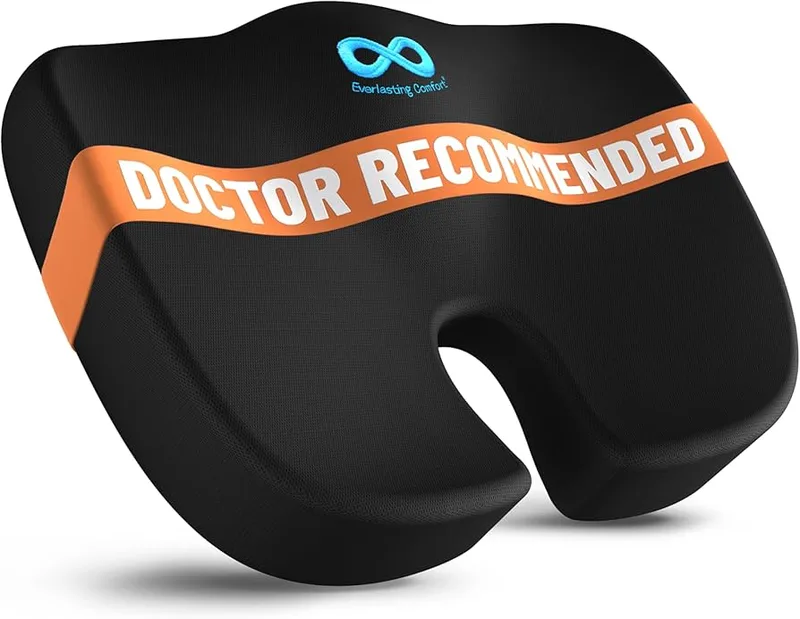
The Fern’s seat is softer and more cradling out of the box. The Gesture’s foam cushion is firmer and more supportive for longer sessions, but it retains heat. In warm environments or summer months, this becomes noticeable. The Fern is available in breathable mesh options that address this directly.
Durability and Warranty
The Gesture is more durably built. At 73 lbs, it’s heavy in a way that signals material density. Long-term owner reviews consistently report tight connections and no loosening after 5+ years of daily use.
The Fern has more reported wear — armrest wobble is the most common multi-year complaint. It’s still a premium chair, but the Gesture’s construction quality is measurably higher.
Warranty: Gesture’s lifetime (single-shift) beats the Fern’s 12 years, though both far exceed the industry standard of 2–5 years.
Value
At near-identical prices, the Gesture delivers more structural longevity and arm flexibility. The Fern delivers more movement adaptivity and a distinctive aesthetic. Which matters more depends entirely on how you sit.
Specs at a Glance
| Feature | Steelcase Gesture | Haworth Fern |
|---|---|---|
| Price | ~$1,299 | ~$1,242 |
| Back System | LiveBack 3D flex | Wave Suspension |
| Armrests | 360-degree + 4D | 4D (no full rotation) |
| Seat Height | 16”–21” | 16”–21” |
| Weight Capacity | 400 lbs | 350 lbs |
| Chair Weight | 73 lbs | 57 lbs |
| Warranty | Lifetime (single-shift) | 12 years |
| Eco Cert | None | GREENGUARD Gold |
| Lumbar | Automatic (Core Equalizer) | Optional add-on |
Who Should Buy the Steelcase Gesture
Pick the Gesture if:
- You use multiple devices throughout the day (keyboard, tablet, phone)
- You’re over 300 lbs and want extra weight capacity headroom
- Long-term durability matters more than aesthetics
- You prefer structured, firm spinal support
- You want the longest possible warranty
The Gesture is the desk chair for developers, analysts, and anyone who sits 8–10 hours and needs a chair that handles every position their work demands. The lifetime warranty makes the math work over a decade — roughly $130/year at $1,299, before accounting for any reduction in back pain costs.
Not sure whether a $1,300 chair is worth it? The guide on whether expensive office chairs are worth it breaks down the break-even math for premium ergonomic chairs.
Who Should Buy the Haworth Fern
Pick the Fern if:
- You’re a restless, active sitter who shifts positions throughout the day
- Aesthetics matter — you want a chair that looks as premium as it costs
- You work in a small or poorly ventilated space (GREENGUARD matters)
- You weigh under 300 lbs and don’t need the extra capacity buffer
- A lighter chair makes sense for your sit-stand workflow
The Fern is the design-forward choice. It’s the chair that turns heads in a home office and delivers a genuinely different sitting experience. If most chairs feel stiff and mechanical, the Fern’s wave suspension may be the thing that finally works for you.
For the full overview of luxury chair options at this tier, see the best luxury office chairs roundup or the luxury home office setup guide.
Buying Guide: What Matters at $1,200+
Arm adjustability: At $1,200+, expect at minimum 4D arms. Both chairs deliver this. The Gesture adds 360-degree rotation — a genuine differentiator if you use multiple input devices.
Weight capacity: Know your weight and buy with a 50–75 lb buffer. The Gesture (400 lbs) provides more headroom; the Fern (350 lbs) is sufficient for most users but worth noting if you’re on the edge.
Warranty reality: A 12-year warranty is strong. A lifetime warranty is better for daily use over a decade. Verify coverage extends beyond just the frame to include mechanisms, upholstery, and foam.
Mesh vs. foam seat: If you run hot, mesh stays cooler. The Fern offers breathable mesh options; the Gesture uses foam. This is one area where the Fern has a real advantage in warm climates.
Lumbar type: The Gesture’s Core Equalizer is automatic and hassle-free but inflexible. The Fern offers optional adjustable lumbar that gives more control — if you purchase it.
If the $1,200+ tier is beyond your budget, the best ergonomic desk chairs under $500 covers strong alternatives at a fraction of the price.
FAQ
Is the Steelcase Gesture worth $1,299?
For someone who works 8+ hours daily and uses multiple devices, yes. The 360-degree arms alone eliminate a common source of shoulder and wrist strain. The lifetime warranty at $1,299 works out to roughly $130/year over a decade — comparable to many mid-range chairs that need replacing in 3–5 years.
Does the Haworth Fern include lumbar support?
The base Fern does not include adjustable lumbar support. Haworth offers it as a paid add-on at purchase. The Wave Suspension provides inherent spinal support through backrest flex, which many users find sufficient — but buyers who need precise lumbar positioning should add it at checkout.
Which chair is better for tall users or heavier people?
The Steelcase Gesture. It offers a 400 lb weight capacity and a wider backrest that accommodates broader frames better than the Fern. Both chairs share the same seat height range, but the Gesture’s build is more suited to users who need extra capacity.
How do these compare to the Herman Miller Aeron?
The Aeron is fully mesh (cooler and more breathable), the Gesture has a foam seat, and the Fern offers both mesh and digital knit options. The Aeron has better resale value; the Gesture has more flexible arms; the Fern has a more adaptive backrest. For a broader view including the Aeron, see the best mesh office chairs guide.
Which chair lasts longer based on owner reports?
The Gesture, consistently. Its heavier construction and lifetime warranty reflect Steelcase’s confidence. Long-term Fern owners report armrest wobble developing after 2–3 years of heavy daily use, which doesn’t appear in Gesture owner feedback at the same rate.
Can I try either chair before committing?
Steelcase has authorized dealers in most major US cities. Haworth’s online store offers a 30-day risk-free return — a meaningful advantage for a $1,200+ purchase you can’t try in a showroom. If you’re buying online, the Fern’s return policy reduces risk significantly.
Conclusion
The Steelcase Gesture and Haworth Fern solve the same problem differently.
Choose the Gesture if you prioritize arm flexibility, structural durability, and weight capacity. It’s the better long-term investment, with better construction and a stronger warranty. The 360-degree arms are a genuine differentiator for multi-device workers.
Choose the Fern if you’re an active, restless sitter who wants a chair that moves with you without constant manual adjustment. The Wave Suspension delivers a genuinely different feel — softer and more responsive than anything Steelcase makes. The design is also exceptional if aesthetics matter to your workspace.
At near-identical prices, this decision comes down to how you sit, not how much you spend. Structure and longevity: Gesture. Movement and design: Fern.
For more premium chair options across different price points, visit the best luxury office chairs roundup.