Disclosure: PostureRanked is reader-supported. When you buy through links on our site, we may earn an affiliate commission at no additional cost to you. Our recommendations are based on independent research and testing.
PostureRanked is reader-supported. When you buy through links on our site, we may earn an affiliate commission at no additional cost to you.
Standing desks have been marketed with bold claims: burn more calories, live longer, boost productivity. But what does peer-reviewed research actually support? This guide separates evidence-based benefits from marketing hype, examining the latest studies through 2025.
The verdict is nuanced. Standing desks provide real, measurable benefits—but they’re not the miracle solution some marketing suggests. Here’s what we know. If you’re still choosing a desk, our best standing desks of 2026 roundup matches the research findings to specific product recommendations.
How the Research Stacks Up
Quality of Evidence
Most standing desk research falls into these categories:
- Strong evidence: Multiple randomized controlled trials with consistent findings
- Moderate evidence: Several studies with generally consistent results
- Emerging evidence: Limited studies, often with methodological limitations
- Insufficient evidence: Claims not yet supported by quality research
Key Research Milestones
| Year | Study | Key Finding |
|---|---|---|
| 2015 | Systematic Review (Cochrane) | Sit-stand desks reduce sitting time by 30 min-2 hours daily |
| 2018 | Applied Ergonomics Consensus | Recommended 2-4 hours standing per day |
| 2021 | Workplace Health Study | Reduced neck/shoulder pain (p = 0.001) |
| 2022 | Cardiometabolic Review | Mixed findings on metabolic markers |
| 2024 | Cognitive Processing Study | Improved engagement on easy tasks while standing |
| 2025 | University Student Review | Positive mental health outcomes in 4 of 17 studies |
Benefits Supported by Research
1. Reduced Musculoskeletal Discomfort
Evidence Level: Strong
Multiple studies consistently show that sit-stand desk users report less pain and discomfort, particularly in the neck, shoulders, and lower back.
Key Findings:
- A 6-month workplace study found significant decreases in discomfort for sit-stand users, while the control group (sitting only) showed no improvement
- Neck and shoulder pain reduction was statistically significant (p = 0.001)
- Benefits appear within weeks of consistent use
The Mechanism: Alternating between sitting and standing distributes load across different muscle groups, preventing the sustained strain that causes pain during prolonged sitting.
Important Caveat: Standing too much can cause its own discomfort. Benefits require actual alternation, not simply replacing sitting with standing.
2. Reduced Post-Work Fatigue
Evidence Level: Moderate
Research shows that sit-stand desk users report less fatigue at the end of the workday compared to seated-only workers.
Key Findings:
- Participants using sit-stand desks experienced less post-work fatigue
- Energy levels throughout the day were more consistent
- Recovery time after work was shorter
The Mechanism: Position changes increase blood flow and prevent the metabolic slowdown associated with prolonged sitting. Movement, even minimal, keeps energy systems more engaged.
3. Improved Mental Health Markers
Evidence Level: Moderate (Emerging)
A 2025 scoping review of 17 studies found that standing desk interventions improved mental health outcomes in multiple studies, including reduced anxiety, improved mood, lower stress, and better emotional states.
Key Findings:
- Four studies showed improved mental health outcomes
- Benefits included reduced anxiety and improved mood
- Reducing sitting time specifically correlated with mood improvements
Important Context: Researchers note that more long-term, high-quality data is needed. The mental health benefits may relate to the sense of control and activity rather than standing itself.
4. Reduced Sitting Time
Evidence Level: Strong
This may seem obvious, but it’s the most consistently demonstrated benefit. Sit-stand desks reliably reduce total daily sitting time.
Key Findings:
- Users reduce sitting by 30 minutes to 2 hours daily
- Behavior change persists over time with proper desk design
- Electric desks with presets show better adherence than manual
- The Stand Up to Work trial, tracked over 12 months, found that sitting-time reductions held through the full year—workers with standing desks still sat less than colleagues after two years
Why This Matters: Extended sitting is associated with multiple health risks. Simply reducing sitting time—regardless of what replaces it—appears beneficial.
5. Improved Cognitive Engagement (Task-Dependent)
Evidence Level: Emerging
A 2024 study found that standing helped participants process information more efficiently and increased engagement—but only during relatively easy tasks and shorter standing periods.
Key Findings:
- Better information processing efficiency while standing
- Increased engagement during easy tasks
- Benefits diminished during complex tasks
- Shorter standing bouts showed better results
The Implication: Standing may be best suited for routine tasks (email, meetings, administrative work) while complex problem-solving may benefit from seated focus.
Benefits with Limited or Mixed Evidence
Calorie Burning and Weight Loss
Evidence Level: Limited
Standing burns only 8-10 additional calories per hour compared to sitting. While technically true, this is far less than marketing often implies.
Reality Check:
- Standing 3 hours burns roughly 24-30 extra calories—less than a small apple
- No studies demonstrate meaningful weight loss from standing desks alone
- Walking (even slowly) burns significantly more than standing
The Honest Assessment: Standing desks are not a weight loss solution. Any weight benefits come from the increased movement they encourage, not standing itself.
Blood Sugar and Metabolic Effects
Evidence Level: Emerging
Some of the most promising new research concerns blood sugar management—though the numbers require context.
What Research Shows:
- Standing for 180 minutes after lunch reduced blood sugar spikes by roughly 43% compared to sitting in one study of office workers
- A 6-month standing desk intervention found a 23% improvement in insulin resistance, driven primarily by lower fasting insulin levels
- Effects appear more pronounced when standing follows meals specifically, not just random standing throughout the day
The Context: These are real metabolic signals. But “43% reduction in spike” sounds more dramatic than it is—absolute improvements are modest, and effects shrink substantially if you compare standing to a short post-meal walk. Standing after lunch is genuinely useful; it’s just not a substitute for other healthy habits.
Cardiovascular Health
Evidence Level: Mixed
A 2022 review of cardiometabolic effects found inconsistent results across studies.
What We Know:
- Reduced sitting time is associated with better cardiovascular markers in observational studies
- Direct causation from standing desk use hasn’t been established
- Effects may be too subtle for current measurement methods
The Gap: Few long-term trials have measured hard outcomes like reduced heart disease incidence. The cardiovascular benefits of standing desks remain plausible but unproven.
Productivity Improvements
Evidence Level: Mixed to Weak
Studies show varied productivity effects, with most finding no significant change and some showing modest improvements.
What Research Shows:
- Most studies find productivity “unchanged” by sit-stand desks
- Some users report feeling more alert and engaged
- One scoping review concluded sit-stand desks are “least effective for productivity”
The Reality: Standing desks probably won’t make you more productive. They’re unlikely to make you less productive either. Productivity is influenced by far more than desk type.
What the Research Doesn’t Support
”Standing Burns Hundreds of Extra Calories”
Reality: 8-10 calories per hour extra. Over a full workday, that’s 25-50 calories—not meaningful for weight management.
”Standing Desks Prevent Heart Disease”
Reality: No long-term studies have demonstrated reduced cardiovascular disease from standing desk use. The hypothesis is reasonable but unproven.
”Standing Is Always Better Than Sitting”
Reality: Standing all day creates its own health problems. Research supports alternation, not standing replacement.
”Standing Desks Boost Productivity”
Reality: Most evidence suggests neutral productivity effects. Individual experiences vary.
How to Maximize Research-Backed Benefits
For Musculoskeletal Benefits
- Alternate positions every 20-30 minutes
- Use an anti-fatigue mat while standing
- Maintain proper ergonomics in both positions
- Include movement breaks beyond just standing
For Fatigue Reduction
- Stand during naturally lower-energy periods (mid-afternoon)
- Don’t stand to exhaustion—switch positions before fatigue sets in
- Combine with brief walking breaks
For Mental Health Benefits
- Use position changes as active breaks, not just passive standing
- Pair standing with natural transition points (new tasks, after meetings)
- Maintain agency—choose when to stand based on how you feel
What Research Says Matters When Buying a Desk
The research tells us something specific about desk features: the desks people actually use consistently are the ones that produce health benefits. That narrows down what you should prioritize.
Electric vs. Manual
Studies consistently show better long-term adherence with electric height-adjustable desks over manual crank models. The friction of cranking a desk discourages position changes. If you’re buying a standing desk for health reasons, this isn’t the place to cut corners.
Memory Presets
Closely tied to adherence. A desk with programmable height presets removes the cognitive barrier to switching positions. You hit a button instead of guessing your ideal height each time. Most quality electric desks offer 3-4 presets—use them.
Height Range
For research-backed ergonomics, your elbows should form roughly a 90-degree angle in both sitting and standing positions. Before buying, calculate your sitting desk height and standing desk height using your measurements. Many budget desks can’t reach low enough for shorter users or high enough for tall ones. Check the full height range, not just the max.
Stability
An unstable desk at standing height is distracting enough to discourage standing use. Look for dual-motor frames for desks over 60 inches wide, and check wobble reviews specifically. See our wobble fix guide if you already own a desk that shakes.
Anti-Fatigue Mat
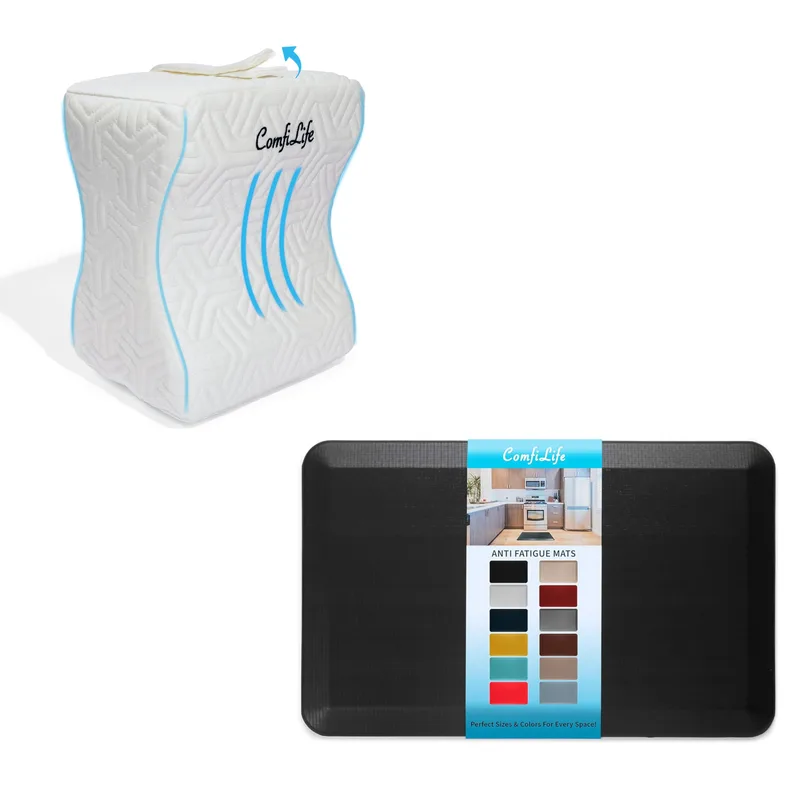
Not technically part of the desk, but research on standing comfort consistently points to flooring fatigue as a limiting factor. If you’re standing on hard floors, a quality anti-fatigue mat extends how long you can stand comfortably—which directly affects how much you use the standing position.
For full recommendations on specific models, see our best standing desks of 2026 and budget standing desk setup guide. If you’re deciding between a full desk and a converter, our standing desk vs. desk converter comparison breaks down the research on each. To put everything together into a complete ergonomic workspace, see our ergonomic workstation setup guide or the Complete Ergonomic Workspace Setup Guide.
Research Limitations to Understand
Study Duration
Most studies last weeks to months. Long-term effects (years, decades) remain unknown.
Participant Populations
Many studies use office workers or university students. Results may not generalize to all occupations or age groups.
Optimal Dosing Unknown
“How much standing is optimal?” remains unanswered. Current guidelines (2-4 hours daily) are based on limited evidence.
Hard Outcomes Rare
Studies typically measure subjective reports (pain, fatigue) or short-term markers. Few measure disease incidence, mortality, or healthcare costs.
Frequently Asked Questions
Are standing desk benefits real?
Yes, but they’re more modest than marketing suggests. The strongest evidence supports reduced musculoskeletal discomfort and fatigue. Claims about weight loss, heart health, and productivity have weaker support.
Should I buy a standing desk based on research?
If you experience discomfort from prolonged sitting or want more postural variety, research supports the purchase. If you’re hoping for weight loss or dramatic health improvements, adjust expectations.
What’s the most important benefit?
Postural variety itself. The ability to change positions prevents the strain of any single sustained posture. This benefit is well-supported and meaningful.
Do I need an expensive desk?
Research doesn’t distinguish between expensive and budget desks. What matters is that you actually use it—electric desks with presets show better adherence than manual, suggesting convenience matters for long-term benefit.
How does walking compare to standing?
Walking beats standing for most health markers. If your goal is health optimization, a treadmill desk or regular walking breaks provide more benefit than standing alone.
Is standing after meals better than standing at random times?
The emerging blood sugar data suggests yes—standing specifically after meals may produce more meaningful metabolic effects than random standing throughout the day. If you can only stand for limited periods, post-lunch is a reasonable priority.
The Bottom Line
Standing desks provide real, research-supported benefits. But which ones actually hold up?
Well-Supported (buy with confidence if these matter to you):
- Reduced musculoskeletal pain—especially neck, shoulders, lower back
- Less post-work fatigue
- Meaningful reduction in total sitting time that lasts long-term
- Modest blood sugar improvements, particularly after meals
Not Well-Supported (don’t buy expecting these):
- Significant calorie burning or weight loss
- Cardiovascular disease prevention
- Productivity improvements
- Dramatic metabolic transformation
Who should buy one: If you sit for 6+ hours a day and experience back or shoulder discomfort, the research supports a standing desk purchase. The musculoskeletal benefits are consistent and appear within weeks.
Who should wait: If you’re sedentary and hoping a standing desk solves it, the research says a daily 20-minute walk will do more for your health than standing at your desk. Get that habit first.
Which type to get: Electric with memory presets, full stop. Research shows manual desks get used less, which means fewer benefits. The convenience gap matters.
The core finding across everything is simple: standing desks give you options. Postural variety, used consistently, provides meaningful health benefits. That flexibility—sitting when you need to focus, standing when you need to move—is the actual product you’re buying. Used right, it delivers.
For setup tips that complement what the research recommends, see our complete standing desk setup guide.