The Humanscale Freedom Chair is one of the few ergonomic chairs that people describe in non-chair terms — reviewers in 2026 have called it “the Rolls Royce of office chairs” and PC Gamer rated it the most comfortable task chair their reviewer had ever used. That kind of language from skeptical sources suggests the Freedom is doing something genuinely different. It is. The weight-sensitive recline and the self-adjusting headrest are real engineering achievements, not marketing vocabulary. But the chair also makes real trade-offs that disqualify it for a significant portion of buyers.
This review covers how the Freedom stacks up today at $1,399, and when the Herman Miller Embody ($2,095) or Steelcase Leap V2 ($1,399) is the smarter call.
Quick pick: The Humanscale Freedom with Headrest is the right chair for sitters who want minimal setup and a headrest that actually moves with them. If you need adjustable lumbar depth or arms that pivot inward, read on.
How All Three Compare
| Chair | Price | Weight Capacity | Recline | Headrest | Warranty |
|---|---|---|---|---|---|
| Humanscale Freedom w/ Headrest | $2018.00 as of Oct 18, 2026 | 300 lbs | Auto (weight-sensitive) | Auto-pivoting ✅ | 15 years |
| Herman Miller Embody | $1249.00-$1919.00 as of Oct 18, 2026 | 300 lbs | Dynamic tilt | Not available ❌ | 12 years |
| Steelcase Leap V2 | $615.00-$1499.00 as of Oct 18, 2026 | 400 lbs | Manual + tilt limiter | Not available ❌ | 12 years |
Humanscale Freedom Chair with Headrest
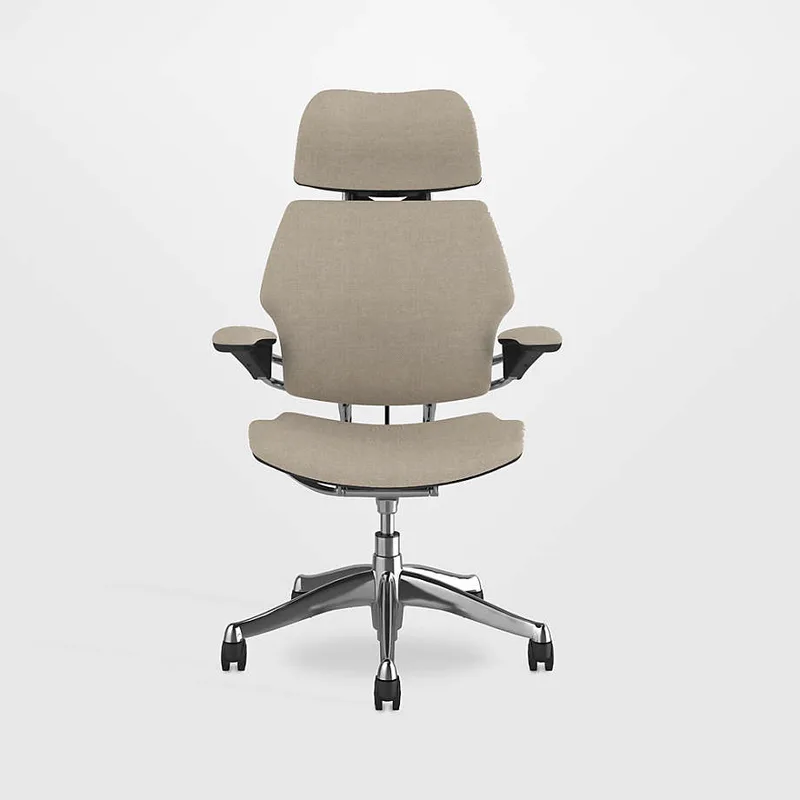
Humanscale Freedom Chair with Headrest
Pros
- ✓ Self-adjusting recline reads body weight and calibrates resistance automatically — no knob, no setup
- ✓ Dynamic headrest pivots to follow head and neck through recline, then returns to neutral when upright
- ✓ Coccyx cutout and waterfall seat edge reduce tailbone and thigh pressure during long sessions
- ✓ Industry-leading 15-year, 24/7 warranty outpaces every direct competitor by three years
Cons
- ✗ Arms adjust height only — no inward pivot, depth, or width at standard configuration
- ✗ Lumbar support is passive and non-adjustable; users needing tunable lower back control will be frustrated
- ✗ Smaller-framed users (under 5'4") often find the arms too wide to reach the natural arm position
The Self-Adjusting Recline
The Freedom’s central feature is its dual-pivot counterbalance recline. Conventional ergonomic chairs use a spring mechanism with a tension knob: you set a resistance level, and it stays fixed until you adjust it again. The Freedom reads your body weight directly and calibrates resistance proportionally. A 150-lb user and a 220-lb user sit in the same chair and both experience appropriate recline tension — without touching a single setting.
In practice this changes behavior. The recline is always live — there’s no lever to unlock before you can lean. That low friction means you shift posture more often, which is precisely what the spine needs during long sessions. Sustained static posture, not movement, is what causes the disc fatigue and lower back loading that accumulates over an eight-hour workday.
The limitation: you cannot override the auto-calibration. Users at the extremes of the weight range — lighter than 130 lbs or heavier than 280 lbs — sometimes report the mechanism sits outside their comfortable recline resistance. There’s no dial to correct for this.
The Headrest That Actually Moves
Most ergonomic headrests are positioned once during setup and rarely used again because they don’t move with the sitter. The Freedom’s headrest is mounted on a pivoting arm that follows your head and neck through the recline arc. Lean back — it tilts to meet your cervical spine at the correct angle. Sit upright — it clears out of the way without pushing your neck forward.
In 2026, the headrest remains a genuine differentiator at this price tier. The Herman Miller Embody has no headrest option. The Steelcase Leap V2 has no headrest option. The Freedom headrest is not a separately sold accessory that barely integrates — it’s engineered into the recline system.
Lumbar: What You Give Up
The Freedom has no adjustable lumbar. The backrest contours inward at the lumbar zone, and when you’re seated fully back, that contour maintains contact through the full recline range. For users with neutral posture habits whose spine geometry matches the chair’s built-in curve, this works well. Reviewers with neutral posture histories consistently rate the Freedom’s passive lumbar support as sufficient.
Users with diagnosed lumbar conditions that require targeted support at a specific spinal level — or who know they need adjustable lumbar depth — will find this a genuine problem. The Steelcase Leap V2’s LiveBack system, with independently adjustable upper and lower back zones, is the better clinical tool for this use case.
Arm Adjustability
The Duron arms in the standard configuration adjust in height only. No pivot, no width adjustment, no forward slide. For users with average to wider shoulder widths who type with their arms at a natural outward angle, this is fine. For narrower-framed users — roughly those under 5’4” or with very narrow shoulder widths — the arms sit outside the natural arm position and provide no active support.
Humanscale offers an Advanced Duron Arms upgrade (as found on some Amazon configurations) that adds height adjustment for the arms in tandem with the seat. This is better, but still not the full 4D adjustment the Embody and Leap V2 offer at comparable price points.
Build and Warranty
The Freedom’s aluminum frame componentry gives it a different feel than polypropylene-heavy competitors — less flex, less creak under load, a weight distribution that feels engineered rather than manufactured. The 15-year warranty covers components and mechanism against defects for the duration. Herman Miller and Steelcase both offer 12-year full warranties. The three-year gap is real: if you’re buying a $1,400 chair, the warranty is part of the value calculation.
Humanscale also highlights the Freedom’s sustainability credentials — the chair has received Living Product Certification, meaning its manufacturing meets strict climate, water, and energy standards. Not a primary buying factor for most, but worth noting for buyers who care about brand values.
Herman Miller Embody
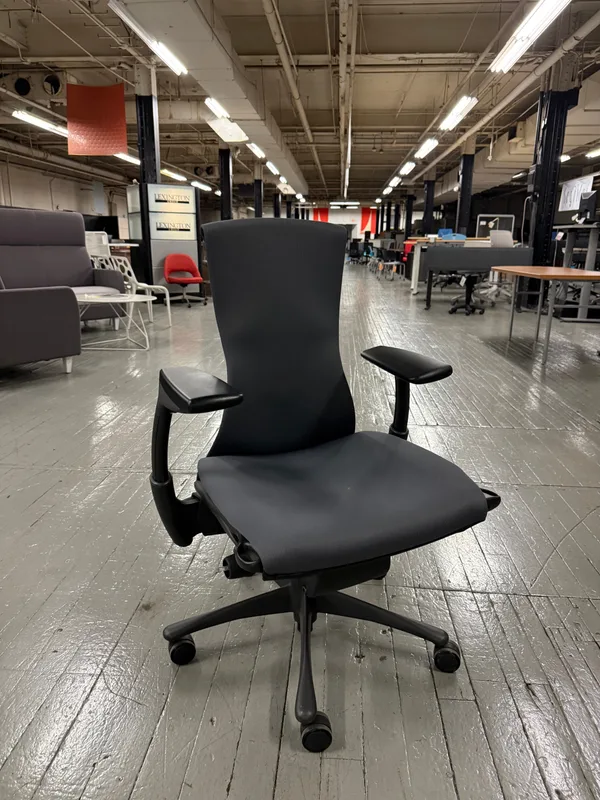
Herman Miller Embody
Pros
- ✓ Pixelated Support distributes weight across hundreds of micro-supports — eliminates the hard points most mesh chairs create
- ✓ BackFit adjustment aligns the chair's spinal channel to individual curvature, not a generic average
- ✓ 4D arms (height, width, depth, pivot) offer significantly more range than the Freedom's Duron arms
- ✓ Dynamic tilt encourages constant subtle movement — reduces the stiffness that comes from static sitting
Cons
- ✗ Most expensive chair in this comparison at $2,095 — $696 more than the Freedom
- ✗ No headrest option from Herman Miller — a real gap for anyone who reclines regularly
- ✗ Seat pan firmness takes 2–3 weeks to break in before reaching its comfortable equilibrium
The Embody is the most rigorously engineered chair in this comparison. Its Pixelated Support system distributes contact force across hundreds of independent micro-supports rather than a few firm contact points — the result is significantly reduced pressure concentration compared to conventional mesh chairs. The BackFit adjustment lets you align the backrest’s spinal channel to your individual curvature rather than a population average.
It’s also the most adjustable. Four-direction arms, extensive seat depth range, and dynamic tilt that follows you through forward lean, upright, and recline all give experienced ergonomic users more control than the Freedom. At $2,095, you’re paying $696 more than the Freedom and Leap V2. The Embody earns that premium for buyers with specific back pain profiles who need precision. For buyers who want value, it doesn’t.
The missing headrest is a real limitation for anyone who reclines during calls or takes postural breaks during the day. No headrest option exists from Herman Miller.
For a deeper comparison between the Embody and Leap V2, see our Herman Miller Embody vs Steelcase Leap V2 showdown.
Steelcase Leap V2
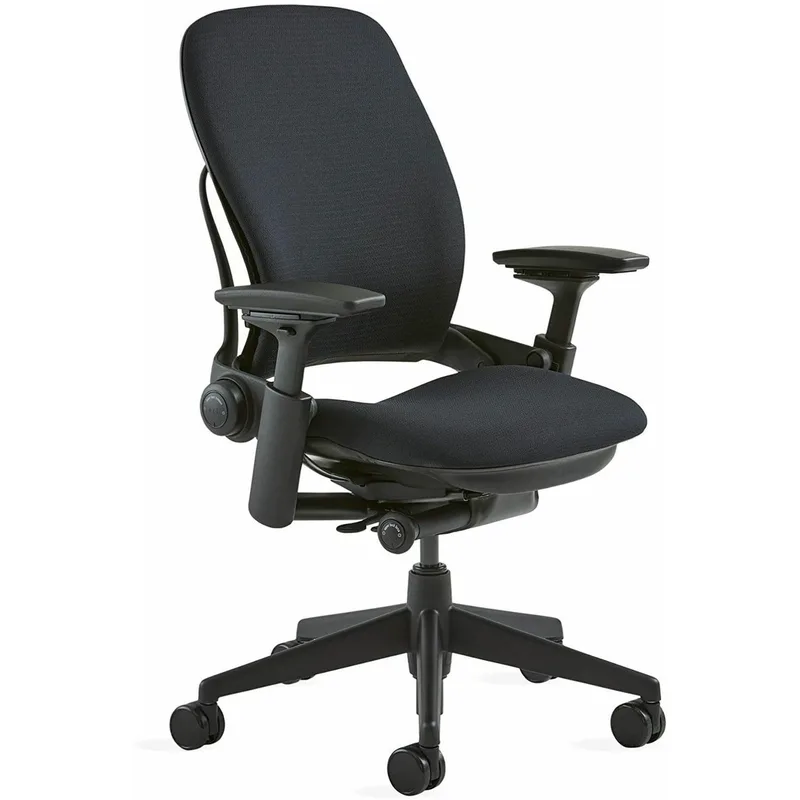
Steelcase Leap V2
Pros
- ✓ LiveBack flex works in two independent zones — upper and lower back resistance adjustable separately
- ✓ Flexible front seat edge reduces thigh pressure during 8+ hour sessions
- ✓ 4D arms with inward pivot accommodate narrower shoulder widths that the Freedom can't serve
- ✓ 400 lb weight capacity — the highest of any chair in this comparison
Cons
- ✗ No headrest available at any configuration level
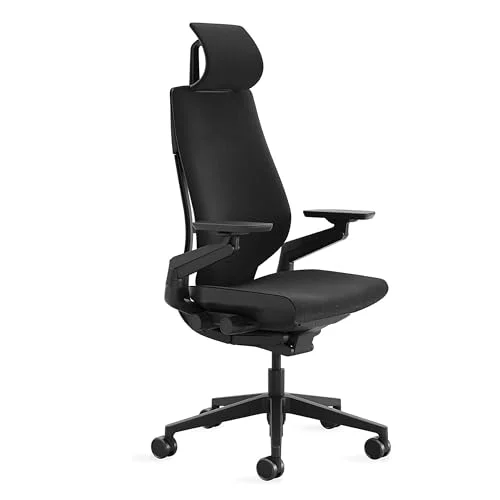
- ✗ Arm pivot range narrower than 360-degree systems like the Steelcase Gesture
- ✗ Design unchanged since the V2 launched — feels dated compared to more recent engineering
The Leap V2 is the most adjustable chair at the $1,399 price point and the strongest choice for users who know exactly what kind of support they need. Its LiveBack technology flexes the back in two independent zones — upper and lower — with separate tension controls for each section. Users who need firm support at the sacrum and less at the thoracic spine can set it precisely. The 4D arms include inward pivot, which the Freedom’s Duron arms lack.
At 400 lbs capacity, the Leap V2 also handles a wider range of body types than either competitor in this comparison. The 12-year warranty is full and comprehensive, the same as the Gesture and Embody.
The gaps: no headrest option at any configuration, and the V2 design hasn’t changed significantly since its launch over a decade ago. The mechanism works, but it’s not current engineering — the Freedom’s counterbalance recline and the Embody’s Pixelated Support represent more recent ergonomic thinking.
Who Should Buy the Freedom?
Buy the Freedom with Headrest if:
- You want a chair that configures itself — you sit down and it works
- You recline regularly during calls, video sessions, or mental breaks
- Your shoulder width is average or wider (the arms fit well)
- The 15-year warranty matters to your long-term cost calculation
Choose an alternative if:
- You need adjustable lumbar depth (Leap V2 is better)
- You need arms that pivot inward for a narrower frame (Leap V2 is better)
- You’re over 300 lbs (Leap V2 at 400 lb capacity is better)
- You have a specific back pathology that needs clinical precision (Embody is better)
The Freedom is part of a considered home office build, not a standalone purchase. If you’re outfitting a full setup, the luxury home office setup guide covers the full picture. If you’re still weighing whether premium ergonomic seating makes financial sense, are expensive office chairs worth it? works through that question in detail.
For all premium chairs at this tier ranked side by side, see our best luxury ergonomic chairs over $1,000 roundup.
Frequently Asked Questions
Is the Humanscale Freedom Chair worth $1,400 in 2026?
For buyers who sit 7+ hours a day and value a chair that works immediately without a manual setup process, yes. The 15-year warranty and auto-adjusting headrest are genuine differentiators at this price. If you need adjustable lumbar support or arms that pivot inward, the Steelcase Leap V2 at the same price delivers more control.
What is the difference between the Freedom with and without the headrest?
The Freedom is available as a task chair without a headrest at a lower price. The headrest version is the same chair mechanically — the headrest is an integrated component, not an afterthought. If you recline during the day, the headrest version is worth the premium. If you sit mostly upright and don’t recline, the task version is sufficient.
How does the weight-sensitive recline work?
The counterbalance mechanism measures body weight and calibrates recline resistance proportionally. Lean back and resistance matches your mass. The chair never needs to be manually adjusted between users — it self-configures. The downside is you cannot manually override the calibrated tension if you want more or less resistance than your weight produces.
Can the Freedom support 300 lbs?
Yes — the rated capacity is exactly 300 lbs. If you’re near or above that limit, the Steelcase Leap V2’s 400 lb capacity is the more appropriate structural choice for long-term confidence.
How does the Freedom compare to the Herman Miller Aeron?
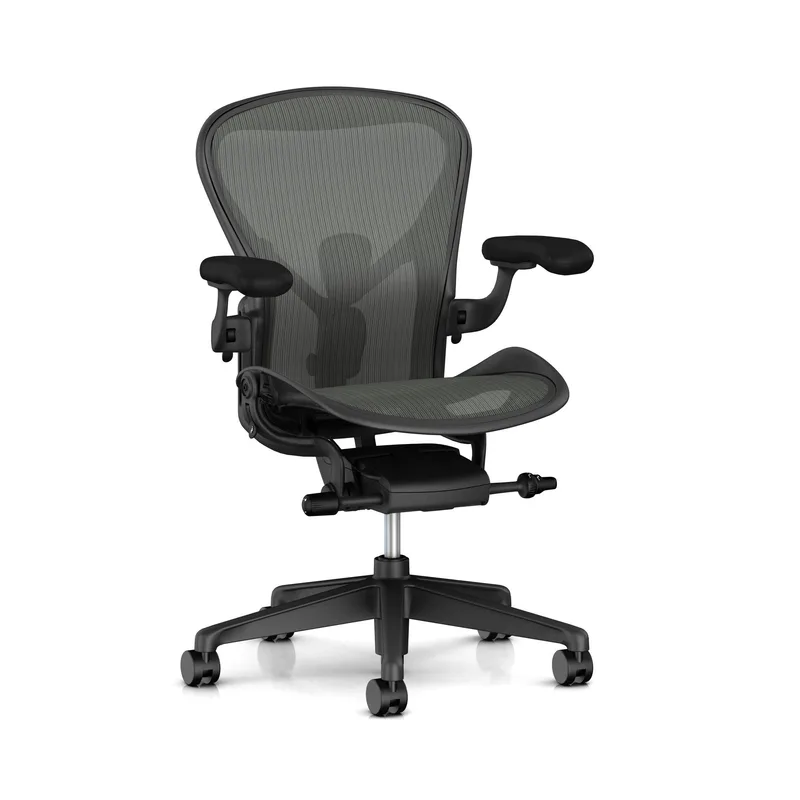
The Aeron offers more manual adjustability — PostureFit SL lumbar, forward tilt, tilt limiter, and more arm configurations. The Freedom is simpler, self-adjusting, and includes a headrest that the Aeron doesn’t offer. The Aeron suits users who want granular lumbar control; the Freedom suits users who want the chair to handle itself. See our best luxury office chairs roundup for a full comparison across both.
Where can I buy the Freedom Chair?
The Freedom Chair is available on Amazon in multiple configurations — fabric, leather, various frame finishes, and arm styles. Humanscale’s website and authorized dealers like BTOD and The Human Solution carry additional custom options and quick-ship variants. Amazon fabric versions represent the most accessible price point.
Conclusion
The Humanscale Freedom Chair with Headrest is a legitimately distinct product in a crowded premium market. The auto-adjusting recline works. The headrest is the best integrated headrest design at this price tier — and both the Herman Miller Embody and Steelcase Leap V2 offer no headrest at all. The 15-year warranty is the longest in the category by three years.
The trade-off is adjustment range. You give up adjustable lumbar depth, arm pivot, and manual recline tension control. For most buyers who sit in neutral posture and value simplicity over configuration, that trade-off is worth making.
For buyers who need precise lumbar intervention or have narrower frames that require arms that pivot inward, the Leap V2 is the better call at the same price.
- Best overall: Humanscale Freedom with Headrest — $1,399
- Best for adjustability: Steelcase Leap V2 — $1,399
- Best for back pain precision: Herman Miller Embody — $2,095
For more on premium seating, see our best luxury office chairs roundup.