Disclosure: PostureRanked is reader-supported. When you buy through links on our site, we may earn an affiliate commission at no additional cost to you. Our recommendations are based on independent research and testing.
| Product | Price | Rating |
|---|---|---|
| Herman Miller Aeron | $2,050 | 9.4 |
| Steelcase Leap V2 | $1,282 | 9.2 |
| Herman Miller Sayl | $1,175 | 8.6 |
| Steelcase Think | $1,115 | 8.4 |
| Branch Ergonomic Chair | $359 | 8.1 |
| HON Ignition 2.0 | $399 | 7.8 |
PostureRanked is reader-supported. When you buy through links on our site, we may earn an affiliate commission at no additional cost to you. Learn more
Best Mesh Office Chairs in 2026: 6 Chairs Worth Buying
After researching and comparing the top mesh office chairs in depth, most fall into two camps: overpriced status symbols or flimsy garbage that sags after six months.
These six are neither. And if you’re short on time: the Herman Miller Aeron is the best mesh chair for most people, while the Branch Ergonomic Chair is the pick if you want real mesh ergonomics without spending four figures. For broader chair options including non-mesh picks, see our best ergonomic chairs under $500.
Why Mesh Over Foam?
Foam seats trap heat. By 2 PM you’re sitting in your own humidity. Mesh breathes. That’s it. That’s the whole pitch.
The tradeoff: mesh has less cushion. Your sit bones feel the frame more. High-end mesh chairs solve this with tensioned suspension systems. Cheap ones just stretch fabric over a plastic frame and call it ergonomic.
There’s also the durability angle. Foam compresses over time — a foam seat that felt great in month one feels flat by year two. Quality mesh holds its tension for a decade or more. You’re paying more upfront for a chair that doesn’t degrade.
The Six Mesh Chairs Worth Buying
1. Herman Miller Aeron — The One Everyone Compares To
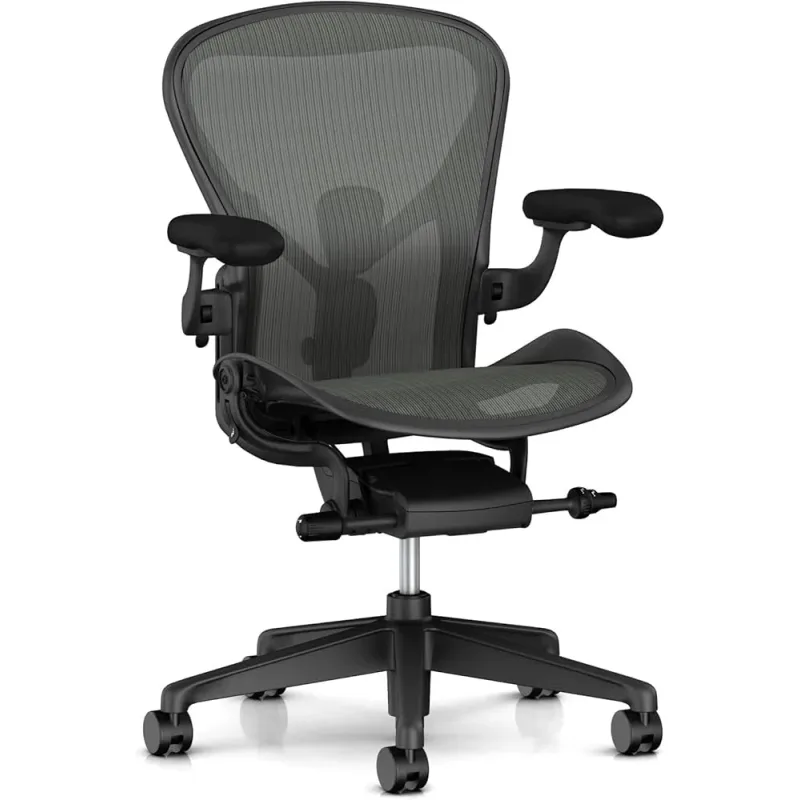
The Aeron has been around since 1994. Thirty years. Most office chairs get discontinued after five.
The “8Z Pellicle” mesh uses eight zones of varying tension. Tighter where you need support, looser where you need flex. It’s not marketing speak — you can actually feel the difference when you sit back. The mesh in the seat pan is slightly softer near the edges, which keeps the frame from digging into your thighs.
PostureFit SL (the “SL” matters, don’t buy used chairs with the old system) has two pads that support your sacrum and lumbar independently. Most chairs have one lumbar pad. This has two, and they adjust separately.
Sizing is critical. Size A is for people under 5’4”. Size B covers 5’4” to 6’. Size C is 6’+. Get it wrong and the seat pan will hit the back of your knees or leave your thighs unsupported. Herman Miller’s website has a sizing tool. Use it.
At $2,050, you’re paying for longevity. I’ve seen Aerons still working perfectly after 20 years. Try finding a $300 chair that lasts five.
Who should buy this: Anyone who sits 8+ hours daily and wants a chair they won’t replace for a decade. Hot-climate workers. People who hate that “stuck to the chair” feeling in summer.
Who should skip this: Anyone under 5’2” or over 6’3” (edge cases where sizing gets tricky). People who prefer a cushioned seat — mesh is firmer, period.
2. Steelcase Leap V2 — For the 10-Hour Days
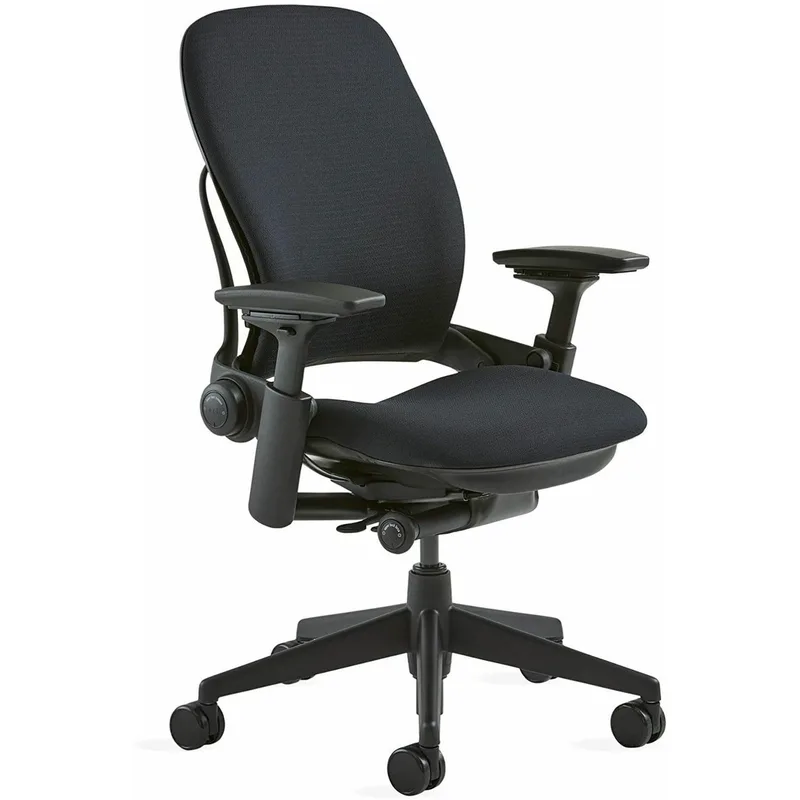
Technically, the Leap isn’t full mesh — the seat is fabric over foam. But the back has a flexible plastic shell that functions like mesh, and the seat is so well-designed I’d feel dishonest excluding it.
LiveBack is Steelcase’s system where the backrest changes shape as you recline. Lean back and the lower back section curves more while the upper section flattens. It sounds gimmicky until you spend eight hours in it.
The lumbar has a firmness dial. Not just position — firmness. You can make it pushier or softer. I’ve never seen this on another chair.
Best feature: the arms. They adjust up/down, in/out, forward/back, and pivot. Four dimensions. Most chairs give you two. When your arms can rest at the exact right position, your shoulders actually relax. This matters more than you think — bad armrest positioning is the silent cause of a lot of neck tension.
The Leap is heavy (54 lbs) and the fabric seat runs warmer than full mesh. If you run hot, get the Aeron. If you want the best back support money can buy, get the Leap.
Who should buy this: People with chronic back pain. Programmers and writers who do 10+ hour sessions. Anyone who fidgets — the LiveBack tracks your movement instead of fighting it.
Who should skip this: Hot-climate workers who need full mesh breathability. Anyone who moves their chair between rooms frequently (54 lbs gets old fast).
3. Herman Miller Sayl — Design That Actually Works
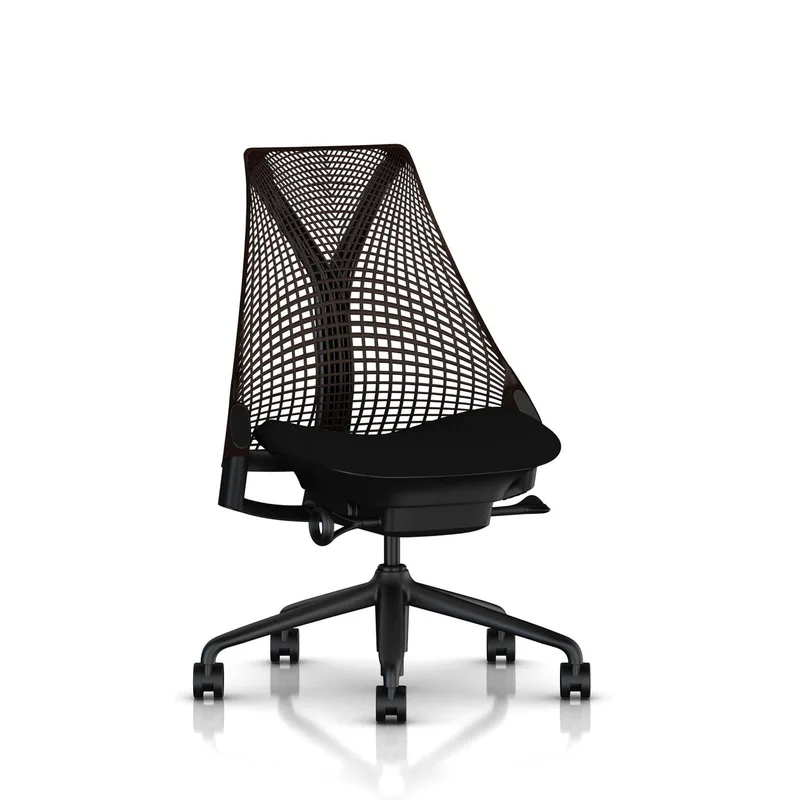
The Sayl looks like a chair from a sci-fi movie. Yves Béhar designed it. That Y-shaped tower in the back isn’t decoration — it’s a suspension system that flexes with your movement.
At $1,175, it’s nearly half the Aeron’s price. The catch: less adjustability. No adjustable lumbar (you can add a pad separately). Fixed armrest height on the base model. The mesh isn’t as sophisticated.
For lighter users under 180 lbs who want a mesh chair that looks incredible, the Sayl delivers. Heavier users or people with back issues should spend more on the Aeron or Leap.
The ArcSpan mesh across the back is a single piece — no seams, no pressure points. It gives uniformly. That’s comfortable for short-to-medium sessions but lacks the zoned support of the Aeron for all-day use.
Who should buy this: Design-conscious buyers. People in client-facing offices where aesthetics matter. Lighter users who prioritize looks and airflow over deep adjustability.
Who should skip this: Anyone over 200 lbs. People with existing lumbar issues who need targeted support.
4. Steelcase Think — Steelcase Quality, Reasonable Price
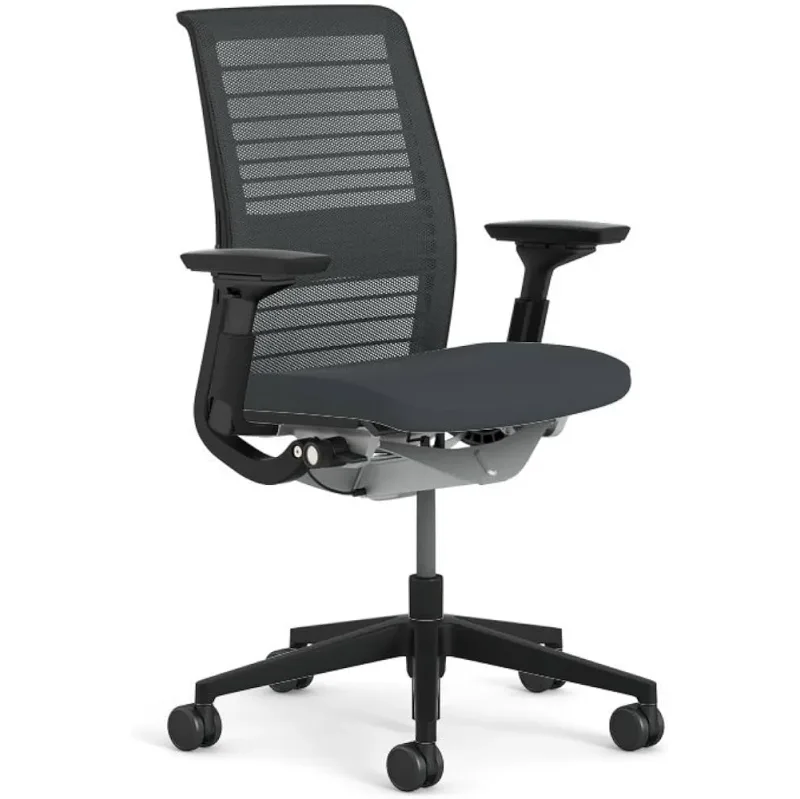
The Think sits in Steelcase’s lineup below the Leap. Same 12-year warranty, same build quality, lower price point.
The 3D Knit back (on newer models) is actual mesh, unlike the Leap. Flexors along the edges of the back adapt to your sitting position. Lean left, the left side gives. Lean right, the right side gives. It’s weight-activated, so there’s no lever to pull — just sit down and it conforms.
At 37 lbs, it’s significantly lighter than the Leap. Easier to move around, easier to roll on carpet.
Who it’s for: people who want Steelcase durability without Leap complexity. The Think has fewer adjustments, which some people prefer. Less fiddling, just sit.
The seat cushion is thinner than the Leap’s. After 6+ hours, I notice it more. For standard workdays, it’s fine. Steelcase also released a Think V2 with a wider seat and improved synchro-tilt — worth checking if your dealer carries it.
Who should buy this: People who want “set it and forget it” ergonomics. Lighter users who don’t need heavy-duty support. Anyone furnishing a multi-chair office on a budget (the Think is often cheaper through office furniture dealers).
Who should skip this: People who sit 10+ hours daily. Anyone over 250 lbs who needs more seat cushion.
5. Branch Ergonomic Chair — Best Value Under $500
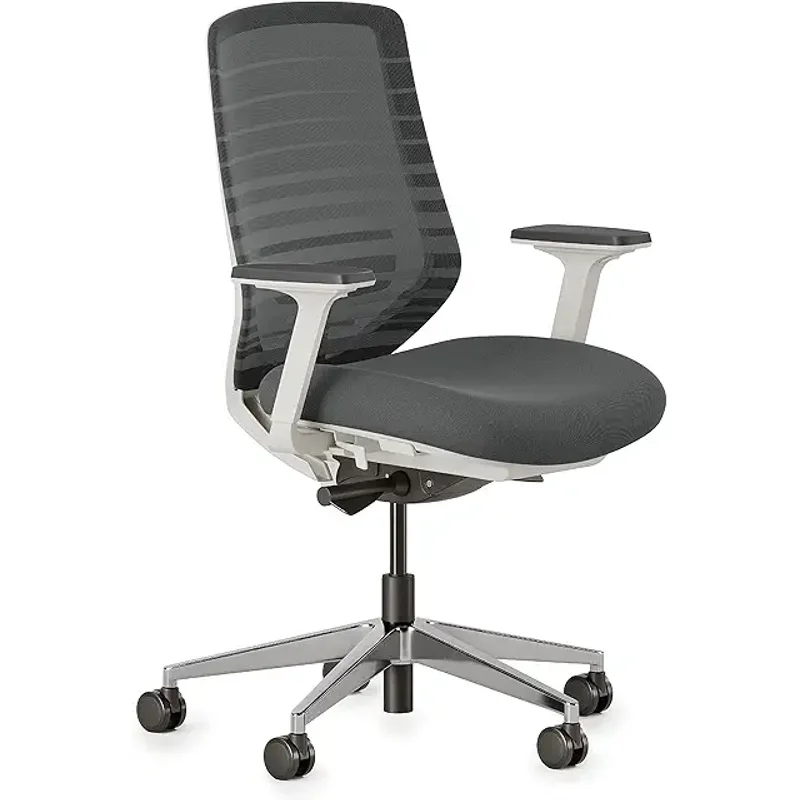
Branch is the direct-to-consumer play in ergonomic furniture. No showrooms, no dealers, just website-to-doorstep. They’ve dropped the price to $359 in 2026, which makes this even more compelling.
The mesh is Italian-made (they’re very proud of this) and genuinely nice. It’s not Aeron-quality, but it’s not cheap either. The frame is solid steel. Assembly takes 10 minutes with the included tools.
Adjustable lumbar support. Height-adjustable armrests. Recline with tension control. Mesh back. All for $359.
The catch: the seat cushion is thinner than I’d like. By month three, I noticed it more than day one. Branch offers a lifetime frame warranty but only 7 years on components — compare that to Herman Miller and Steelcase’s 12-year everything warranties.
Branch also now accepts HSA/FSA payments, which is a nice perk if your health plan covers ergonomic equipment.
For $359, it’s the best mesh chair you can buy without crossing into four figures. The trial period is 30 days with free returns if you hate it.
Who should buy this: First-time ergonomic chair buyers. People upgrading from a $150 Amazon chair. Anyone who wants “good enough” ergonomics without the premium price tag.
Who should skip this: Heavy users over 250 lbs (300 lb capacity is tight). Anyone who plans to sit 10+ hours daily — the seat cushion won’t hold up to marathon sessions like the Leap will.
6. HON Ignition 2.0 — Real Ergonomics Under $400
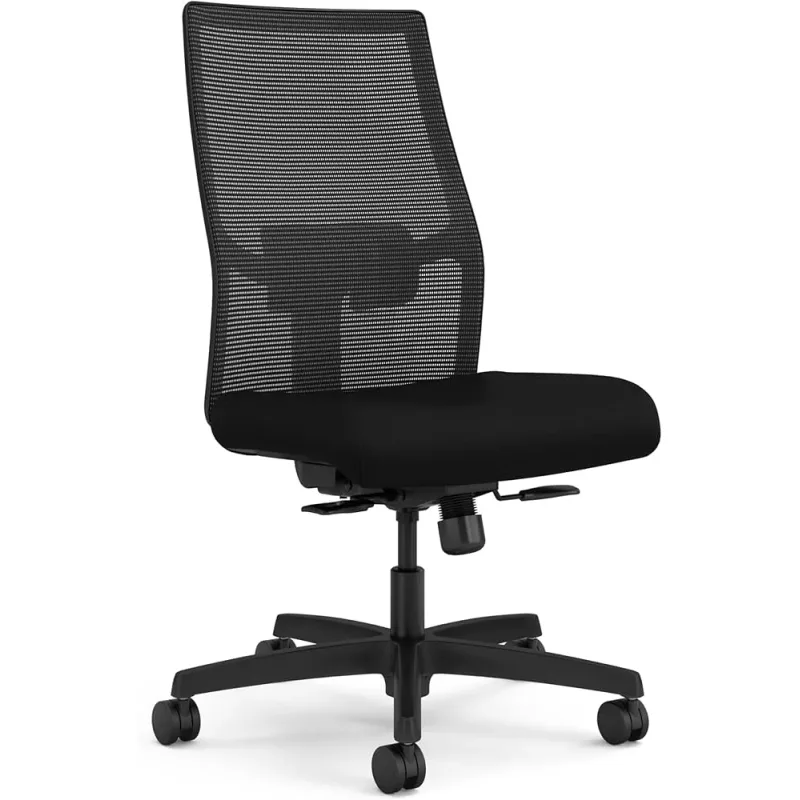
HON makes contract furniture — the stuff in corporate offices, hospitals, government buildings. The Ignition 2.0 is their volume play.
The Ilira-stretch mesh back is thinner than premium chairs but still breathable. Adjustable lumbar support. Basic tilt mechanism. Mesh seat option available (costs more, worth it).
At around $399 for the mesh-back/fabric-seat version, you’re getting legitimate ergonomic features without the premium markup. The build quality exceeds anything else in this price range. HON’s lifetime frame warranty backs that up.
Where it falls short: the armrests on the base model don’t adjust height. The mesh isn’t as taut as expensive chairs — it’ll stretch more over time. The aesthetic screams “office furniture.”
If you’re furnishing a home office on a budget and plan to upgrade in 3-5 years, the Ignition 2.0 makes sense. If this is a 10-year chair, spend more.
Who should buy this: Budget-conscious buyers who still want real ergonomics. People furnishing multiple workstations (buying 3 Ignitions costs less than 1 Aeron). Shorter users under 5’8” — the seat height range works well.
Who should skip this: Anyone who wants a chair that looks premium. Taller users over 6’ (the seat height maxes out at 20 inches).
Quick Comparison
| Chair | Price | Rating | Warranty | Weight Capacity | Best For |
|---|---|---|---|---|---|
| Herman Miller Aeron | $2,050 | 9.4 | 12 years | 350 lbs | All-day comfort, hot climates |
| Steelcase Leap V2 | $1,282 | 9.2 | 12 years | 400 lbs | Back problems, long sessions |
| Herman Miller Sayl | $1,175 | 8.6 | 12 years | 350 lbs | Design-conscious, lighter users |
| Steelcase Think | $1,115 | 8.4 | 12 years | 400 lbs | Steelcase quality, simpler controls |
| Branch Ergonomic | $359 | 8.1 | 7 years | 300 lbs | Best value mesh |
| HON Ignition 2.0 | $399 | 7.8 | Lifetime frame | 300 lbs | Budget-conscious buyers |
Buying Guide: What to Look for in a Mesh Chair
Not all mesh is created equal. Here’s what actually matters when you’re shopping.
Mesh quality. Cheap mesh is just woven polyester stretched over a frame. Premium mesh (like the Aeron’s 8Z Pellicle) uses engineered elastomers with variable tension zones. The difference shows up around month six — cheap mesh sags, good mesh holds. Press on the mesh with your thumb. If it bottoms out against the frame easily, it’s too thin.
Lumbar support. Adjustable beats fixed, always. You want to move the lumbar pad up and down (height) at minimum. The best chairs also let you adjust firmness (how hard the pad pushes). The Leap’s firmness dial is the gold standard here.
Seat depth adjustment. Underrated feature. If the seat pan is too long, the front edge presses behind your knees and cuts off circulation. If it’s too short, your thighs are unsupported. A sliding seat pan fixes both. The Aeron and Leap have this. The Branch and HON don’t.
Armrest adjustability. 2D arms (height + pivot) are the minimum. 4D arms (add width + depth) let you position your arms exactly where your shoulders relax. The Leap’s 4D arms are the best available in this category. Bad armrests cause more shoulder and neck pain than people realize.
Warranty length. The warranty tells you how long the manufacturer thinks the chair will last. Herman Miller and Steelcase both offer 12 years. Branch offers 7. HON offers a lifetime frame warranty but shorter coverage on components. If you’re spending $800+, don’t accept less than 10 years.
Weight capacity. Check it. “Up to 300 lbs” means the chair was designed for people well under 300 lbs. If you’re near the limit, size up. The Steelcase chairs (400 lbs) handle heavier users much better than the Branch or HON (300 lbs).
Where to Buy (And Where Not To)
Herman Miller: Buy direct from hermanmiller.com or authorized dealers. Sales happen around Memorial Day, Labor Day, and Black Friday. 15% off is common; 20-25% off is the max I’ve seen.
Steelcase: steelcase.com or office furniture dealers. Steelcase does less direct-to-consumer. Authorized dealers sometimes beat web prices.
Branch: branchfurniture.com only. No third-party retailers. They accept HSA/FSA now.
HON: Amazon, Staples, office furniture dealers. Prices vary wildly — check multiple sources.
Used market: Aerons and Leaps hold value and last forever. Facebook Marketplace, Craigslist, and office liquidators sell them for 40-60% off retail. Check the manufacturing date (label under the seat) and make sure all adjustments work. A 5-year-old Aeron in good shape is a better buy than a new $300 chair.
FAQ
How long do mesh office chairs last?
Premium mesh chairs (Aeron, Leap, Steelcase) last 10-20 years with normal use. The mesh itself doesn’t wear out — the gas cylinder and tilt mechanism go first. Both are replaceable. Budget mesh chairs last 3-5 years before the mesh sags or the frame wobbles. The warranty length is your best indicator.
Is a mesh chair better for your back than a foam chair?
Not automatically. Back support comes from the lumbar mechanism, not the seat material. A mesh chair with adjustable lumbar (like the Aeron or Leap) beats a foam chair with no lumbar support. But a well-designed foam chair with good lumbar beats a cheap mesh chair every time. Mesh is better for temperature — it runs cooler. For back health specifically, focus on lumbar adjustability, not material.
Can you add a headrest to a mesh chair?
Depends on the model. The Aeron has an official headrest attachment (~$230). The Leap doesn’t have a factory option, but third-party headrests exist (Atlas Headrest is the most popular). The Sayl, Think, Branch, and HON don’t support headrests without modification. If you recline frequently or have neck issues, factor this in.
Are refurbished mesh chairs worth buying?
Absolutely — if you buy from a reputable seller. Companies like Crandall Office Furniture and BTOD (Back to Office Days) refurbish Aerons and Leaps with new gas cylinders, armrest pads, and foam, then sell them with 10-12 year warranties. You’ll pay $500-$800 for a chair that costs $1,300+ new. Avoid random eBay sellers or chairs without a warranty.
How do I clean a mesh office chair?
Vacuum the mesh with an upholstery attachment monthly to remove dust and skin cells. For stains, use a damp cloth with mild soap — no harsh chemicals, no bleach. The Aeron’s Pellicle mesh is particularly easy to clean because it doesn’t absorb liquids. Never pressure wash or soak the mesh. Let it air dry completely before sitting.
Do mesh chairs work for heavy users?
Check the weight capacity. The Steelcase Leap V2 and Think support 400 lbs. The Aeron and Sayl support 350 lbs. The Branch and HON max out at 300 lbs. If you’re near a chair’s weight limit, the mesh will stretch faster and the mechanism will wear out sooner. For users over 300 lbs, the Leap V2 is the best option — the fabric seat distributes weight more evenly than mesh, and the 400 lb capacity gives real headroom.
The Bottom Line
For most people: the Herman Miller Aeron is still the benchmark after 30 years. The mesh runs cool, the PostureFit SL lumbar is outstanding, and the chair will outlast your career. At $2,050, it’s expensive. It’s also the last chair you’ll buy. See our full Herman Miller Aeron review for the complete picture.
For back pain: the Steelcase Leap V2 edges out the Aeron. The LiveBack system and adjustable lumbar firmness dial handle spinal issues better than any other mesh chair in this price range.
For tight budgets: the Branch Ergonomic Chair at $359 delivers 80% of the Aeron experience at roughly 17% of the price. It’s the best value in mesh ergonomics right now.
Skip the cheap Amazon mesh chairs with 4.5-star ratings from suspicious reviewers. A $150 “ergonomic mesh chair” will sag, squeak, and end up in a landfill within two years. Spend $359 minimum on the Branch, or save up for something better. Your back will thank you.
Looking for more chair options? Check out our complete guide to ergonomic chairs for lower back pain or our picks for the best ergonomic chairs under $300. Programmers specifically may want our best ergonomic chairs for programmers guide.